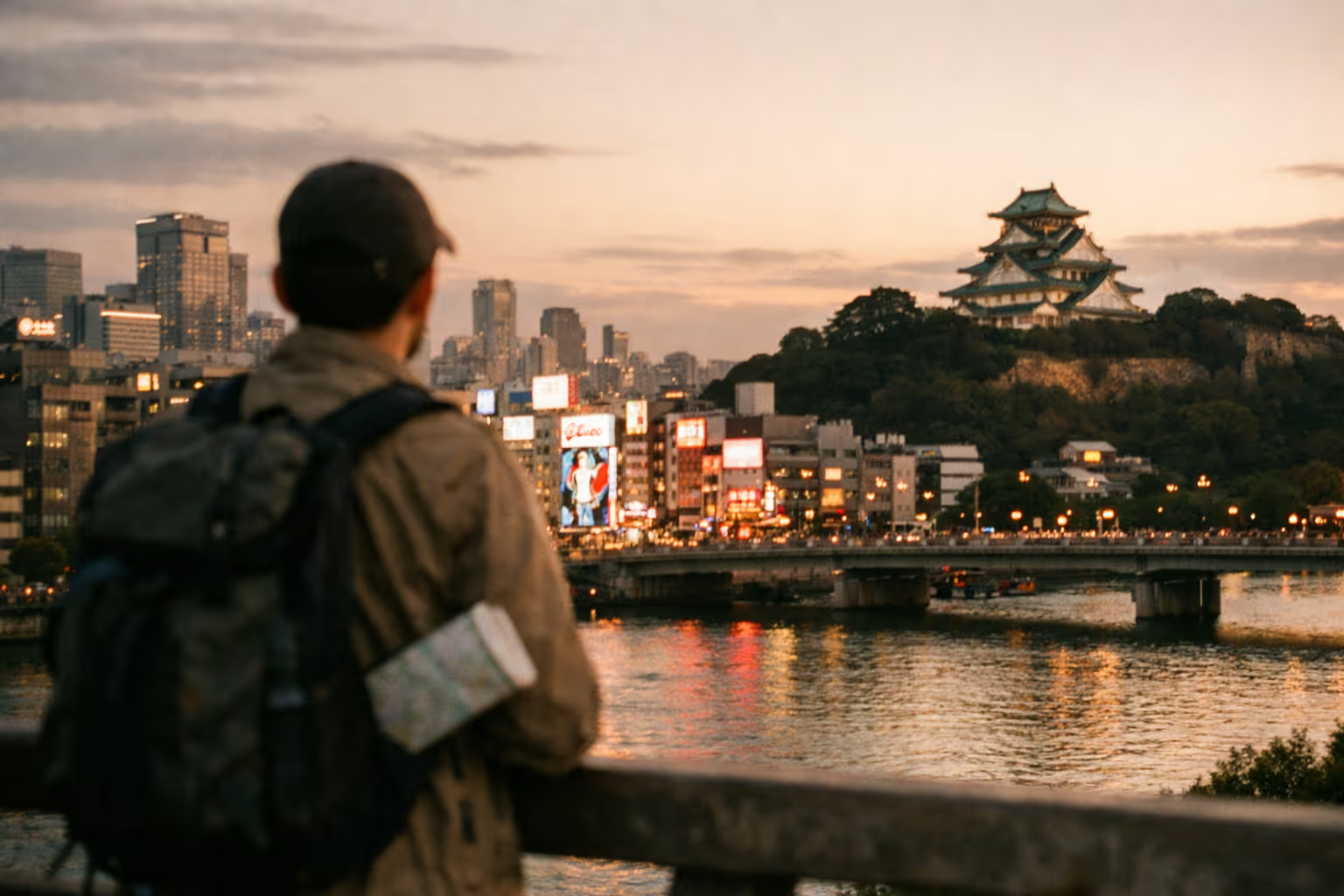
Things to Do in Osaka: Where to Start and How Long to Stay
If you’re wondering about the best things to do in Osaka, two to three full days is the practical minimum for first-timers. Add a fourth if you want to fit in Universal Studios Japan and a day trip without sprinting between sights. Bon Traveler recommends a minimum of two full days in the city, but suggests four nights if you want to include nearby temples and towns (3).
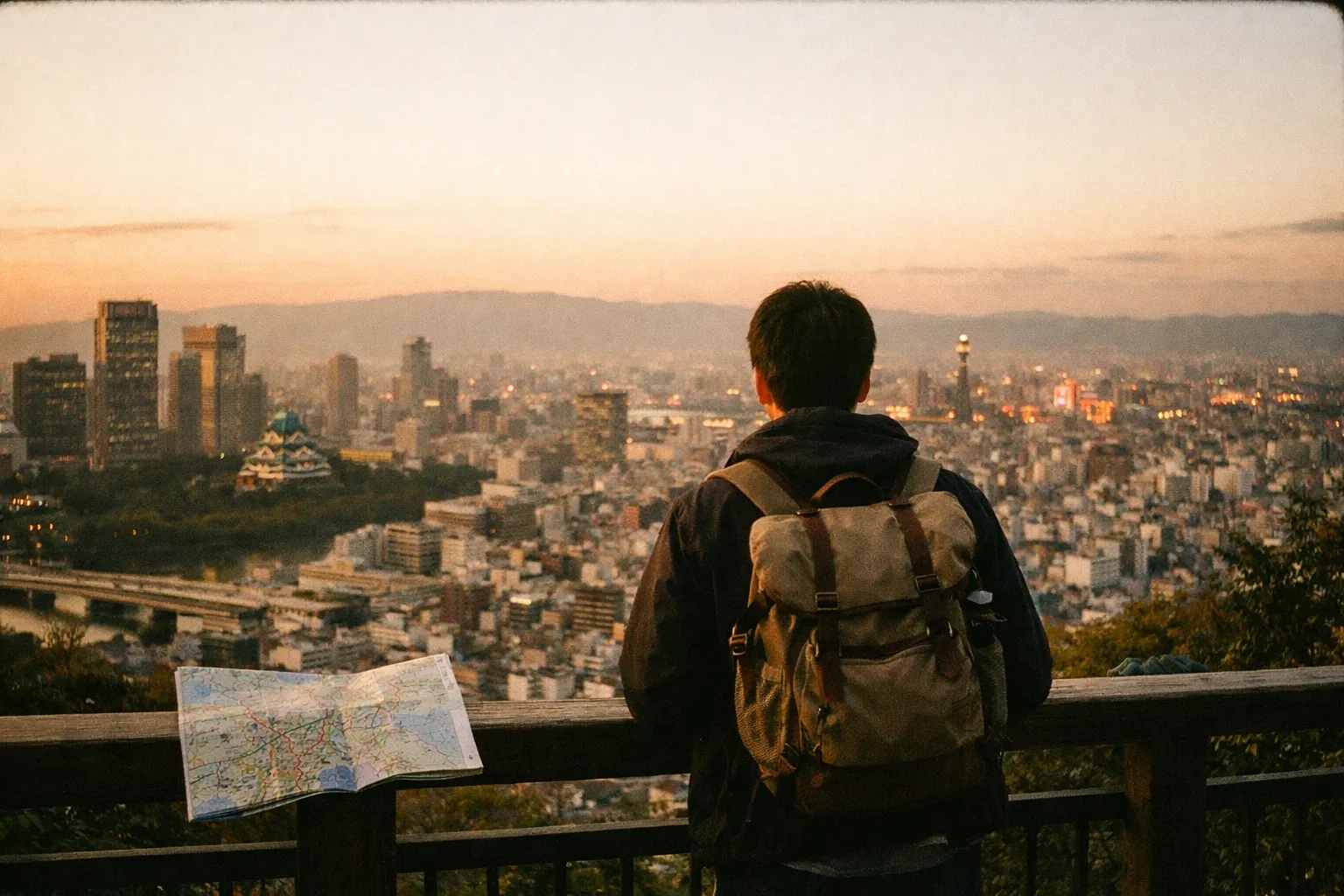
If you’re combining Osaka with Kyoto - and most people are - plan five to seven days total: two to three in Osaka, two to three in Kyoto, and a day for travel and buffer. You can do a single day in each, but you’ll spend most of it on trains and miss what makes both cities worth visiting.
Where you sleep matters more than the star rating. Stay near Namba, Shinsaibashi, or Hommachi for fast access to the southern districts where you’ll spend most of your time. Pick Umeda if you’d rather be on top of the main rail hub. The travel guide from Where Are Those Morgans recommends staying within walking distance of the Midosuji Subway Line, which links Namba, Shinsaibashi, Hommachi, and Umeda, and calls it the most efficient way to navigate the city (5). Avoid cheap hotels far from both hubs - what you save on the room you lose in daily transit time.
For getting around, an IC card (ICOCA, Suica, or PASMO) covers nearly all local subway, JR, and bus rides. Load it at any station machine. If you’re hitting multiple Kansai cities, calculate whether a Kansai Thru Pass pays off before you buy.
If you have one day in Osaka
Hit Osaka Castle in the morning before the elevator lines build, browse Kuromon Market in the afternoon for a food crawl, then end at Dotonbori after dark when the neon is at full strength. That sequence covers history, food, and nightlife in one efficient loop.
If you have two to four days
Add a full day at Universal Studios Japan, an evening wander through Shinsekai, and one day trip to Nara or Kyoto. With four days you can do all of it without rushing.
Dotonbori and Namba: The Neon Heart of the City
Dotonbori is a canal strip running roughly 500 to 800 meters, lined with neon billboards, restaurants, and the Glico Man sign that’s become the city’s unofficial logo. Japan-Guide identifies Minami, the area around Namba, as the heart of Osaka’s nightlife, with Dotonbori as its core (2). On Tripadvisor it carries a 4.3 out of 5 rating from more than 12,700 reviews.
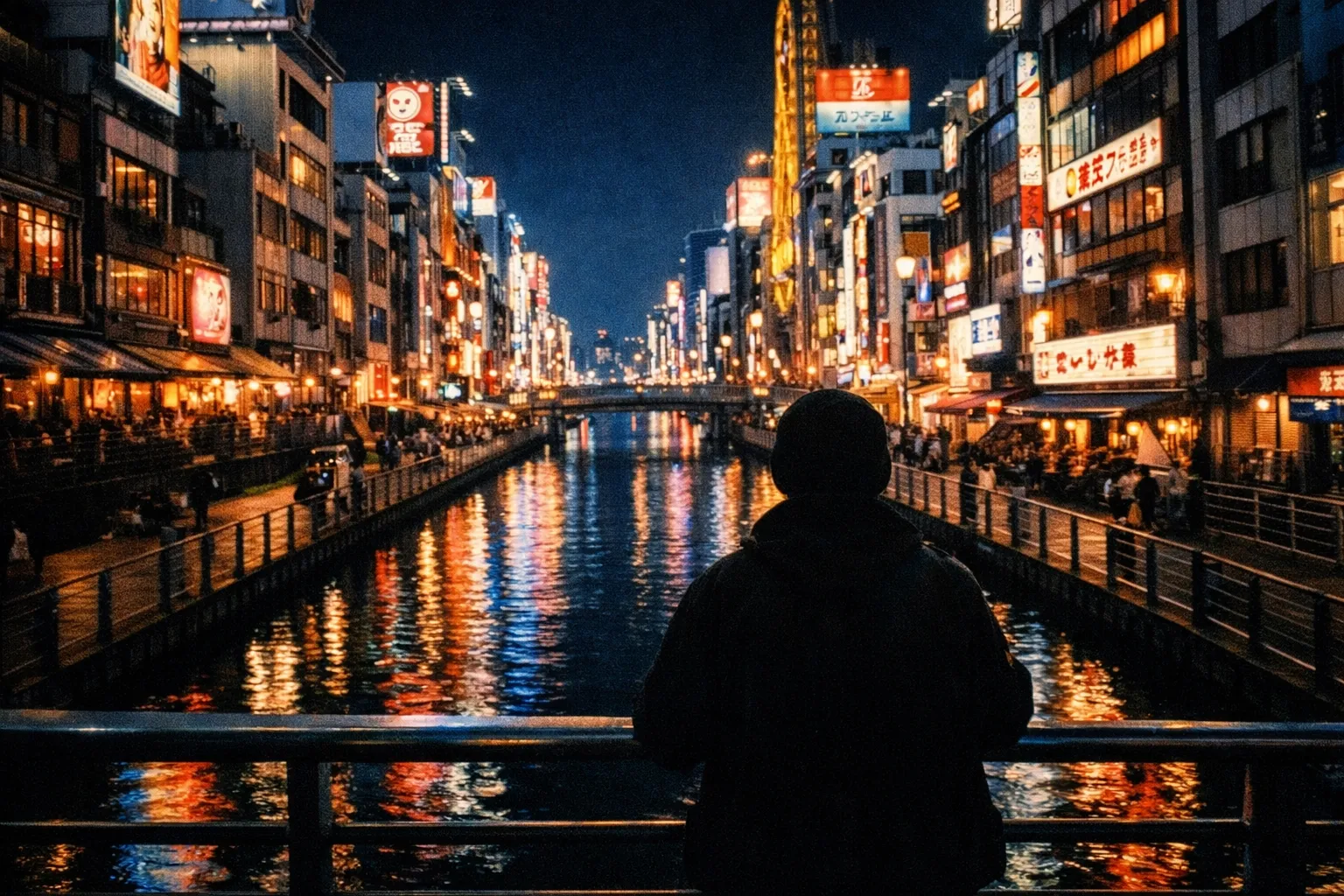
Come after dark. The neon is the main event, and the canal only reflects the full light show after about 8 PM.
Namba is the transit and commercial machine wrapped around Dotonbori. Nankai, Kintetsu, JR, and subway lines all converge here, which is exactly why it works so well as a base for day trips to Kyoto and Nara.
The Glico Man and what else to actually look at
Walk the Tombori Riverwalk - the pedestrian path along the canal - in the late evening. The neon reflections are better and the daytime crowds have thinned. For a different angle, the Tombori River Cruise runs about 20 minutes and costs roughly ¥1,000 to ¥1,200 (about $7 to $9), with departures every 30 minutes in peak hours. I did the nighttime cruise on my first visit and the view of Dotonbori’s neon from the water is genuinely worth the ¥1,200 - it’s a different perspective than the riverwalk, and the 20 minutes goes fast.
Back alleys and side streets: where locals eat near Dotonbori
Here’s the honest warning: the restaurants directly on the main canal are tourist-priced. Walk one block back and you’ll find better-value izakayas (Japanese pub-style restaurants) and small joints. Japan-Guide and seasoned visitors both point to the adjacent side streets for the meal that doesn’t feel like a markup.
For what to eat right here: takoyaki runs ¥500 to ¥800 for six to eight pieces, okonomiyaki (savory cabbage pancake) is everywhere, and the canal stalls sell street snacks all evening. Then there’s Hozenji Yokocho, a narrow stone-paved alley one block off the main strip, lantern-lit and far quieter than the canal. Travel Pockets lists it separately from Dotonbori for good reason - it’s worth 20 minutes for the atmosphere alone, especially if the main drag starts to feel overwhelming.
Osaka Street Food: A Namba and Kuromon Market Crawl
Osaka street food is best approached as a structured crawl rather than a random grazing session. The logical sequence: Kuromon Market in the late morning, Dotonbori snacks at dusk, then kushikatsu (deep-fried skewers) in Shinsekai for dinner.
Kuromon Ichiba Market: timing and what to order
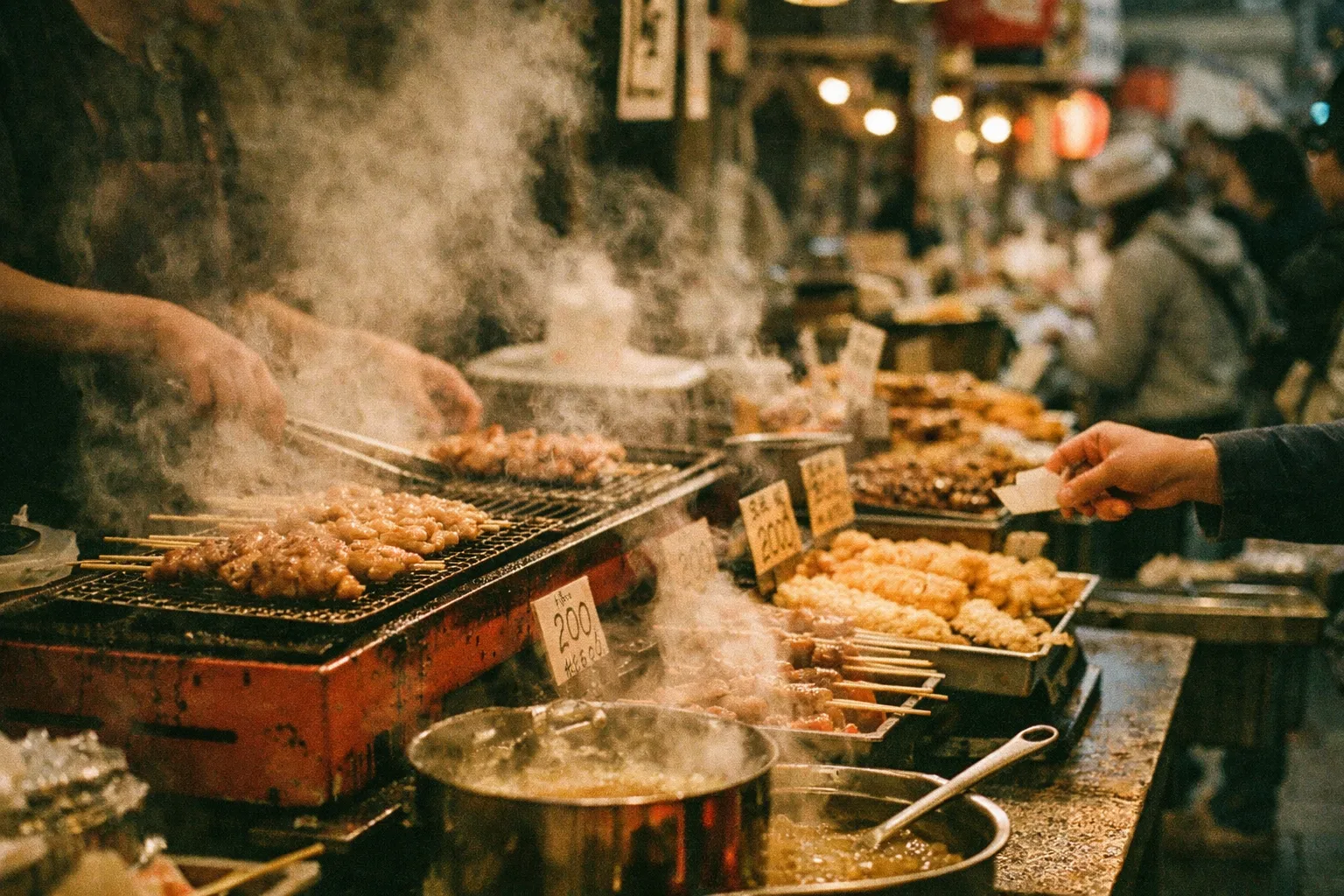
Kuromon Ichiba Market is a covered arcade near Namba - Bon Traveler describes it as “one long covered street” lined with stalls, and it’s one of Osaka’s most famous food markets (3). The Rambling Renegade puts the count at around 150 shops selling seafood, meat, and produce. You can grab bites on the spot or buy larger portions to take away.
Go between 9 and 11 AM, before the tour groups arrive. The seafood is freshest then and you’ll actually have room to move. When I visited on a Tuesday morning in late October, I had most of the back half of the arcade nearly to myself by 9:30 AM - by 11 AM the tour groups had arrived and the main stalls had queues. Order takoyaki, fresh seafood skewers, and wagyu skewers, and budget ¥1,500 to ¥2,500 (about $10 to $17) for a proper crawl through the arcade.
Shinsekai and kushikatsu: Osaka’s retro food district
Shinsekai is a retro district that Travel Pockets calls a “time capsule of old school Osaka street life,” full of neon, arcade machines, and street food (1). It’s the kushikatsu capital - those are deep-fried skewers, usually ¥100 to ¥250 each, with set menus from around ¥1,000.
One rule matters here, and it’s not a tourist myth: do not double-dip in the communal sauce. The pot on your table is shared, and dipping a half-eaten skewer back in is a genuine breach. Dip once, before you bite. You’ll see the signs everywhere, but it’s worth taking seriously. If you want to brush up on Japanese pub-style restaurants and other local customs before you arrive, it’s worth a read.
Sennichimae Doguyasuji Street is the practical sibling to all this eating. Bon Traveler describes it as a roughly 600-meter kitchenware district packed with knives, restaurant supplies, bento boxes, and tableware (3). It’s a good souvenir stop for anyone who cooks, and pairs well with a cooking class if you have time.
Budget for the full crawl: a serious Namba food day - Kuromon plus Dotonbori snacks plus a sit-down kushikatsu set - runs ¥3,000 to ¥5,000 (about $20 to $35) per person.
Osaka Castle: History, Views, and How to Visit Without the Crowds
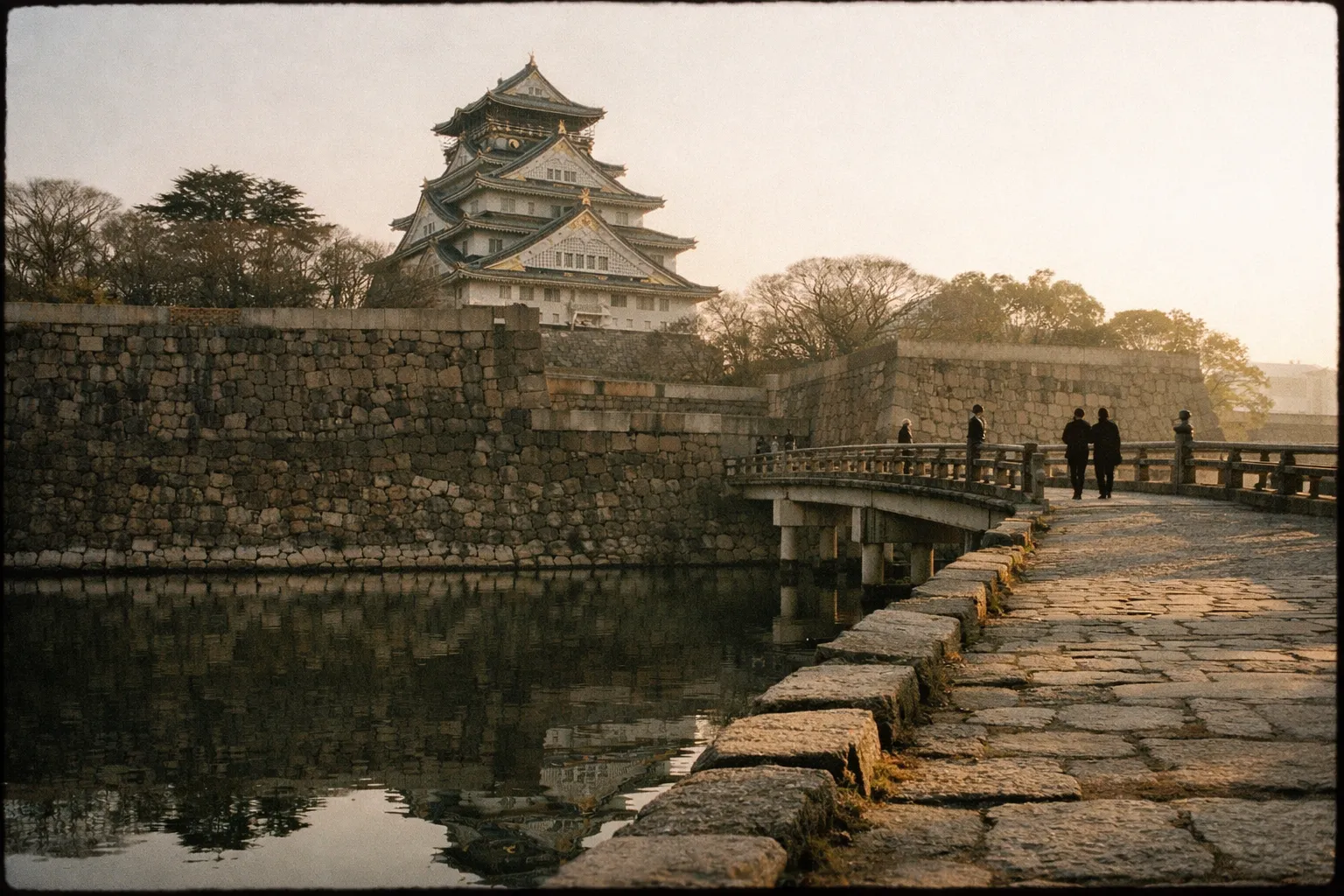
Osaka Castle was originally built by Toyotomi Hideyoshi starting in 1583 and played a central role in the 16th-century unification of Japan (7). The structure you see today is a concrete reconstruction - Japan-Guide dates it to 1931, with restorations after WWII - but the massive stone walls and moats are historically original and genuinely impressive up close. The reconstruction question comes up a lot, and it’s fair to flag, but the grounds alone are worth the visit.
Inside the keep: what the museum actually covers
The interior houses a modern history museum spread across eight floors, with exhibits on Hideyoshi and Osaka’s past. The 8th floor is an observation deck with panoramic views over the city - worth it on a clear day, and best timed for late afternoon or sunset when the skyline starts to come alive. Budget two to three hours for the museum and grounds combined.
The logistics are friendly. Osaka Castle Park is free to enter, and admission to the inner keep runs around ¥600 to ¥800 (about $4 to $6) for adults (7). To avoid the elevator lines inside the keep, arrive early on a weekday morning.
If it rains, the Osaka Museum of History sits a 10-minute walk away and gets skipped by most visitors - a solid indoor backup.
Osaka Castle in cherry blossom season
The grounds hold around 3,000 cherry trees, and the bloom typically peaks in early April, drawing large hanami (cherry blossom viewing) crowds (7). The park is exceptional then - genuinely one of the better blossom spots in the city - but expect significant crowds and longer queues for the keep. If you’re visiting in late March or early April, go early in the day and treat the grounds, not the museum, as the main attraction.
Universal Studios Japan: Super Nintendo World, Harry Potter, and Surviving the Crowds
Universal Studios Japan is Osaka’s top attraction on Tripadvisor, rated 4.1 out of 5 from more than 11,300 reviews, and Japan-Guide lists it first among the city’s attractions (7). The ranking is earned. But the experience depends entirely on how you manage it.
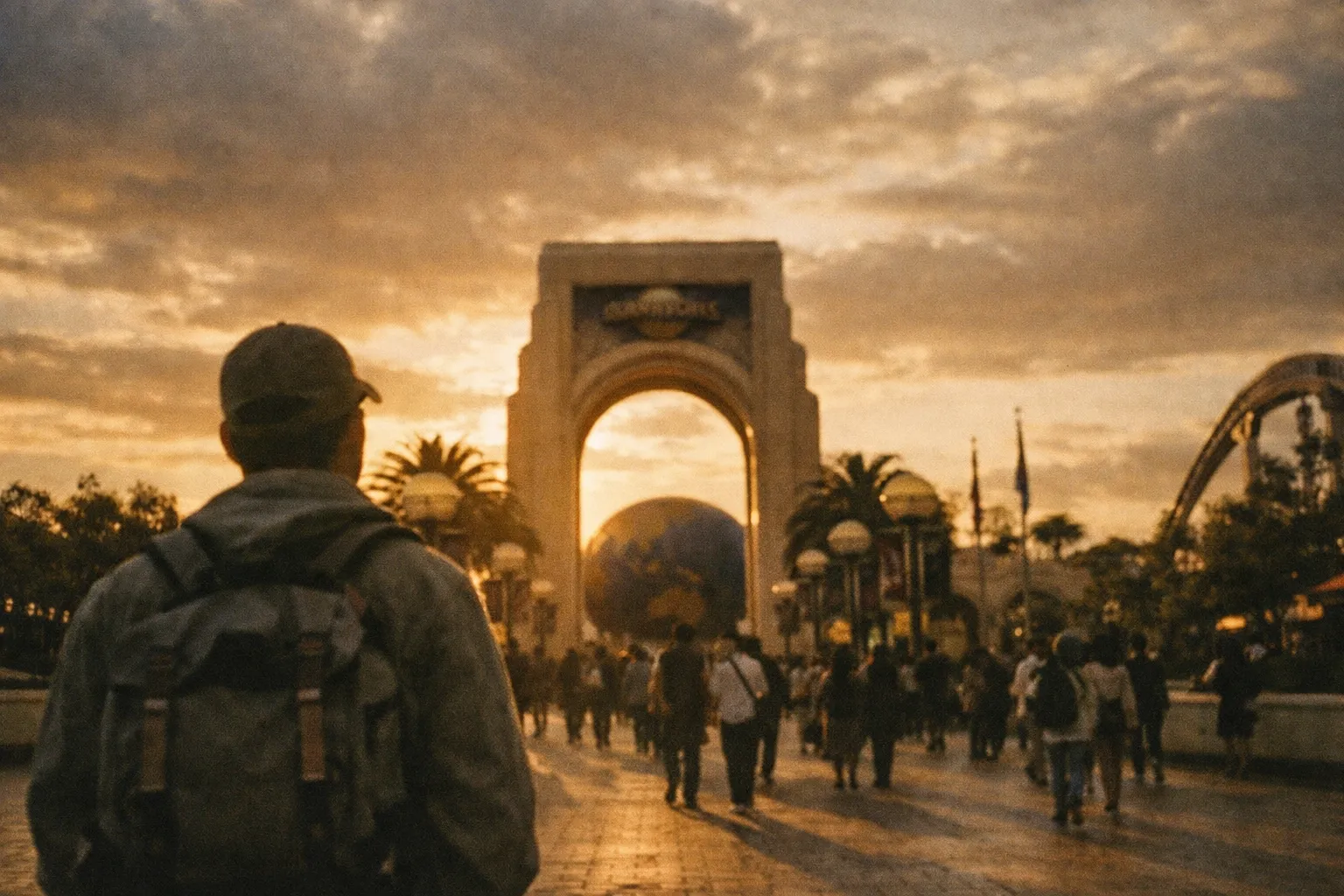
Two zones anchor the park: Super Nintendo World, which opened in 2021 and remains the main draw, and The Wizarding World of Harry Potter. Both use timed-entry systems or build punishing queues by mid-morning, so your strategy revolves around getting to one of them first.
On pricing: a 1-Day Studio Pass runs roughly ¥8,600 to ¥9,800 (about $60 to $70) per adult depending on the date (7). Express Pass add-ons are sold separately and often exceed ¥10,000 (about $70+) on peak days. They’re worth it on busy weekends and skippable on quiet weekdays. Getting there is simple: take the JR Yumesaki Line from Osaka Station to Universal City Station, about 15 minutes (7).
How to tackle USJ without wasting half the day in queues
8 hoursA step-by-step strategy to maximize your time and avoid long waits at Universal Studios Japan.
- 1
Buy date-specific tickets online well in advance
Peak dates sell out, and you don't want to discover that at the gate.
- 2
Check Super Nintendo World timed-entry requirements
Access is controlled by timed or area-entry tickets on busy days.
- 3
Arrive at the gates 20 to 30 minutes before opening
This single move saves more time than any pass.
- 4
Walk directly to Nintendo World or Harry Potter
Do not stop for food or merchandise. You can browse later; you can't un-build a 90-minute queue.
- 5
Use an Express Pass on peak days, skip it on quiet weekdays
Match the spend to the crowd level.
- 6
Eat lunch after 1:30 PM
Restaurant queues shorten and you've already cleared the headline zones.
If you leave the park by around 4 PM, the Osaka Aquarium Kaiyukan and the Tempozan Ferris Wheel are walkable from the USJ area - a reasonable half-day add-on for families who still have energy.
Beyond the Big Five: More Osaka Worth Your Time
Shinsekai deserves a second mention for its atmosphere, not just its kushikatsu. Japan-Guide describes it as an early-20th-century entertainment district with Tsutenkaku Tower as its central landmark, and the tower’s observation deck offers views over southern Osaka. It’s budget-friendly and a good evening wander after dinner.
The Umeda Sky Building in Kita is the city’s best-known paid viewpoint. Japan-Guide puts its Floating Garden Observatory at 173 meters, with admission around ¥1,500 (about $10). On a clear night the open-air rooftop beats the view from Osaka Castle’s deck - it’s worth the trip north if you haven’t already spent the day in Umeda.
For nature, Minoo Park sits a short ride from central Osaka. The walking trail to Minoo Falls runs about 2.8 kilometers from Minoo Station and takes roughly 45 minutes one way, with autumn foliage in late November as the prime season. Bon Traveler reaches it via the Midosuji Line and local trains and treats it as an easy half-day escape (3).
For a quieter afternoon, the Nakanoshima Museum of Art covers contemporary work and rarely feels crowded - a good break from the neon.
One seasonal note: summer heat and humidity in Osaka are real. Schedule outdoor options like Minoo Falls and the castle grounds for morning or evening, and save indoor attractions - USJ, Kaiyukan, the museums - for the punishing midday hours of July and August.
Day Trips from Osaka: Kyoto and Nara by Train
Osaka’s position as a Kansai rail hub is one of its most underrated advantages. Both Kyoto and Nara are genuinely easy day trips, and you can do either without booking anything in advance.
Here’s how the two compare. Kyoto is roughly 15 to 30 minutes from central Osaka, with one-way fares around ¥570 to ¥1,000 (about $4 to $7); it’s best for temples, shrines, and the geisha district, needs a full day of 8 to 10 hours, and draws high crowds, especially at Fushimi Inari. Nara is about 45 minutes away at ¥570 to ¥720 (about $4 to $5) one way; it’s best for the deer park, the giant Buddha, and a relaxed pace, works as a half to full day of 4 to 9 hours, and stays moderately crowded. Neither requires advance booking for the main sights.
Kyoto from Osaka: temples, districts, and not burning out
Multiple lines run from Osaka, Umeda, and Shin-Osaka. Japan-Guide notes that JR trains between Osaka Station and Kyoto Station take about 30 minutes and cost ¥570 one way on standard rapid services - the Shinkansen is faster but pricier (7).
A combined Osaka and Kyoto trip really needs five to seven days to do both properly. A single-day Kyoto trip from Osaka works, but it limits you to two or three districts - which is fine, because the real risk in Kyoto is temple burnout. Don’t try to see everything. A strong pairing is Fushimi Inari before 7 AM, then Gion in the evening; another is Arashiyama plus Nishiki Market. For a deeper look at how to plan by zone, start early and avoid the crowds, Kyoto rewards that kind of preparation.
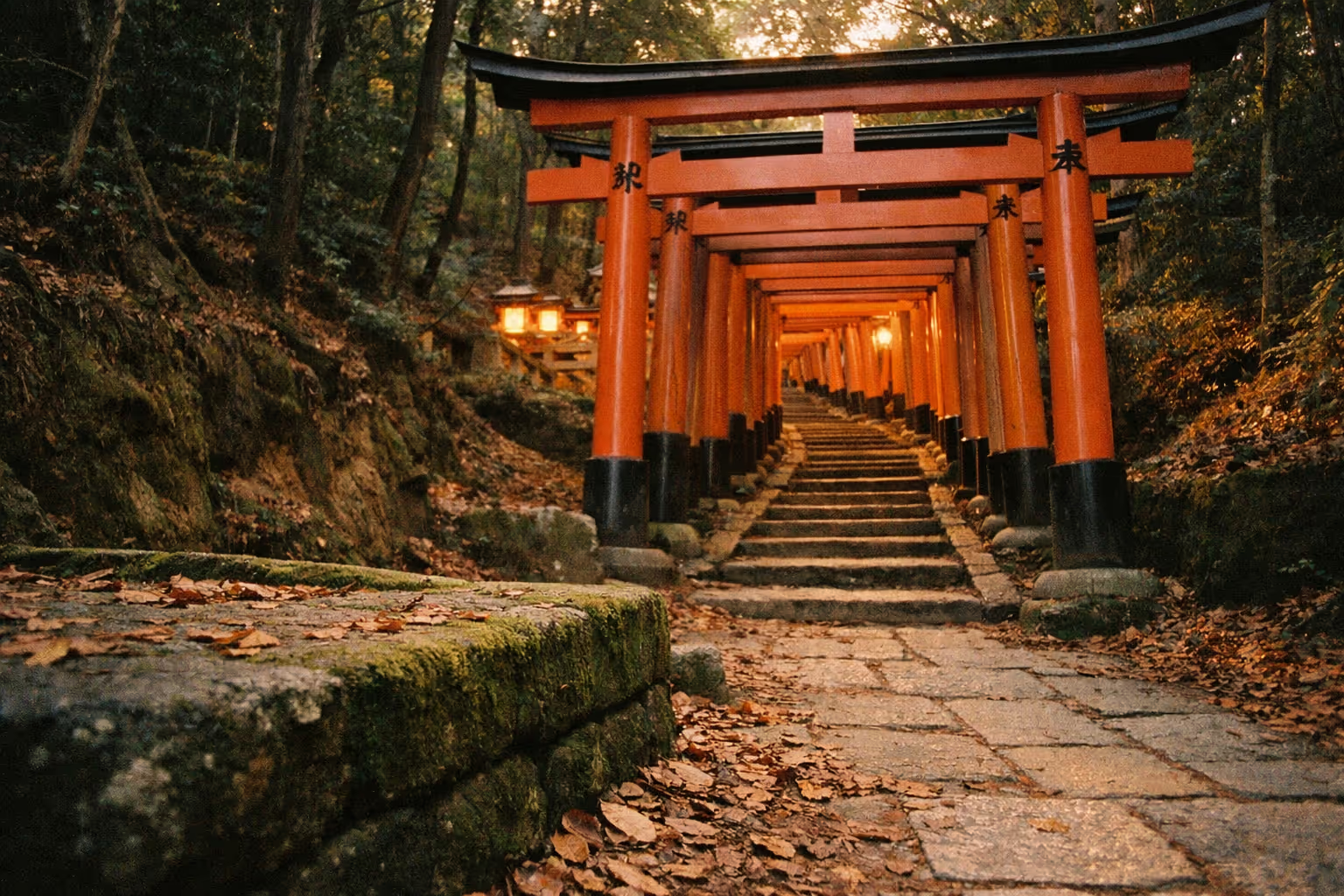
Fushimi Inari Taisha, with its tunnels of thousands of vermilion torii gates, is open 24 hours and free. It’s the single best reason to make Kyoto an early-morning day trip - go at dawn and you’ll have the gates nearly to yourself. I went on a November morning around 6 AM and passed maybe a dozen other people on the lower trail. By 9 AM the main approach was packed.
Nara from Osaka: deer, temples, and a half-day that earns its train fare
Take the Kintetsu or JR line from Namba or Osaka Station. Japan-Guide lists JR Yamatoji rapid trains from Osaka taking about 45 to 50 minutes at ¥820, and Kintetsu Nara Line services from Osaka-Namba at about 40 minutes for around ¥580 (7).
Nara Park is home to over 1,000 free-roaming deer that bow for crackers (7). Buy shika senbei (deer crackers) from the official stalls, and keep the crackers out of sight until you’re ready to feed - the deer can get aggressive when they see food. It’s funny until a determined buck is headbutting your daypack.
Todai-ji Temple houses one of Japan’s largest bronze Buddha statues, about 15 meters tall (7). Allow three to four hours for the park and temple together. Nara works as a half-day or a full one; an early start lets you head back to Osaka for an afternoon in Shinsekai or Dotonbori.
Kyoto vs. Nara Day Trips from Osaka
| Kyoto | Nara | |
|---|---|---|
| Travel Time from Namba | about 15-30 min | about 45 min |
| Approximate One-Way Train Cost | ¥570-1,000 (about $4-7) | ¥570-720 (about $4-5) |
| Best For | Temples, shrines, geisha district | Deer park, giant Buddha, relaxed pace |
| Time Needed | Full day (8-10 hrs) | Half to full day (4-9 hrs) |
| Key Sights | Fushimi Inari, Gion, Arashiyama | Nara Park, Todai-ji, Kasuga-taisha |
| Crowd Level | High (especially Fushimi Inari) | Moderate |
| Advance Booking Needed? | No | No |
Getting Around Osaka and Budgeting Your Trip
IC cards - ICOCA, Suica, or PASMO - are the default for getting around Osaka, covering JR local trains, subways, and most buses in Kansai (7). Note that the sale of some card types to overseas visitors has been temporarily limited at certain times, and not every private rail operator accepts all three brands - check current availability before you travel and confirm acceptance on any private lines you plan to use. Load one at any station machine and tap through.
If you’re visiting multiple Kansai cities, look at the Kansai Thru Pass, a non-JR rail and bus pass valid for two or three days over a period and usable on many private railways (7). Its value depends entirely on how many cities you hit in those days, so do the math against individual fares before buying. For USJ specifically, no pass is needed - the JR Yumesaki Line from Osaka Station gets you there in about 15 minutes.
Here’s a realistic per-day cost breakdown for Osaka itself (prices reflect early 2025 rates - verify before you book, as the yen shifts):
- Budget day (castle grounds, street food, a Dotonbori walk): ¥3,000 to ¥5,000 (about $20 to $35).
- Midrange day (castle admission, Dotonbori cruise, a sit-down meal): ¥8,000 to ¥12,000 (about $55 to $80).
- USJ day (standard ticket, Express Pass, food): ¥20,000 to ¥25,000 (about $135 to $170).
Is $1,000 enough for a week in Japan? It’s tight but possible at budget level, roughly $70 to $100 a day excluding flights. Midrange runs $120 to $180 a day. A week split across Osaka, Kyoto, and Nara at midrange comes to roughly $840 to $1,260 - doable on $1,000 with discipline on accommodation and by skipping the USJ Express Pass. The fastest budget-busters are the Express Pass and where to stay in Japan by neighborhood, budget, and trip type - choosing the wrong area can quietly drain your daily budget. Cut the Express Pass on a quiet weekday and you save about $70 instantly.
Last reminder: book USJ date-specific tickets, popular Namba and Shinsekai food tours, and weekend restaurant reservations in advance.
Practical Tips for Visiting Osaka
When to visit. Japan-Guide flags spring (late March to April, cherry blossoms at Osaka Castle) and autumn (November, Minoo foliage) as the best windows (7). July and August are hot and humid - plan indoor activities for the middle of those days.
Where to stay. Namba and Shinsaibashi for southern-district access; Umeda for the rail hub. Skip cheap hotels far from both - the daily transport time and cost eat the savings.
The Dotonbori pricing trap. The main canal restaurants charge tourist prices. Walk one block back for better value. This single habit improves nearly every meal.
Walking distances. Osaka Castle grounds, the Namba underground malls, and Umeda can each require 15 to 25 minutes on foot between points. Don’t over-schedule your days.
Cash and payments. Japan is increasingly cashless, but small stalls, shrines, and local izakayas still prefer cash. Carry ¥10,000 to ¥20,000 (about $65 to $130) (7).
Tipping. Not customary in Japan - don’t do it. It can cause genuine confusion (7). Pay the bill amount and a sincere thank-you covers it.
Frequently Asked Questions
- How many days do you need in Osaka and Kyoto?
- Plan two to three days in Osaka and two to three in Kyoto, for a combined five to seven days. A single day in each is possible but rushed - you'll miss USJ, Shinsekai, and most of Kyoto's outer districts. If you only have three days total for both, base yourself in Osaka and do Kyoto as a day trip focused on Fushimi Inari and Gion.
- What are the top 3 things to do in Osaka?
- Dotonbori and Namba for street food and nightlife, Osaka Castle for history and views, and Universal Studios Japan for a full-day pop-culture experience. Those three cover the city's main registers - food, history, and theme park - and carry the highest visitor satisfaction ratings among Osaka attractions.
- Is $1,000 enough for 1 week in Japan?
- Tight but achievable at budget level, around $70 to $100 a day excluding flights. A week across Osaka and Kyoto at midrange runs closer to $840 to $1,260. The main budget-busters are USJ with an Express Pass, Shinkansen fares if you're coming from Tokyo, and accommodation near Namba. Skip the Express Pass on a quiet weekday and you save about $70 immediately.
- Is Universal Studios Japan worth it?
- Yes, if you go in prepared. Super Nintendo World is genuinely impressive and unlike anything else in Japan. The caveat is crowds - arrive before opening, head straight to Nintendo World, and consider an Express Pass on peak days. A poorly planned visit is expensive and exhausting; a well-planned one is a highlight.
- What's the best way to get from Osaka to Kyoto?
- The JR Shinkansen from Shin-Osaka reaches Kyoto Station in about 15 minutes but costs more. The Hankyu or JR conventional lines from Umeda or Osaka Station take 30 to 45 minutes and cost around ¥570. For a day trip, the conventional lines are the better value and perfectly fine.
- When is the best time to visit Dotonbori?
- After dark. The neon signs, including the Glico Man, are the main visual event, and they're best after about 8 PM when the canal reflects the full light show. For the Tombori Riverwalk, crowd levels vary by season, local holidays, and events - weeknights are often quieter than weekend nights, but that's not guaranteed, especially around festivals or public holidays.
- Do I need to book restaurants in Osaka in advance?
- For street food and casual izakayas, no - you walk up and order. But popular food tours in Namba and Shinsekai, and some sit-down restaurants on weekends and holidays, book out. Since inbound tourism surged after 2022, reserving ahead for anything specific you've got your heart set on is the safe move.
Before You Book
Osaka rewards travelers who treat it as a base, not a stopover. Two nights is a floor, not a plan - give it three or four and you can fit the food, the castle, the theme park, and a day trip without burning out.
Two decisions shape the whole trip: whether to do Universal Studios Japan, which eats a full day and demands advance booking, and whether to add Kyoto, Nara, or both as day trips. Sort those two and the rest of the itinerary falls into place around them. If you’re still weighing the broader route, a Japan itinerary covering 5 stops for 7, 10, or 14 days is a useful framework for building out the full trip.
One practical note that matters more than it sounds: book your USJ tickets before you book your flights. They sell out on peak dates faster than hotel rooms do.
Osaka is the easiest city in Japan to eat well on any budget. Start there.