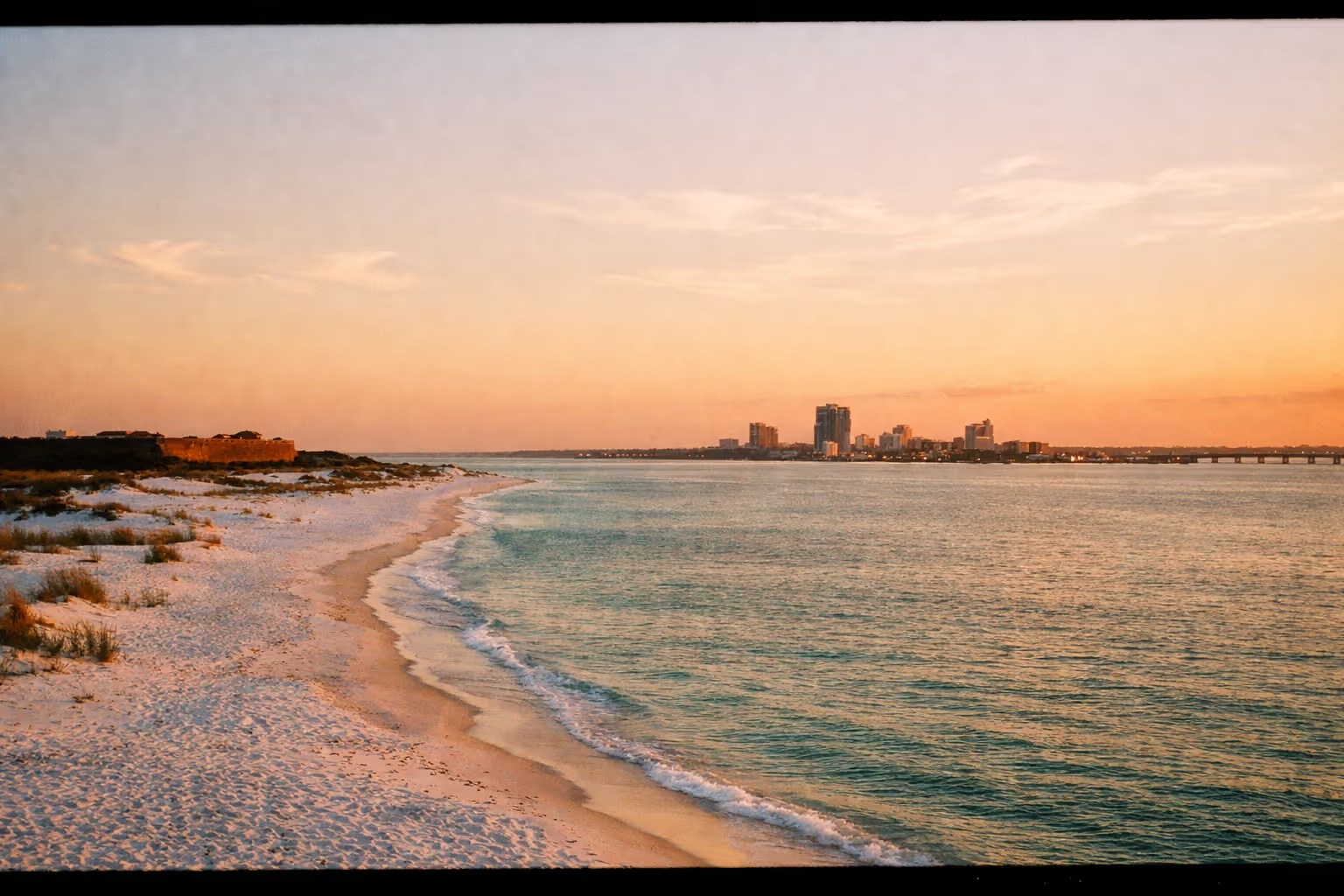
Gulf Islands National Seashore: Worth the Detour
If you’re mapping out pensacola things to do, start here if you only have one outdoor day. Gulf Islands National Seashore tops the list of pensacola things to see for good reason: the beaches inside the park are noticeably less crowded than the public stretches of Pensacola Beach, and the history layered into Fort Pickens alone justifies the drive. Gulf Islands National Seashore protects the barrier islands stretching from Pensacola to Mississippi, and the beaches inside the park are noticeably less crowded than the public stretches of Pensacola Beach.
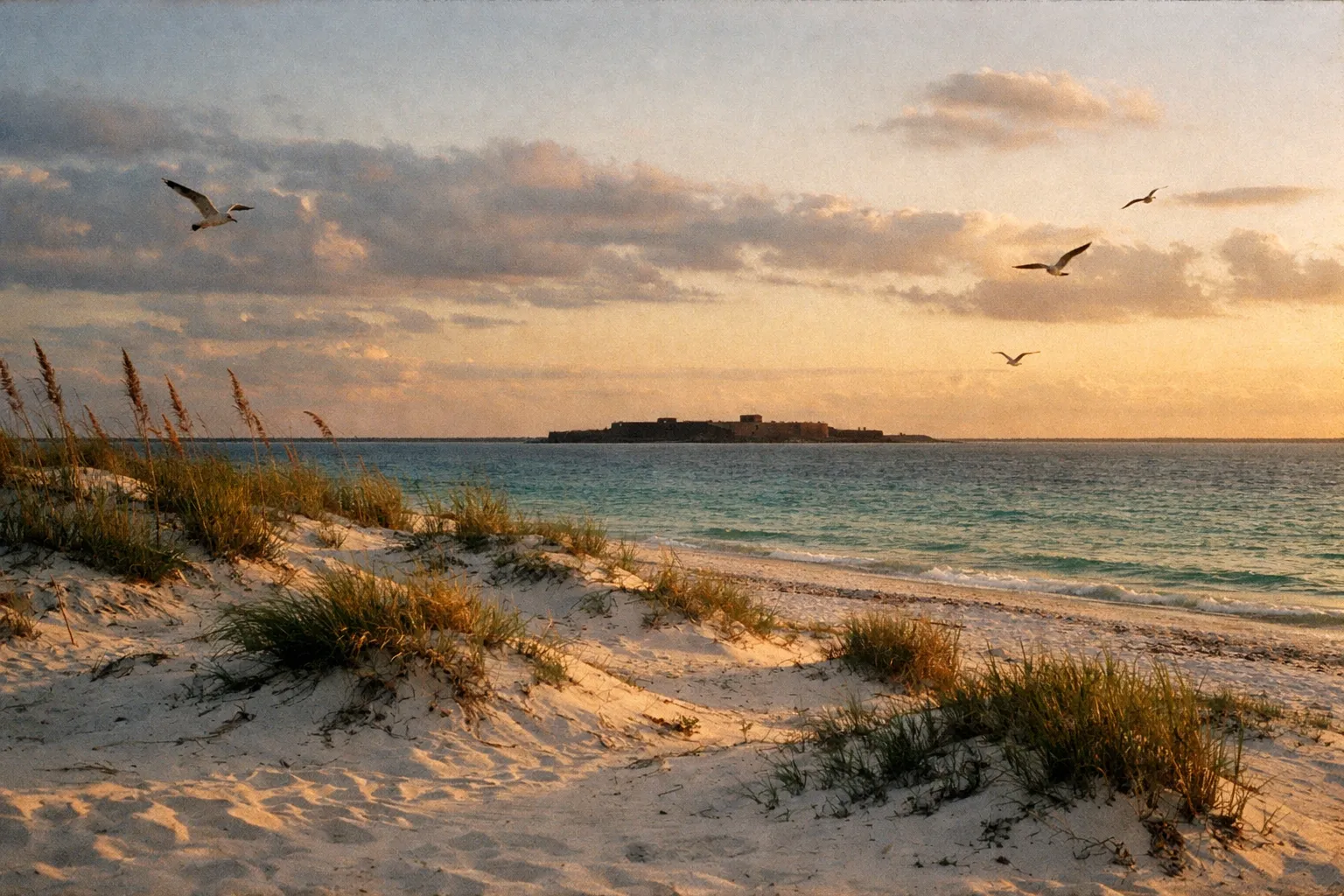
Entry is $25 per private vehicle for a 7-day pass, $20 for motorcycles, or $15 walk-in/bike. The America the Beautiful annual pass ($80) covers it and pays off quickly if you hit two or more national parks per year. Fort Pickens admission is bundled in.
What to do inside:
- Langdon Beach for swimming (lifeguards in summer)
- Fort Pickens loop for biking - 22 miles of paved roads with minimal traffic
- Naval Live Oaks trail system on the mainland side, 7.5 miles of shaded trails
Check the NPS website before you go. Hurricane repairs from Sally in 2020 and multiple seasons since have closed sections of Fort Pickens Road periodically, and the closures don’t always make it onto third-party travel sites.
Fort Pickens: Worth the Detour
Completed in 1834, Fort Pickens is the largest of the four masonry forts built to defend Pensacola Bay, and one of only four Southern forts that stayed in Union hands throughout the Civil War. Geronimo was imprisoned here in 1886 - there’s interpretive signage about it inside the casemates.
Fort Pickens, Gulf Islands National Seashore - Pensacola, Florida
Open daily 7 a.m. to sunset; admission is included with the Gulf Islands entry fee. Go on a weekday morning. The brick interior holds heat well into the afternoon in summer, and the parking lot fills by 10 a.m. on weekends. Bring a flashlight - some of the tunnels are unlit and the signage doesn’t warn you.
The campground inside the park has 200 sites with electric hookups, running $26-$40/night depending on season. Reservations open six months out on recreation.gov and summer dates go fast.
National Naval Aviation Museum: Worth the Detour (If You Can Get In)
This is the big one - 350,000 square feet of exhibits and 150+ restored aircraft, including a Curtiss NC-4 that made the first transatlantic flight in 1919. Admission is free.
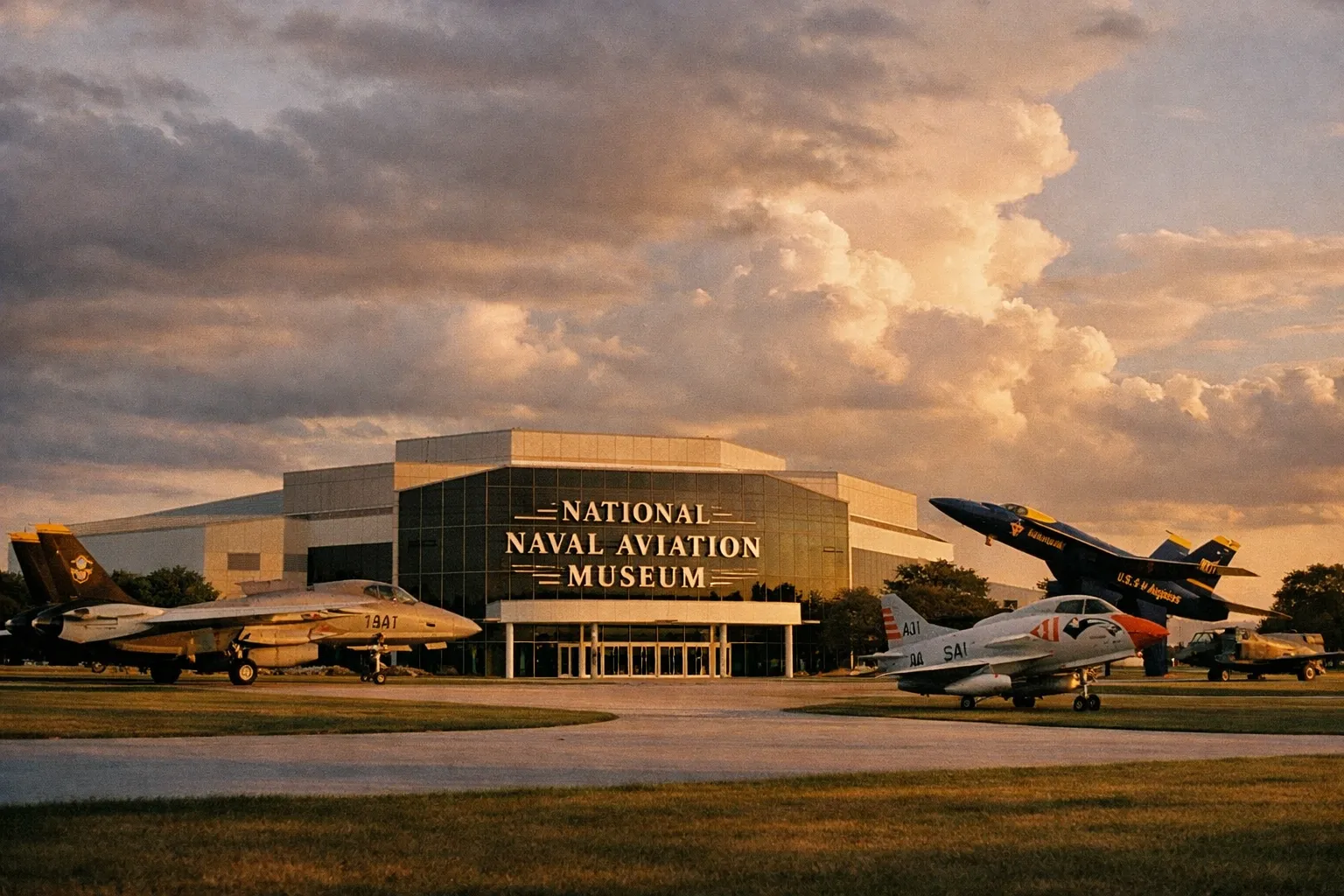
The catch: it sits aboard Naval Air Station Pensacola, and base access rules changed after the December 2019 shooting incident. Current policy generally requires a REAL ID-compliant driver’s license or passport, vehicle registration and proof of insurance, and a background check at the West Gate (allow extra time). Foreign nationals face additional restrictions and may need to coordinate access in advance.
Check the museum’s website within a week of your visit. Policies have shifted multiple times since 2020, and pre-2019 blog posts that say “just drive on base” are wrong.
The Blue Angels practice over the museum on select Tuesday and Wednesday mornings during their March-November training season. Arrive 60-90 minutes early for parking. After the practice, the pilots typically sign autographs at the museum’s atrium - bring a hat or photo.
Pensacola Lighthouse & Maritime Museum
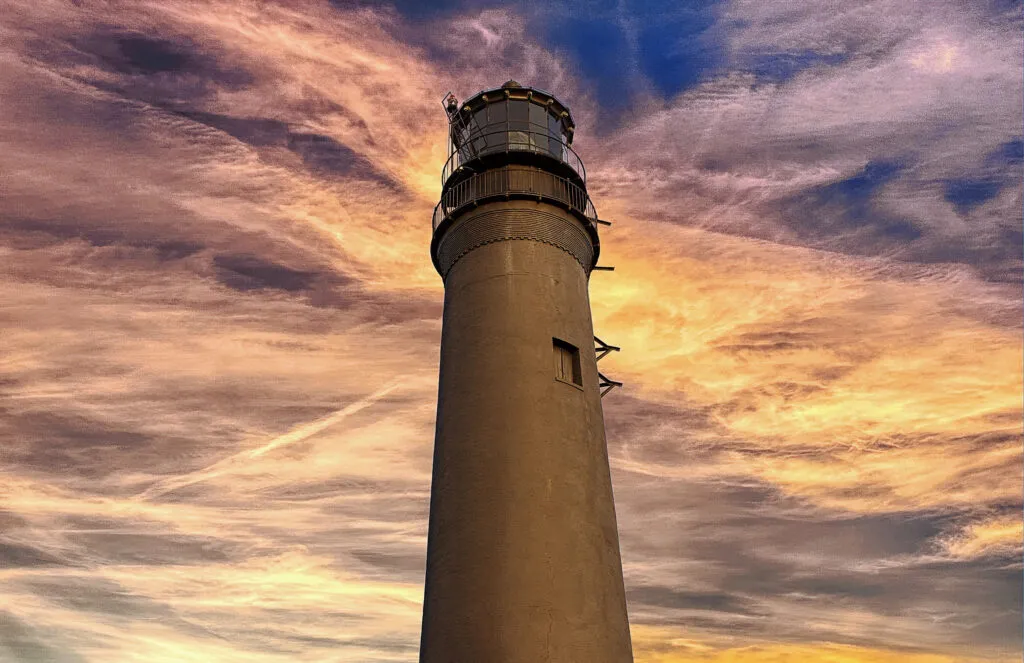
Also on NAS Pensacola property, so the same access rules apply. The tower was completed in 1859 and reaches 150 feet - 177 steps to the top (1). The climb earns you the best panoramic view in the area: the Naval Air Station to the west, the barrier islands to the south, and downtown across the bay.
General admission runs about $10-$12 for adults, $7 for kids 8 and up. Younger children aren’t allowed to climb. Combo tickets with the Aviation Museum’s IMAX bring the price down slightly.
The lighthouse keeper’s quarters house a small maritime museum with rotating exhibits on the area’s shipbuilding history. Worth 30-45 minutes if you’re already on base.
Historic Pensacola Village: Worth the Detour
The single best use of $12 in this city. The UWF Historic Trust manages 8.5 acres and 30+ historic structures in the downtown core (1). One ticket gets you into all of them for seven days - which is the right move. Drop in for an hour, leave when the weather shifts, come back later.
Standard pricing runs roughly $12 adults, $7 for kids 3-14, with senior and military discounts. The ticket covers the Pensacola Museum of History, the T.T. Wentworth Jr. Florida State Museum (the 1908 Mediterranean Revival building alone is worth a look), the Pensacola Children’s Museum, the Julee Cottage, Lavalle House, and other restored homes, plus self-guided tours of Old Christ Church.
Living history demonstrations run on select days - blacksmithing, colonial cooking, period crafts. Check the calendar before you go.
Palafox Street: Worth the Detour
The American Planning Association named Palafox one of the “10 Great Streets in America” in 2013, and the designation has held up. It’s a five-block stretch in downtown Pensacola lined with restaurants, bars, boutiques, and the Saunders Memorial Library, with most buildings dating to the late 1800s and early 1900s.
What to actually do here:
- Palafox Market every Saturday, 8 a.m.-1 p.m. - 100+ vendors, produce, local crafts, food trucks
- Gallery Night, third Friday of most months - galleries open late, streets close to traffic, live music
- Plaza Ferdinand VII at the southern end, where Andrew Jackson accepted Florida’s transfer from Spain in 1821
Food worth your time: The Fish House (grits a ya ya is the signature dish), Five Sisters Blues Café (gumbo, oxtails), Old Hickory Whiskey Bar (200+ whiskeys), and Bodacious Brew for coffee. I’ve eaten at all four - Five Sisters is the one I’d go back to first.
Pensacola Beach and the Gulf Pier
The public stretch of Pensacola Beach sits on Santa Rosa Island, accessed via the Bob Sikes Bridge ($1 toll each way, cash or SunPass). Parking near the boardwalk is metered or runs $10-$20/day in private lots. The free public access points east and west of the main strip are less crowded and cost nothing.
The Pensacola Beach Gulf Pier extends 1,471 feet into the water - one of the longest in the Gulf. A fishing pass runs roughly $7-$12 per adult depending on gear (2); sightseeing passes are about $2.35-$3. From the pier you’ll regularly see dolphins, sea turtles, rays, and tarpon, especially in early morning.
Bridge timing matters. On summer weekends, eastbound traffic onto the island backs up severely after 10 a.m. Leave before 9 or after 4 to avoid 30-60 minute delays.
Flag colors matter more. Red means strong surf and currents; double red means the water is closed and you can be fined for entering. Check the flag at any lifeguard tower before you swim. Gulf rip currents kill multiple swimmers in this region every year.
Perdido Key State Park
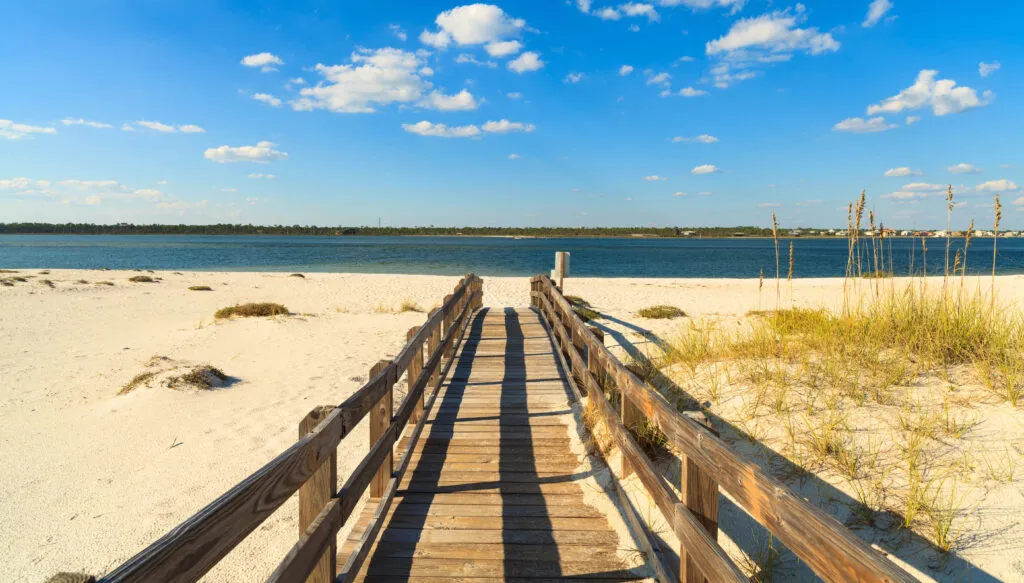
Twenty minutes west of Pensacola Beach, Perdido Key is quieter, less developed, and arguably has whiter sand than the main beach. The state park covers 247 acres along Old River and the Gulf.
Open 8 a.m. to sunset, 365 days a year. Entry is $3 per vehicle (cash or card at the iron ranger). There are restrooms and showers but no concessions - pack food and water. Excellent for shelling at low tide.
Big Lagoon State Park
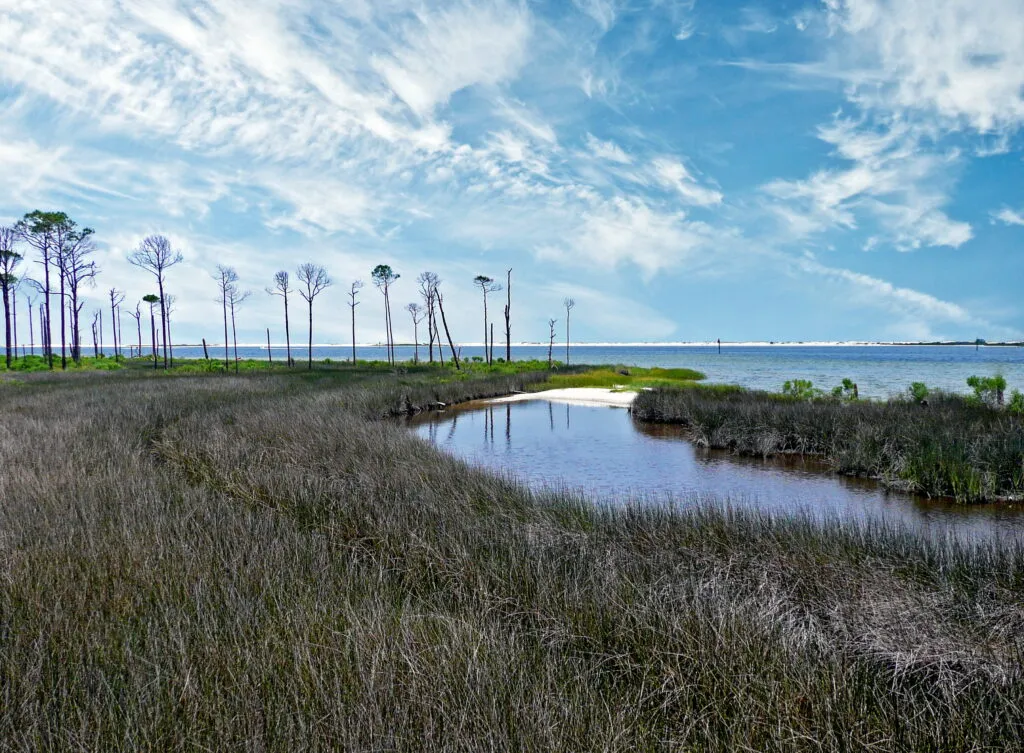
On the mainland side near Perdido Key, Big Lagoon covers 705 acres with hiking trails, a boardwalk through salt marsh, and an observation tower with views of the Intracoastal Waterway. Entry is $6 per vehicle (up to 8 people), open 8 a.m. to sunset.
Big Lagoon State Park - Pensacola, Florida
Good for paddleboarding the protected lagoon (rentals on-site in season), birding (it’s a designated stop on the Great Florida Birding Trail), and kid-friendly hiking - the trails are flat and well-marked. One of the more underused parks in this part of the Panhandle.
Pensacola Blue Wahoos Baseball
The Blue Wahoos are the Double-A affiliate of the Miami Marlins (they switched from the Reds in 2021), playing at the 5,000-seat Blue Wahoos Stadium right on the downtown bayfront. Tickets run $10-$20 depending on seat and night, parking $5-$10. Games run April through September, typically Tuesday-Sunday with 7:05 p.m. starts.
Even non-baseball fans will enjoy a sunset game with the bay behind the outfield wall. The stadium has been ranked among the top Southern League experiences by Ballpark Digest, and it’s easy to see why - the setting does most of the work.
Pensacola Ice Flyers Hockey
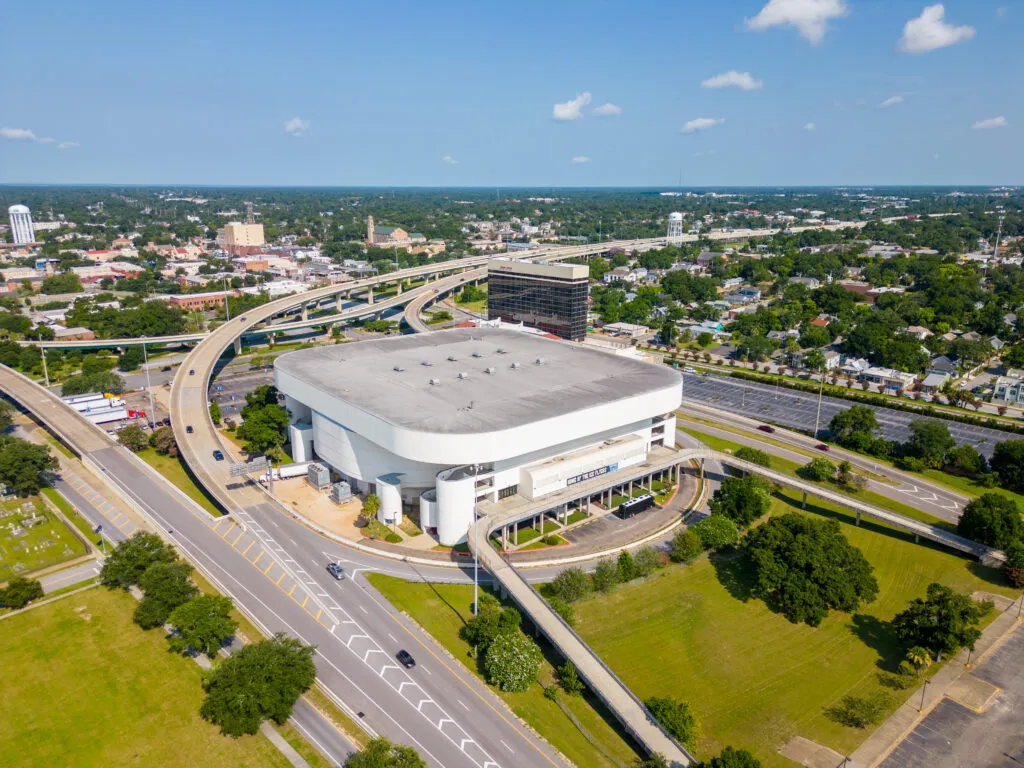
Yes, hockey in Florida. The Ice Flyers play in the Southern Professional Hockey League from October through March at the Pensacola Bay Center. Single-game tickets run $15-$35. The team has won multiple league championships and the games run hot - fights are common.
Pensacola Bay Center - Pensacola, Florida
Gulf Breeze Zoo
A legitimate zoo with 800+ animals across 50 acres in nearby Gulf Breeze. The Safari Express train ride is the differentiator - it travels through a 30-acre free-range area where giraffes, zebras, and rhinos roam without fences between you and them. Admission runs about $24 adults, $16 kids (3-11), with the train ride included.
Giraffe feeding is $5 extra. Worth it for kids.
Dolphin Cruises
Several operators run 1.5-2 hour dolphin cruises from Pensacola Beach and the downtown marina. Pricing typically runs $35-$55 for adults, $20-$35 for kids, with sunset cruises running $5-$10 more.
Reliable operators include Condor Sailing (catamaran, smaller groups) and Frisky Mermaid (larger boats, faster pace). Book 48-72 hours ahead in summer - capacity-limited tours sell out. You’ll see bottlenose dolphins on nearly every trip; they routinely surf the wake of moving boats. Mornings and late afternoons have better activity than midday.
Glow Paddle at Night
Clear-bottomed kayaks fitted with LED lights, paddled on the calm waters of Big Lagoon or Santa Rosa Sound after dark. Sessions run 1-1.5 hours and cost roughly $50-$70 per person (3). The lights attract small fish, and you’ll often see them swimming directly below you.
Best on new-moon nights for darkness, or full-moon nights for ambient visibility. Skip if it’s windy - choppy water kills the experience.
Naval Live Oaks Nature Preserve
President John Quincy Adams set aside this peninsula in 1828 to grow live oaks for Navy shipbuilding - the dense, curved wood was essential for warship hulls. The trees never got harvested, the Navy switched to ironclads, and the result is a 1,378-acre preserve with 7.5 miles of hiking trails through some of the oldest live oak stands on the Gulf Coast.
Free entry. Trails are flat, shaded, and well-marked. The bayfront picnic area is one of the most overlooked spots in the area - I’ve been there on a Saturday in May and had it nearly to myself.
Joe Patti’s Seafood
A working seafood market that’s been operating since the 1930s. You walk in, take a number, and watch as your order is pulled fresh from ice - Gulf shrimp, snapper, grouper, oysters, blue crab. Prices are wholesale-adjacent and noticeably lower than restaurants.
It’s not a restaurant in the traditional sense, but there’s a small sushi counter, a deli with smoked fish dips and gumbo, an in-house bakery, and a wine shop. If you’re staying in a condo with a grill, buy ice and a cooler here.
Open daily 8 a.m. to 6 p.m. The line moves quickly.
Seville Quarter
Seven themed venues under one roof in a restored 1880s building downtown. The signature spot is Rosie O’Grady’s, where the Dueling Piano Show runs Thursday through Saturday nights - two pianists taking song requests and roasting the crowd. Cover is typically $5-$10 after 8 p.m.
Other rooms include Apple Annie’s (acoustic music), the End o’ the Alley Bar, and Lili Marlene’s (1940s aviation theme, the most polished of the bunch). One cover gets you into all of them.
Plaza De Luna Waterfront Park
The southernmost tip of Palafox Street, jutting out into Pensacola Bay. It’s free, it has benches, and the sunset views back across the bay are legitimately good. Splashpad runs in warmer months for kids.
A 20-minute stop, not an afternoon destination.
Graffiti Bridge
A railroad trestle on 17th Avenue that’s been continuously repainted by local artists since the 1980s - the city allows it, and the murals change weekly. It’s the most-photographed spot in Pensacola that doesn’t appear in older guidebooks. Free, drive-up, takes 15 minutes.
McGuire’s Irish Pub
An institution. Open since 1977, with over a million dollar bills stapled to the walls and ceiling. The food is solid Irish-American - shepherd’s pie, corned beef, their own brewed beer - the portions are large, and the senate bean soup costs 18 cents, a tradition they’ve kept for decades.
Reservations recommended on weekends. Late-night menu runs until close.
Pensacola Children’s Museum
Included in the Historic Pensacola ticket, which makes it a strong value-add if you’re traveling with kids 8 and under. Two floors of hands-on exhibits on local history, maritime trades, and Native American culture. Plan 60-90 minutes.
Worth knowing: it’s smaller than typical big-city children’s museums. Don’t make it your full afternoon plan - pair it with the adjacent Lavalle House or a walk to Plaza Ferdinand.
How to Spend a Day in Pensacola
13 hoursA practical itinerary covering key attractions, meals, and timing for a full day. Budget roughly $80-$120 per adult for a full day including Gulf Islands entry, Historic Pensacola Village, lunch, and evening entertainment - not counting lodging or gas. A 3-day trip for two, including mid-range lodging, runs approximately $900-$1,400 total.
- 1
8:00 a.m. - Morning coffee and walk
Start with coffee at Bodacious Brew on Palafox Street, then stroll through Plaza Ferdinand and Seville Square (about 15 minutes).
- 2
9:00 a.m. - Historic Pensacola Village
Buy a ticket and spend 2 hours visiting 2-3 museums, focusing on T.T. Wentworth and the Pensacola Museum of History.
- 3
11:30 a.m. - Lunch
Eat at Five Sisters Blues Café or The Fish House on Palafox Street.
- 4
1:00 p.m. - Pensacola Beach
Drive 15 minutes to the beach (longer on summer weekends) and spend two hours on the sand.
- 5
3:30 p.m. - Fort Pickens
Tour the fort and walk a beach section inside Gulf Islands National Seashore.
- 6
6:30 p.m. - Dinner downtown
Return to downtown Pensacola for dinner and sunset drinks at Plaza De Luna or Perfect Plain Brewing rooftop.
- 7
9:00 p.m. - Evening entertainment
Attend the Dueling Piano Show at Seville Quarter or have nightcaps at McGuire's Irish Pub.
Getting to Pensacola
By air: Pensacola International Airport (PNS) has direct service from Atlanta, Dallas, Houston, Charlotte, and Chicago on Delta, American, Southwest, and United. Fares from major Southeast hubs run $150-$300 round-trip; from the Northeast or Midwest, budget $250-$450. The airport is 5 miles from downtown - a rideshare runs $12-$18, a rental car $40-$70/day.
By car: From Atlanta it’s 4.5 hours via I-65 S to I-10 W. From New Orleans it’s 3 hours east on I-10. From Tampa it’s 7 hours via I-75 N to I-10 W. Pensacola sits at the western edge of the Florida Panhandle, so it’s more accessible from the Gulf South than from central or south Florida.
What most guides get wrong: Nearly every roundup leads with Pensacola Beach and treats the city as a beach-only destination. The downtown core - Historic Pensacola Village, Palafox Street, the Naval Aviation Museum - is what separates Pensacola from every other Panhandle beach town. Visitors who skip downtown and spend three days on the sand are missing the actual differentiator. Also: most guides don’t mention that Tristán de Luna established a settlement here in 1559, six years before St. Augustine - making Pensacola the site of the first European settlement in what is now the U.S., a claim St. Augustine’s tourism machine has largely buried.
Pensacola or Destin: Which Is Better?
The honest answer is they serve different trips.
Choose Destin if you want larger resorts with full amenities, a more developed dining-and-shopping scene (Destin Commons, HarborWalk Village), and don’t mind higher prices and bigger crowds. Destin draws a more concentrated tourist economy with more chain dining and bigger condo towers.
Choose Pensacola if you want a real city alongside the beach (downtown matters here), better historical depth, 15-25% lower lodging costs on average, and less crowded beaches inside Gulf Islands National Seashore.
Beach quality is roughly equivalent - same quartz sand, same emerald water, same barrier-island geography. According to visitpensacola.com (2), lodging in Pensacola runs 15-25% lower than comparable Destin properties in peak season. Destin’s harbor is more developed for charter fishing; Pensacola has more free public access and a stronger cultural calendar.
For a first-time visitor splitting the difference: stay in Pensacola, drive 45 minutes east to Destin for one day if you want to compare.
What Pensacola Is Best Known For
Three things drive Pensacola’s identity:
-
Naval aviation history. It’s the home of the Blue Angels and the National Naval Aviation Museum, and “The Cradle of Naval Aviation” is the city’s official nickname. Naval pilots have trained here since 1914.
-
Being the first European settlement in the U.S. Tristán de Luna landed in 1559 - six years before St. Augustine. A hurricane destroyed the settlement and it wasn’t continuously occupied, which is why St. Augustine usually gets the title. Pensacola’s historians will correct you on this.
-
White-sand beaches. The quartz sand of Santa Rosa Island and Perdido Key is some of the brightest, finest sand in North America - geologically distinct from the Atlantic-coast beaches and most Caribbean destinations.
Free Things to Do in Pensacola
Twelve attractions that cost nothing:
- Pensacola Beach public access points (parking may apply)
- Graffiti Bridge
- Plaza De Luna and the downtown waterfront
- Naval Live Oaks Preserve (7.5 miles of trails, free)
- Palafox Market (Saturdays)
- Gallery Night (third Friday most months)
- Edward Ball Nature Trail on the UWF campus
- Veterans Memorial Park (half-scale Vietnam Wall replica)
- St. Michael’s Cemetery (Florida’s second-oldest, free walking tours scheduled)
- Bands on the Beach (free Tuesday concerts, April-October)
- Innerarity Point Park
- National Naval Aviation Museum (free, base access required)
Nighttime in Pensacola
The downtown nightlife concentrates in two zones: Palafox Street (cocktail bars, breweries, the symphony, Vinyl Music Hall) and Seville Quarter. Pensacola Beach has its own scene centered on the Boardwalk and Casino Beach Bar.
Worth your evening:
- Vinyl Music Hall - 525-capacity venue in a former Masonic temple, books regional and national touring acts
- Perfect Plain Brewing Co. - best craft beer in town, rooftop seating
- Old Hickory Whiskey Bar - 200+ whiskeys, knowledgeable bartenders
- Bands on the Beach at Gulfside Pavilion (Tuesdays, April-October, free)
- Flora-Bama Lounge - 30 minutes west on the Alabama state line, legitimate roadhouse classic
Frequently Asked Questions
- What is Pensacola Florida best known for?
- Pensacola is known for its naval aviation heritage, being the site of the first European settlement in the U.S., and its distinctive white quartz beaches on Santa Rosa Island and Perdido Key.
- How do you spend a day in Pensacola?
- A practical day includes morning museum visits in Historic Pensacola Village, lunch on Palafox Street, an afternoon at Pensacola Beach, a late afternoon tour of Fort Pickens, and evening entertainment downtown.
- Is Pensacola or Destin better for vacation?
- Pensacola offers a more authentic city-beach experience with historical depth and lower prices, while Destin has larger resorts and a more developed tourist infrastructure. Both have similar beach quality.
- What are some lesser-known pensacola things to see?
- Near Pensacola, overlooked spots include Naval Live Oaks Preserve, the less crowded western Gulf Islands National Seashore, Edward Ball Nature Trail, and St. Michael's Cemetery. These are the pensacola things to see that most visitor guides skip entirely.
- When is the best time to visit Pensacola?
- April to mid-May and late September to October are best for warm water, lower lodging costs, and reduced hurricane risk, avoiding peak summer crowds and storms.
- Is the National Naval Aviation Museum free?
- Admission is free, but visitors must comply with strict base access rules including REAL ID and background checks. Foreign nationals may face additional restrictions.
- How many days do you need in Pensacola?
- Three full days cover downtown, beaches, Fort Pickens, and the Naval Aviation Museum. A fourth day allows for additional activities like Perdido Key or a Blue Wahoos game.