Things to Do in Tamarindo, Costa Rica - And Whether It’s Right for You
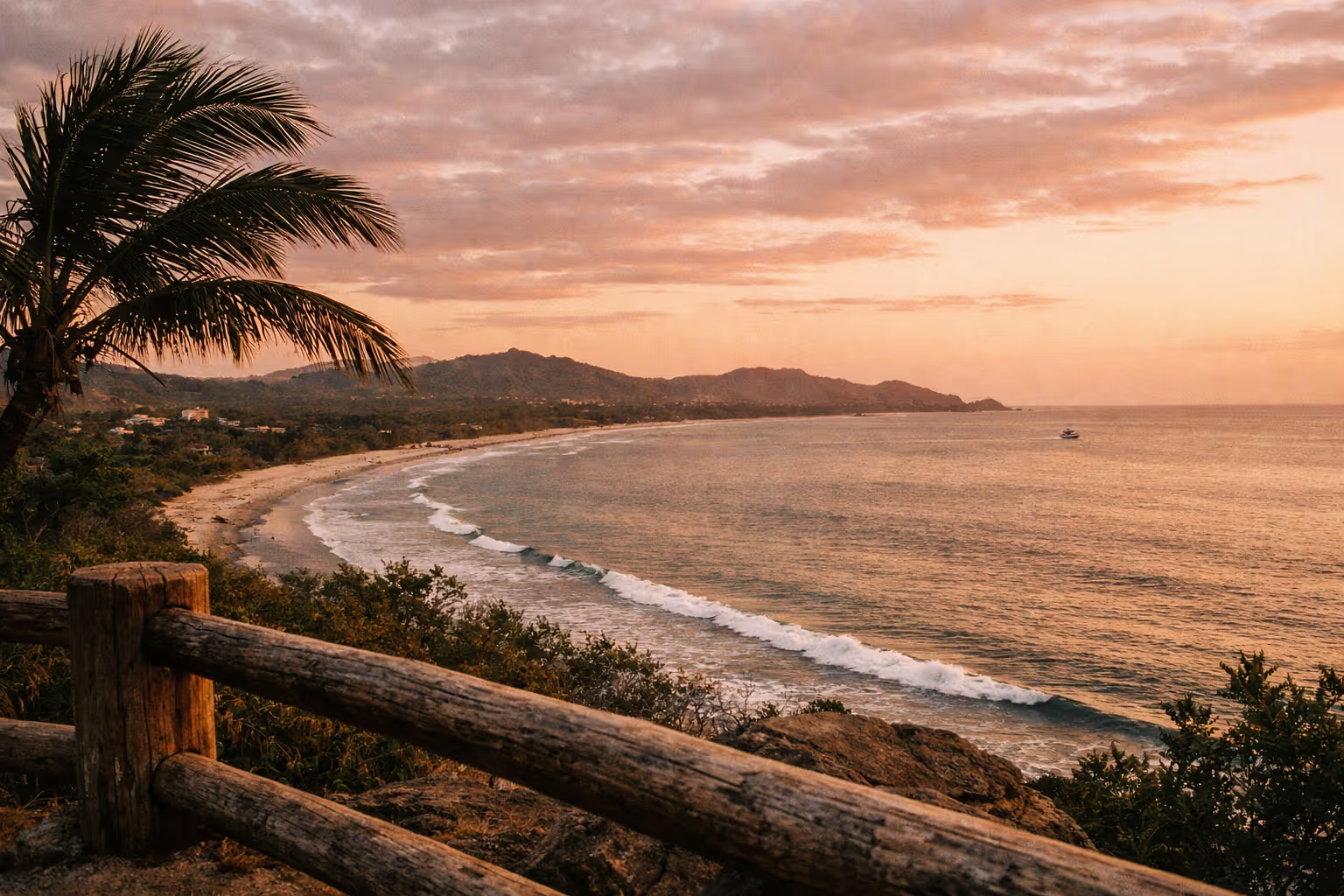
If you’re wondering about things to do in Tamarindo Costa Rica, this beach town offers a variety of options along its sandy bay, which stretches roughly 2 km (1.2 mi). The town runs parallel to the beach, with most hotels, restaurants, surf schools, and shops located along one main strip just behind the sand, making it easy to explore most of it within a 10 to 20 minute walk.
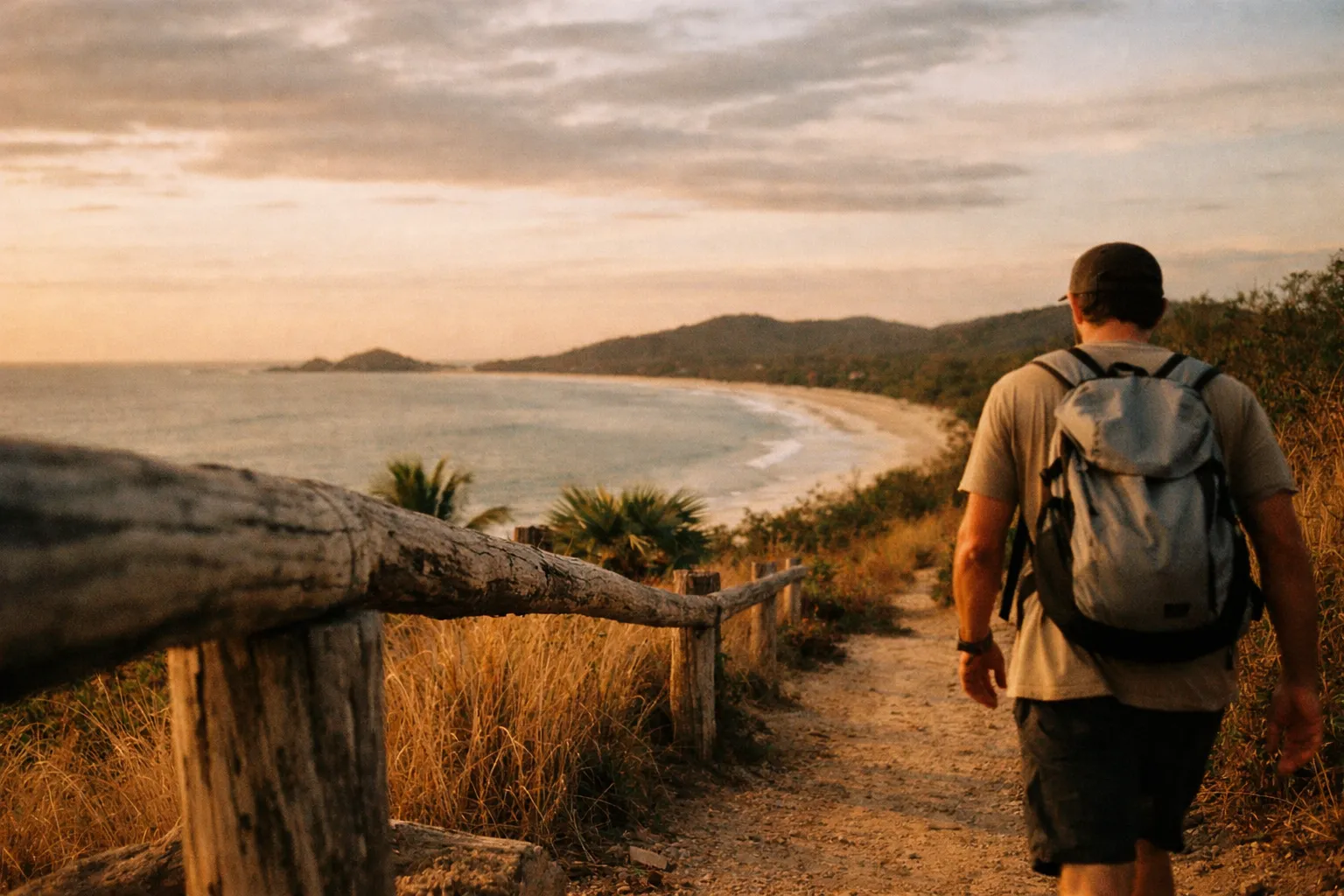
Set your expectations honestly before you arrive. This is a developed beach town with traffic, nightlife noise, and construction in parts. If you came for a sleepy village, you will be disappointed. If you came for variety and convenience without a car, it delivers.
On safety, Tamarindo is generally fine to walk around. The town is well-trafficked and active into the evening. The main concern is petty theft - bag snatching, car break-ins, and theft of unattended belongings on the beach are the issues the U.S. State Department flags for tourist centers in Costa Rica. Don’t leave gear on the sand while you swim, don’t leave valuables visible in rental cars, and keep your phone out of sight in crowds. No special permits are needed for beaches, surfing, or nightlife.
Who it suits: first-timers to Costa Rica, surfers at any level, couples, families, solo travelers, and anyone focused on food and nightlife. Who it doesn’t: travelers chasing seclusion.
Seasons matter here. The dry season runs December through April with minimal rainfall, which overlaps with peak prices. The most consistent surf swells land May through August. Leatherback turtle nesting at nearby Las Baulas peaks December through February - if that’s on your list, plan around it specifically.
Getting to Tamarindo from Liberia Airport
Most visitors fly into Liberia (LIR), which sits under a two-hour drive away down a paved highway. Shared shuttles run roughly $25 to $35 per person each way, while private transfers for small groups run about $120 to $180 per vehicle depending on size and season (2). A rental car runs $40 to $80 per day with mandatory insurance - useful for day trips, but not required for the town itself.
Getting Around Town
Tamarindo is walkable. Short taxi rides within town usually run $4 to $10, and golf cart rentals - common here, and genuinely practical - go for around $50 to $80 a day. You only really need a car if you plan to explore multiple beaches or self-drive a day trip inland.
Tamarindo Beach - What to Expect on the Sand
Playa Tamarindo is roughly 2.5 km (1.5 mi) of light-colored sand with a gentle slope and sandy bottom, which is exactly what makes it work for beginner surfers. The beach gets busy in front of town - surf schools line the southern half, and the water turns calmer near the estuary at the northern end. This is an active beach, not a quiet cove.
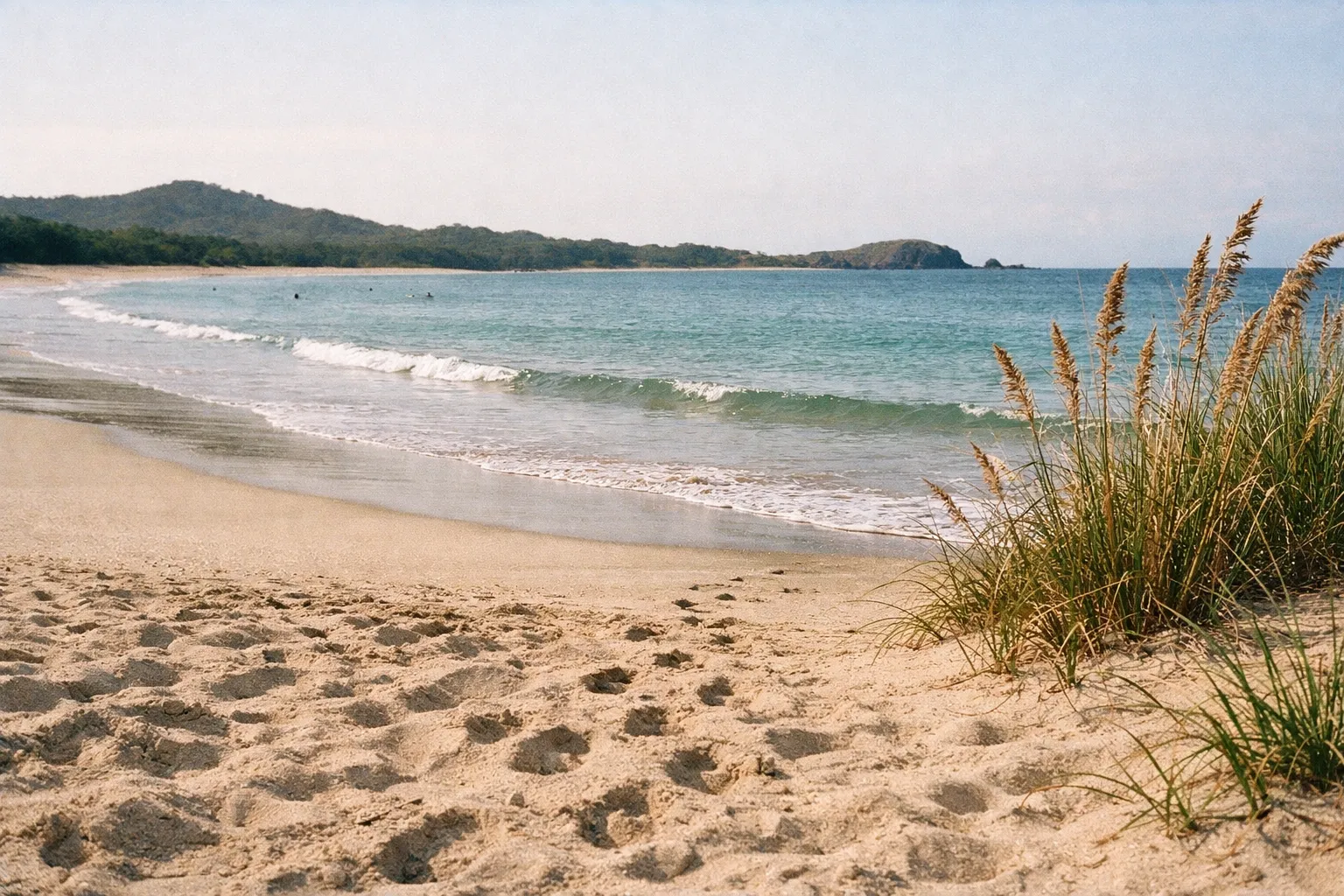
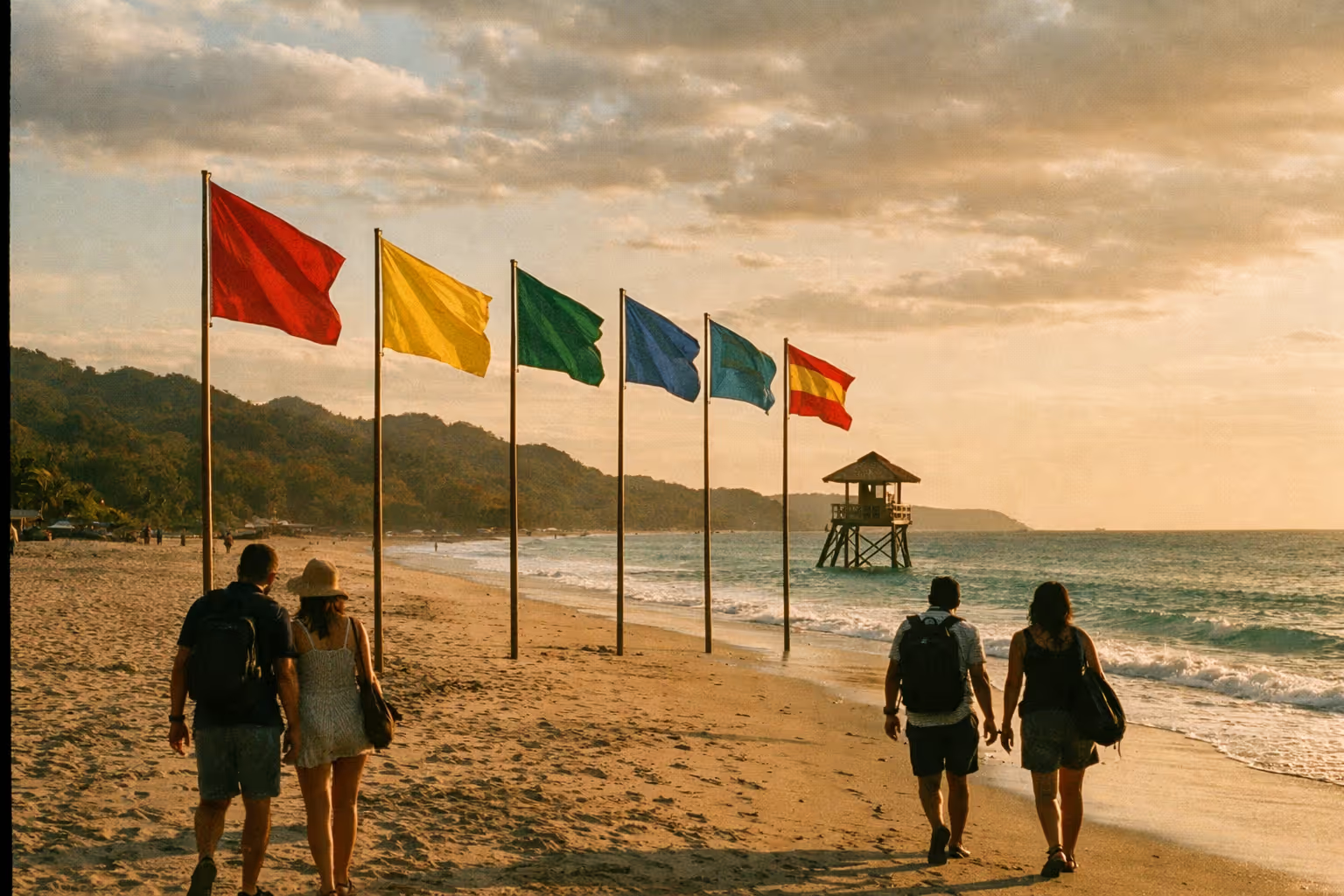
Time it right. A sunrise stroll around 5:30 a.m. in dry season gets you the sand mostly to yourself. By 9 a.m., surf lessons fill the southern stretch. Sunset is the main daily event - locals and visitors gather along the central beach for the sun dropping straight into the Pacific almost year-round. For a less-crowded version, walk 15 to 20 minutes south toward Langosta or north toward the estuary.
The beach itself is free. Organized offerings - surf lessons, beach chair rentals, catamaran pickups - are paid add-ons sold by private operators, not the town (8). Loungers and umbrellas at beach clubs cost extra.
A swimming note: the shorebreak can be rough for small kids and weak swimmers. Tamarindo’s reputation as a surf destination means regular wave action, and the water earns it. For calmer conditions, head to Langosta at mid-tide or Conchal on a day trip. And the UV index is high year-round - reapply sunscreen, drink water, and never leave gear unattended while you’re in the water.
Nearby Beaches Worth the Trip
Don’t treat the nearby beaches as interchangeable. Each has a distinct character, and picking the wrong one for what you want wastes a half-day.
Nearby Beaches at a Glance
| Central Tamarindo | Langosta | Playa Grande | Conchal | Avellanas | |
|---|---|---|---|---|---|
| Vibe | Busy, active | Quieter, upscale | Less crowded, natural | Clear water, shell beach | Intermediate surf, beach bar |
| Best For | Beginner surf, nightlife | Sunset walks, mid-tide swimming | Quieter waves, turtle nesting | Swimming, shell-gazing | Intermediate surf |
| Swim vs. Surf | Surf mostly | Swim & surf | Surf | Swim | Surf |
| Distance from Tamarindo | 0 km | 2-3 km south | 13 km north | 40-50 min drive north | 30 min south |
| Car Needed? | ✗ | ✗ | ✓ | ✓ | ✓ |
Short version: Conchal is for swimming, Avellanas is for intermediate surf, Playa Grande is for quieter waves, and Langosta is for a calmer evening. Pick based on what you actually want to do.
Surfing in Tamarindo - From First Lesson to Boat Charters
Tamarindo surfing is genuinely beginner-friendly. The sandy bottom and forgiving white-water waves, combined with several established schools, make it one of Costa Rica’s most accessible places to learn. Witch’s Rock Surf School is the most-cited beginner option, repeatedly recommended for its English-speaking instructors (1)(2).
Beginner Surf Lessons - What to Expect
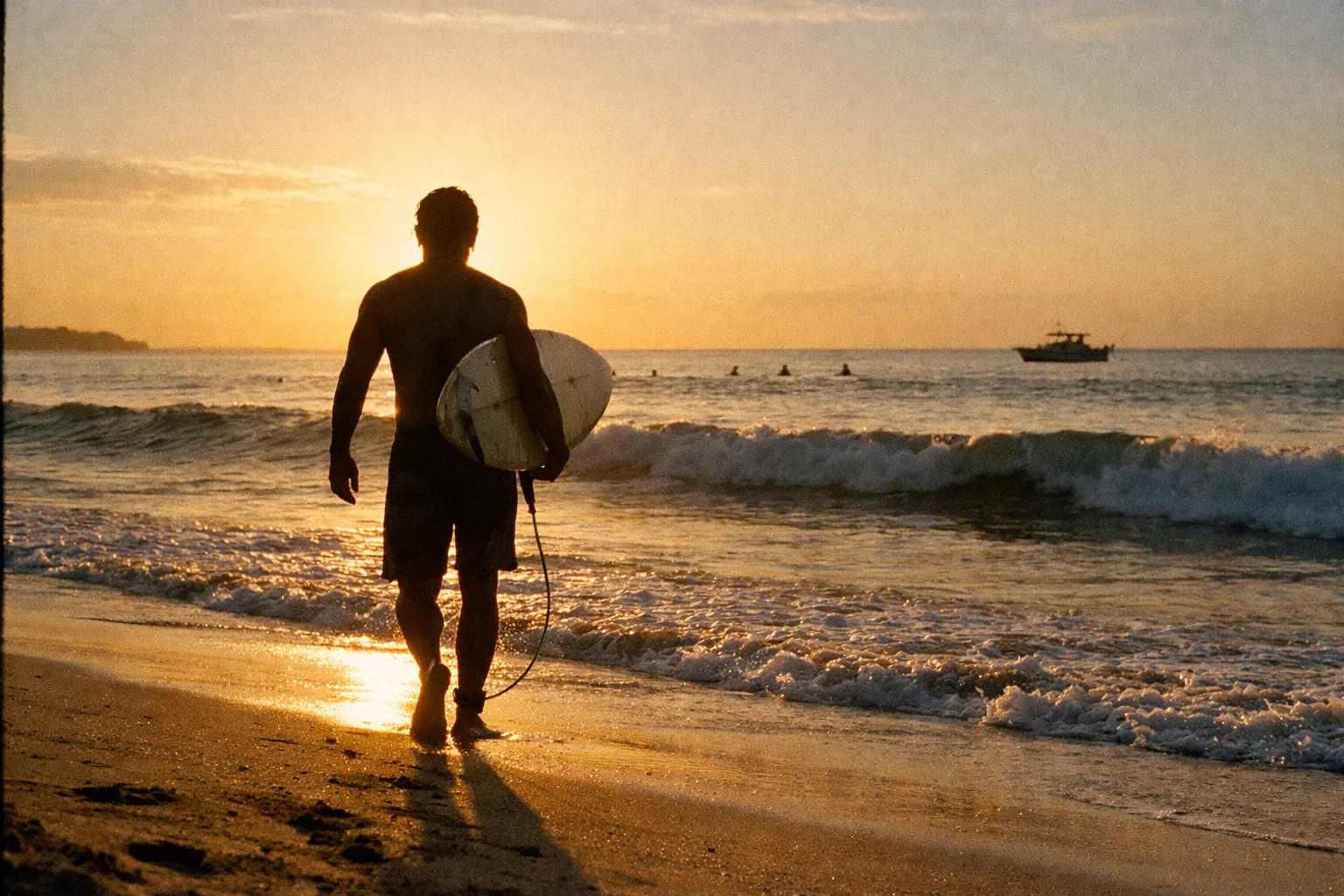
Group lessons generally run $40 to $60 for a 2 to 3 hour session, including board and rash guard - one of the more affordable structured activities in town (2). Private lessons typically run $70 to $120 per person depending on school and season (2).
The only real prerequisite is basic swimming ability. No prior surf experience needed. Ask schools about group size caps before you book - two to four students per instructor is the sweet spot. Book a lesson early in your trip so you have time to rent a board and practice solo afterward. Schedule it for early morning or late afternoon: cooler temperatures, fewer crowds, and noticeably better wave quality.
Intermediate and Advanced Options
Once you’re past the lesson stage, soft-top rentals run about $15 to $20 a day, with fiberglass shortboards closer to $25 to $35 (2). Intermediate surfers can work Tamarindo, Langosta, or head to Playa Avellanas - 30 minutes south - for multiple sand-bottom breaks. Playa Grande, just across the estuary, offers similar conditions with fewer people in the water.
The most consistent swells land May through August, though Tamarindo works year-round for beginners. December through March can bring bigger waves and bigger crowds simultaneously.
For advanced surfers, the reef breaks at Witch’s Rock and Ollie’s Point sit inside Santa Rosa National Park, accessed by boat. Full-day charters out of Tamarindo typically run $300 to $500 per person as small-group trips (2). These are not beginner waves - skip them unless you can already handle a reef break confidently. Scouted the Witch’s Rock charter departure in dry season: boats leave the Tamarindo estuary around 6 a.m. and the crossing takes roughly 45 minutes; swells at the break were running 6 to 8 feet on a moderate day, with a fast right that closes out quickly if you misread the entry.
Water Activities Beyond Surfing
If you don’t surf, the water still delivers.
The sunset catamaran cruise is the most popular non-surf activity, and it earns that status. It’s social, works for non-swimmers, and ends with the sunset from the water. Trips typically run 4 to 5 hours with open bar, snacks, and a snorkeling stop, costing about $70 to $95 per person on shared boats (2). Departures fall around 1 to 2 p.m. with a sunset return. Book in advance - these sell out around holidays without much warning. Plan it for a day with a clear afternoon forecast, and it pairs well with a morning surf lesson.
For divers and snorkelers, the main destination is the Catalina Islands. Dives there reach depths of 60 to 70 feet (18 to 21 m) and regularly feature white-tip reef sharks, manta rays, eels, and schooling fish - this is a real marine-life destination, not a shallow reef paddle. Two-tank scuba trips run roughly $120 to $140; snorkeling excursions to the same area run around $90 per person (2). Open-water certification is usually required for deeper dives, though intro dives are available for first-timers.
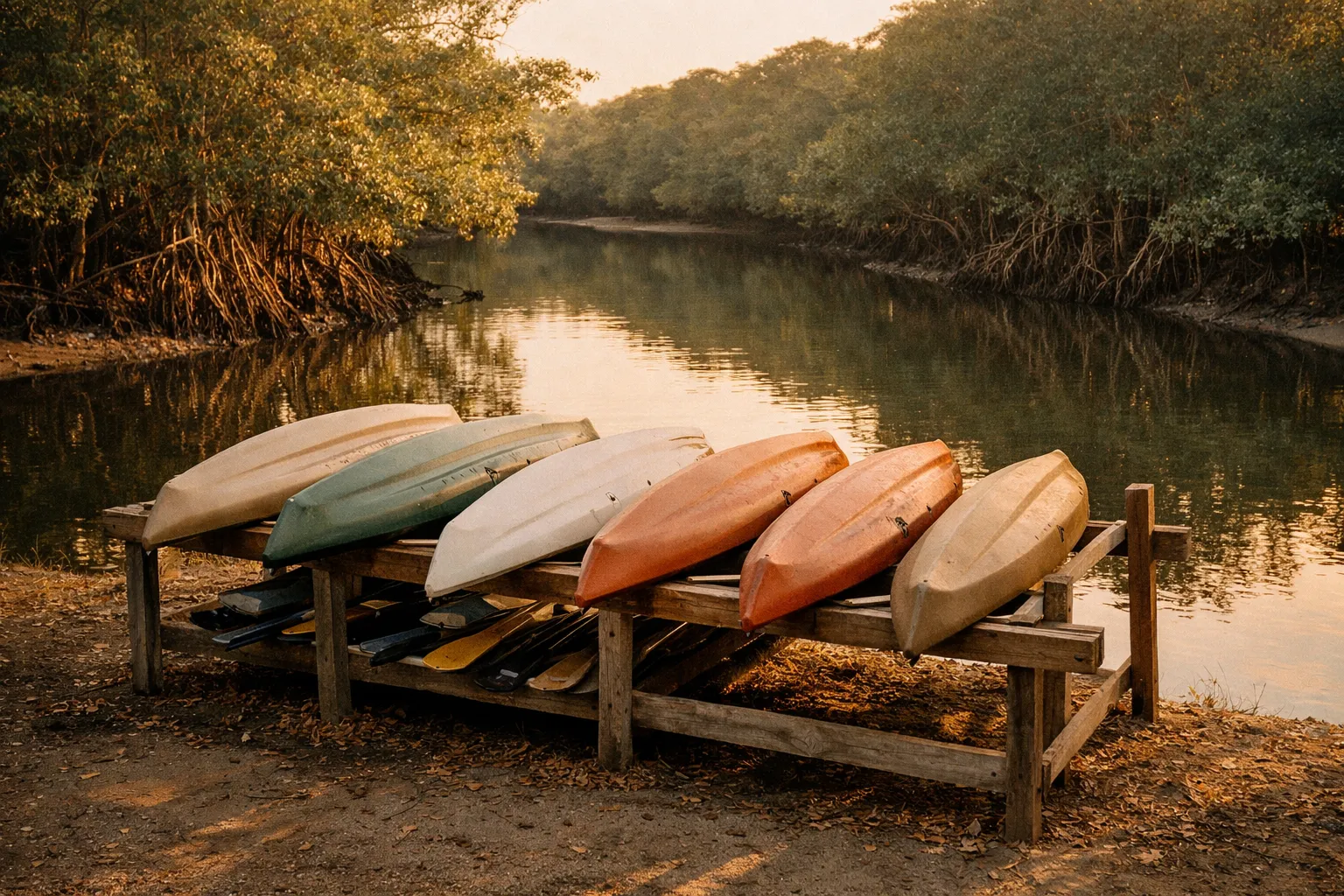
Sport fishing runs from Tamarindo bay - offshore for marlin, sailfish, and tuna, in-shore for roosterfish and snapper, in half-day and full-day charters. For something slower, kayaking the estuary and mangroves of the Tamarindo National Wildlife Refuge makes a good low-key morning, either self-guided or with a guide.
Whale and dolphin watching usually gets folded into catamaran or boat outings. Dolphins appear almost year-round. Humpback whales are typically seen July through March during their Pacific migration (3).
Wildlife Day Trips from Tamarindo
Tamarindo functions as a launch pad, not just a beach stop. The wildlife here is guide-dependent - self-directed wandering rarely delivers the same results - so advance booking is standard practice, not optional.
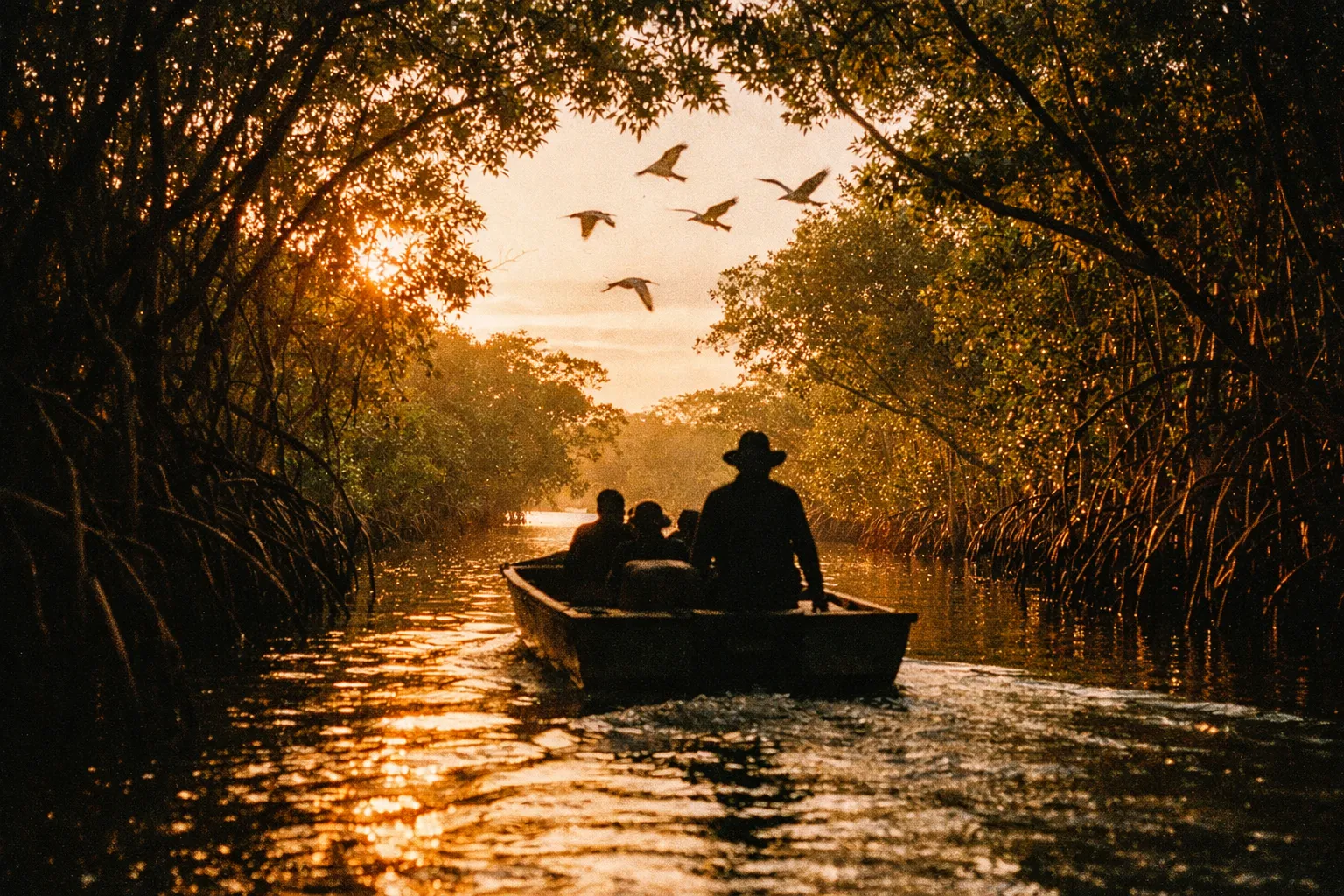
The mangrove and estuary boat tour into the adjacent wildlife refuge is one of the town’s most reliable experiences. Tours run 2 to 3 hours and cost about $35 to $50 per person, focusing on crocodiles, howler monkeys, birds, and iguanas along the river (7). It’s an easy win for families and photographers. Book with a licensed guide - the quality gap between licensed and unlicensed operators here is real.
For ethical wildlife encounters on land, the Las Pumas Rescue Center near Cañas - roughly a 1.5 to 2 hour drive from Tamarindo - houses rehabilitated big cats and other wildlife, with a modest entrance fee of around $10 to $15 per adult that goes directly toward animal care (3). The APAMI Monkey Park Foundation is another option increasingly highlighted in recent guides for responsible wildlife viewing.
Turtle Nesting Tours at Las Baulas - Timing and What to Know
Las Baulas National Marine Park at Playa Grande, 13 km (8 mi) north, hosts one of the world’s largest leatherback nesting sites. Nesting activity generally peaks December through February, and tours run only at night during the season (7). Group sizes and beach access are tightly controlled by park rangers - this isn’t a casual walk-up experience.
The rules are strict and enforced: no flash photography, no touching the animals (3). Breaking them can result in fines, and rangers take it seriously. The tour itself is physically straightforward - mostly walking on sand in the dark - but you must book through a certified guide. Aim for early or late in the season (December or February) to avoid the heaviest crowds, since prime dates sell out well ahead.
Day Trips to Rincón de la Vieja and Beyond
Rincón de la Vieja National Park is the most popular full-day trip inland, about 2 to 2.5 hours away. Combination tours bundle hiking, hot springs, mud baths, ziplining, and river tubing, generally priced around $125 to $160 including transport and lunch (2). Park entrance for foreigners is $15, and the park is closed Mondays. The summit hike to the active crater is closed indefinitely; the Cangreja waterfall loop is the main hike at 10 km (6.2 mi) round trip - bring more water than you think you need.
Palo Verde National Park offers a river boat safari heavy on crocodiles and birds, and Barra Honda has caves, though it’s a less common pick. Be honest with yourself about the trade-off: a full-day inland trip eats a beach day. Prioritize accordingly.
Land-Based Adventures - Ziplines, ATVs, and More
The active land options round out the offering, though they’re rarely the highest-value use of a day in Tamarindo.
Zipline and canopy tours run as half-day outings with multiple cables, often combined with horseback riding or hot springs, priced roughly $60 to $100 per person depending on length and add-ons (2). Good for adrenaline without a full-day commitment.
ATV tours commonly run 2 to 3 hours at around $70 to $100 per driver, taking dirt roads and tracks to viewpoints and nearby beaches (2). They’re better in dry season - the roads turn muddy in the green months, and the dust in peak dry season is its own problem. Clarify photo and GoPro package pricing upfront; many operators charge extra for professional pictures, and it’s easy to miss in the booking conversation.
Horseback riding on the beach and in the surrounding hills is a standard offering, usually billed as 2-hour rides suitable for beginners. And combo adventure days like the Guachipelín Adventure Tour bundle ziplining, horseback riding, river tubing, and hot springs into a single 10 to 12 hour excursion (2) - a useful “do-it-all” option if you’re short on time and want to check multiple boxes in one go.
Minimum ages and weights vary by operator (often 8 to 12 years for zipline and ATV), and closed-toe shoes are usually required. Honest take: generic ATV tours out of Tamarindo are frequently cited as skippable. The water and wildlife options tend to deliver more per hour.
Markets, Culture, and the Weekly Schedule
Most visitors miss the fixed weekly market schedule entirely by treating Tamarindo as only a beach destination. That’s a mistake - these are active current fixtures and some of the clearest windows into local life you’ll find in town.
The Tama Market runs every Saturday from 8 a.m. to 2 p.m. behind Plaza Tamarindo near the skatepark, with local produce, jewelry, crafts, and prepared food stands (2). No booking needed - just show up. It’s the best place to assemble a cheap picnic or pick up souvenirs without the markup of the surf shops.
The Tamarindo Moonlight Market (the night market) runs Thursdays from 6 to 9 p.m. with food stalls, cocktails, and live music (2). It’s a genuinely fun alternative to a sit-down dinner and slots easily into a nightlife evening. Beyond these two, Tamarindo now hosts multiple weekly markets, including a farmer’s market by Green Papaya and a night market at Plaza Palmas, plus the multi-vendor El Mercadito de Tamarindo Food and Cocktail Market, which has become a central social spot in recent guides.
For a rainy-morning activity, cooking classes in the area run 2 to 3 hours and cost roughly $40 to $90 per person, typically teaching gallo pinto, ceviche, and casado in small groups (3). Worth knowing about if the weather turns.
Tamarindo Restaurants - Where to Eat and What to Spend
The eating scene runs dense and varied for a town this size - from local sodas to international restaurants and beach clubs. Tamarindo restaurants break down roughly like this: $6 to $10 for a casado or plate at a local soda, $10 to $18 for mains at mid-range international spots, and $6 to $10 for cocktails at most bars (2).
A few named anchors worth knowing: Antichi Sapori Tamarindo gets repeated mentions as a standout Italian spot known for authentic pasta and pizza (2). El Mercadito de Tamarindo is a multi-vendor food court with several bars and casual stalls in one open-air space, and Volcano Brewing Co. is a local craft-beer hub with pub food and beach views (2). Other names that surface across guides include Pacifico Bar, La Bodega, Café Tico, and Waffle Monkey. Treat these as starting points, not a definitive list, and confirm current status before you build a plan around any one of them.
Budget Eats vs. Splurge Dinners
The strategy that stretches your money: eat your main meals at local sodas, where a casado runs $6 to $10, then put the savings toward one or two higher-end dinners or sunset cocktails at a beach club. Tamarindo’s café scene is solid for fueling up before a morning surf or tour, and most mid-range restaurants cover vegetarian options alongside Italian, Mexican, seafood, and American menus.
Prices in the source set aren’t fully verified for the current season - confirm directly before you go. Restaurant turnover in beach towns moves faster than most guides keep up with.
Tamarindo Nightlife - Bars, Beach Clubs, and What Actually Happens After Dark
Tamarindo nightlife is real for a beach town. Most bars and restaurants sit along the central boulevard and beachfront within easy walking distance of each other - you don’t need a car, and the layout makes it easy to move between spots without planning.
The standard evening flow: dinner, then sunset happy hour at a beach bar, then on to bars or clubs. Volcano Brewing Co. anchors the craft-beer end of the spectrum, while Pacifico Bar runs as a key late-night venue with DJs and dancing (2). Many bars run ladies’ nights and themed events on set days, which gives the week a consistent rhythm once you’re there for a few days.
If you want atmosphere without a loud bar, the Thursday Night Market (6 to 9 p.m.) is your spot - live music, DJs, fire dancers, kid-friendly performers, and free entry (8). It’s the budget-friendly evening option and genuinely more interesting than sitting in a bar for most of the night.
One practical caveat: nightlife noise in central Tamarindo is real. If you’re a light sleeper, factor that into your hotel choice before you book. For calibration, this isn’t Cancún - but it’s far more active after dark than quieter Guanacaste alternatives like Flamingo or Nosara.
Where to Stay in Tamarindo - Matched to How You Travel
Tamarindo hotels span the full range, from backpacker hostels to high-end beachfront resorts in a compact area. Where you sleep should match how you travel - especially given the nightlife noise downtown.
Budget, Mid-Range, and High-End
Beachfront hotels and condos along Playa Tamarindo put you a step from the sand - ideal for surf-first travelers and sunset-from-your-doorstep types, but the highest noise exposure at night. Rates run roughly $90 to $200 for mid-range and $250 to $600+ for higher-end beachfront. Named examples include Cala Luna and the all-inclusive Occidental Tamarindo, which typically prices standard rooms from $250 to $400 per night in high season.
Hilltop or slightly off-beach boutique hotels run quieter, often with better value and views, typically $80 to $150 a night - a 5 to 15 minute walk or quick taxi from the sand. Good for couples who want to sleep without the bass line from the bars.
Budget hostels offer dorm beds around $20 to $35 and private rooms from $45 to $70 in high season, with a social vibe and walkable town access.
Then there are the nearby quieter communities - Langosta and Playa Grande - which give you access to Tamarindo’s dining and tours with less noise at night, at the cost of a short taxi or car for evening plans. Good for families who want a calmer base without sacrificing access. If you’re weighing other coastal options for a family trip, the 7-Day Costa Rica Family Vacation Wildlife and Cacao Plan lays out a structured itinerary that covers both beach and inland stops.
Booking timing matters more here than most travelers realize. Peak periods like Christmas, New Year, and Easter can book out completely weeks or months ahead, with rates running 20 to 50 percent above shoulder season (2). Book early. To summarize the zones: beachfront means highest noise but best walkability and the widest price range, best for surfers and sunset-seekers; hilltop boutique means low noise, a short walk, mid-range prices, best for couples; nearby communities mean low noise, low walkability for evenings, and a calmer base for families.
Where to Stay in Tamarindo by Traveler Type
| Surf & Sunset Beachfront Hotels & Condos | Hilltop/Boutique Hotels | Budget Budget Hostels | Nearby Quieter Communities (Langosta, Playa Grande) | |
|---|---|---|---|---|
| Noise Level | High | Low | Medium | Low |
| Walkability | Excellent | Good (5-15 min walk) | Excellent | Low (taxi/car needed) |
| Price Range (USD) | $90-600+ | $80-150 | $20-70 | $70-200 |
| Best For | Surfers, sunset watchers | Couples, quieter sleep | Solo travelers, social | Families, calm base |
How to Structure Your Time in Tamarindo
No one gives concrete scheduling advice, so here it is. The town rewards a rhythm: active mornings, beach afternoons, sunset, then food and the waterfront.
How to Plan a Day in Tamarindo
12 hoursA practical daily itinerary to balance activity, beach time, and nightlife.
- 1
Morning active tour or surf lesson (7 to 10 a.m.)
Schools and operators schedule early departures for cooler temperatures and calmer conditions (7). Wildlife is more active and waves are cleaner before the wind picks up.
- 2
Beach time and lunch (10 a.m. to 2 p.m.)
Swim, read, or explore town in this window.
- 3
Afternoon catamaran or rest (1 to 5 p.m.)
Catamaran cruises depart 1 to 2 p.m. and return around sunset (2), blocking the afternoon but leaving the evening open. No tour? This is the low-energy part of the day - use it accordingly.
- 4
Sunset (5:30 to 7 p.m.)
Walk the beach, grab a bar, or head south to Langosta for a less-crowded view.
- 5
Dinner and nightlife (7 p.m. onward)
Or the Thursday Night Market if the day lines up.
A few planning rules worth stating plainly. Build in at least one or two days with nothing scheduled - weather, fatigue, and spontaneous beach days are part of the value here, not a failure to plan. For a 4 to 5 day trip, a good mix is one surf lesson, one market visit, one wildlife or boat day, and one nightlife evening - the full range without over-scheduling.
On budget: backpackers can get by on roughly $50 to $80 per day, mid-range travelers should expect $120 to $220, and higher-end visitors $250 to $400+ once tours, dining, and lodging are included (2). And don’t combine a full-day adventure tour (10 to 12 hours) with late-night partying - that combination leads straight to fatigue and missed early-morning activities the next day.
What Not to Miss - And a Few Things to Skip
Don’t miss: the Saturday Tama Market, a sunset catamaran cruise, at least one surf lesson if you’ve never tried it, the Thursday Night Market, and a mangrove estuary boat tour. These five cover the full range of what makes Tamarindo worth the trip, and none of them require a car (2)(7).
Don’t miss if wildlife is your priority: the Las Baulas turtle nesting tours, December through February only. Plan around this if it matters to you - it’s not something you can add last-minute. Whale watching runs July through March.
Worth skipping or deprioritizing: generic ATV tours (fun, but not the highest-value day, and dusty in peak dry season (7)); the Palo Verde river safari if you’re already doing the estuary tour; and over-ambitious national park day trips that eat a full day you could spend on the sand.
The common mistake to avoid: treating all nearby beaches as interchangeable. Conchal is for swimming and shells, Avellanas is for intermediate surf, Playa Grande is for quieter waves. Pick based on what you want from the day.
And the non-negotiable caution: don’t leave gear on the beach or valuables in cars. Treat sunscreen, a hat, and water as required equipment - the UV index is high year-round, and the ER is not how you want to spend a beach day.
Frequently Asked Questions
- What not to miss in Tamarindo?
- The Saturday Tama Market, a sunset catamaran cruise, and at least one surf lesson are the three most consistently recommended experiences. If wildlife is a priority and timing aligns, the Las Baulas turtle nesting tours (Dec-Feb) are genuinely worth planning around. The Thursday Night Market is an easy add for any evening.
- Is Tamarindo, Costa Rica worth visiting?
- Yes - for most travelers, especially first-timers to Costa Rica. It's the most complete beach-town package on the Guanacaste coast: walkable, surf-accessible, with solid restaurants and real nightlife. If you want seclusion or a traditional village feel, it's not the right fit. If you want variety and convenience in one base, it delivers.
- Is it safe to walk around in Tamarindo?
- Generally yes. The town is walkable and well-trafficked. The main risk is petty theft - don't leave gear unattended on the beach, don't leave valuables visible in rental cars, and keep phones out of sight in crowded areas. No special precautions beyond standard travel awareness.
- What to be cautious of in Costa Rica?
- Petty theft is the most common issue in tourist areas. On the water, rip currents are the primary hazard - surf within your skill level and watch the flags. UV index is high year-round; dehydration and sunburn are real risks. For wildlife tours, only book with licensed guides - especially for turtle nesting, where flash photography and touching animals are prohibited and can result in fines.
- When is the best time to visit Tamarindo?
- For sunshine and calm seas: December-April (dry season). For surf: May-August, with bigger swells and fewer crowds. For turtle nesting at Las Baulas: December-February. Peak season (Christmas, New Year, Easter) brings the highest prices and crowds - book accommodation and tours well in advance.
- Do I need a rental car in Tamarindo?
- Not for the town itself - it's walkable and taxis/golf carts cover short distances. A rental car is useful if you want to explore multiple nearby beaches independently (Conchal, Avellanas, Flamingo) or do a self-drive day trip to Rincón de la Vieja. A 4x4 is recommended if you're driving dirt roads in rainy season.
- How many days should I spend in Tamarindo?
- Four to five days hits the sweet spot for most travelers - enough for one surf lesson, a market visit, a wildlife or boat day, and a nightlife evening, with a free day or two built in for weather and rest. A three-day stop works if you're focused, but you'll be choosing between activities rather than fitting them all in.
Tamarindo works best when you treat it as a base with a rhythm: mornings for activity, afternoons for the beach, evenings for food and the waterfront. The Saturday market, one surf lesson, one boat trip, and a couple of good dinners will cover most of what makes it worth the trip. Verify current tour prices and hotel availability directly with operators before you book - sunset catamarans and turtle tours sell out faster than most travelers expect, and the activity scene moves quickly enough that published prices are often a season behind.