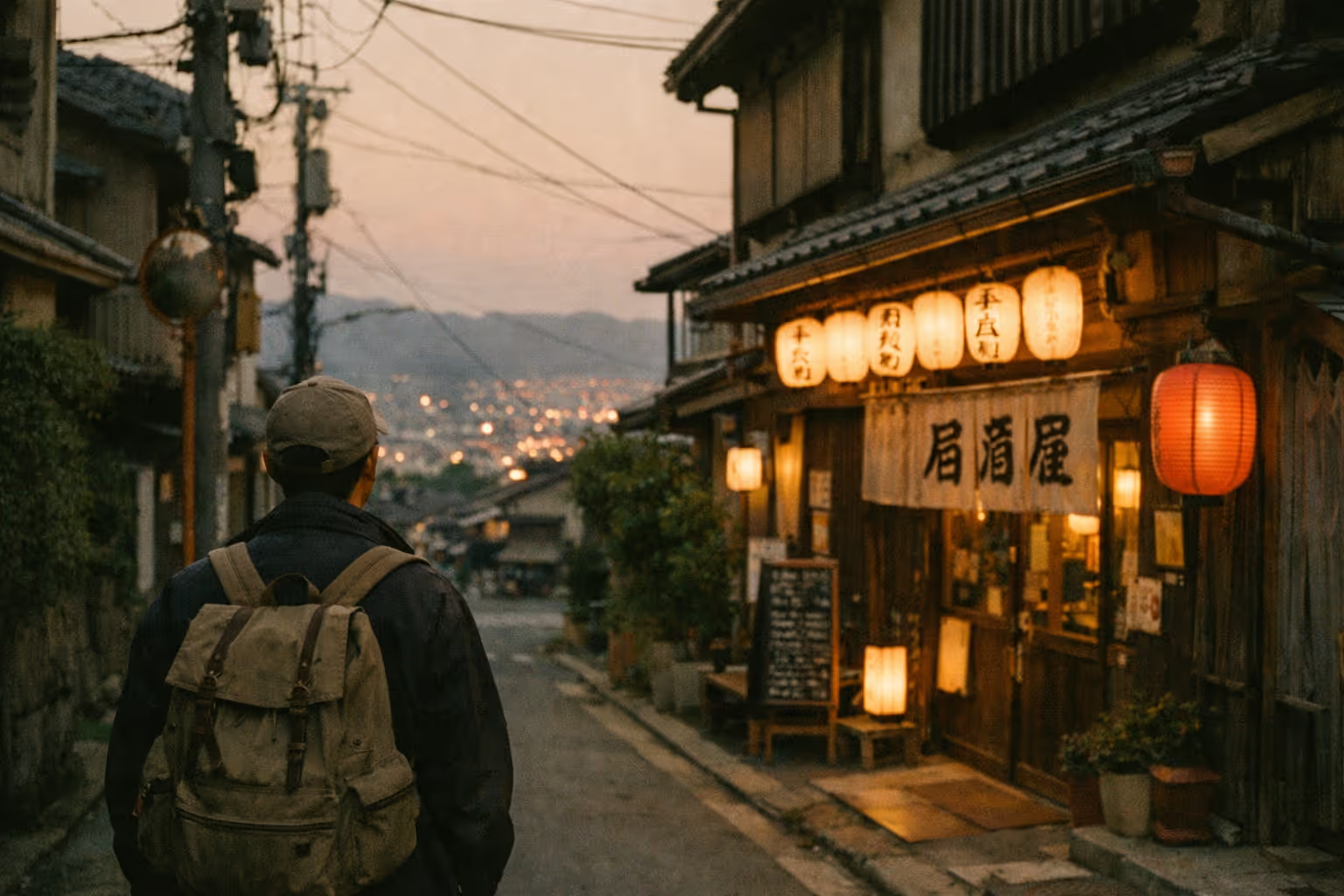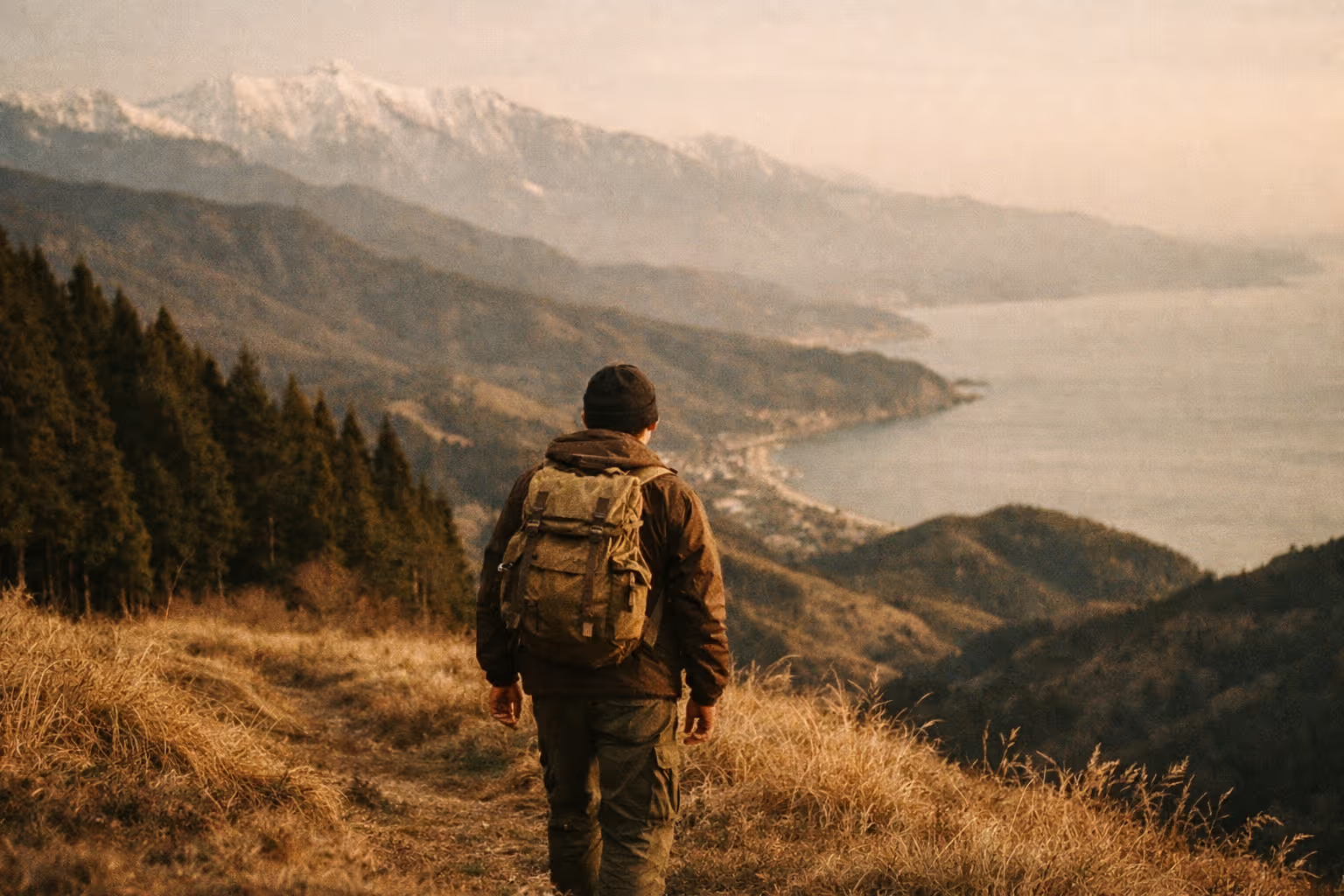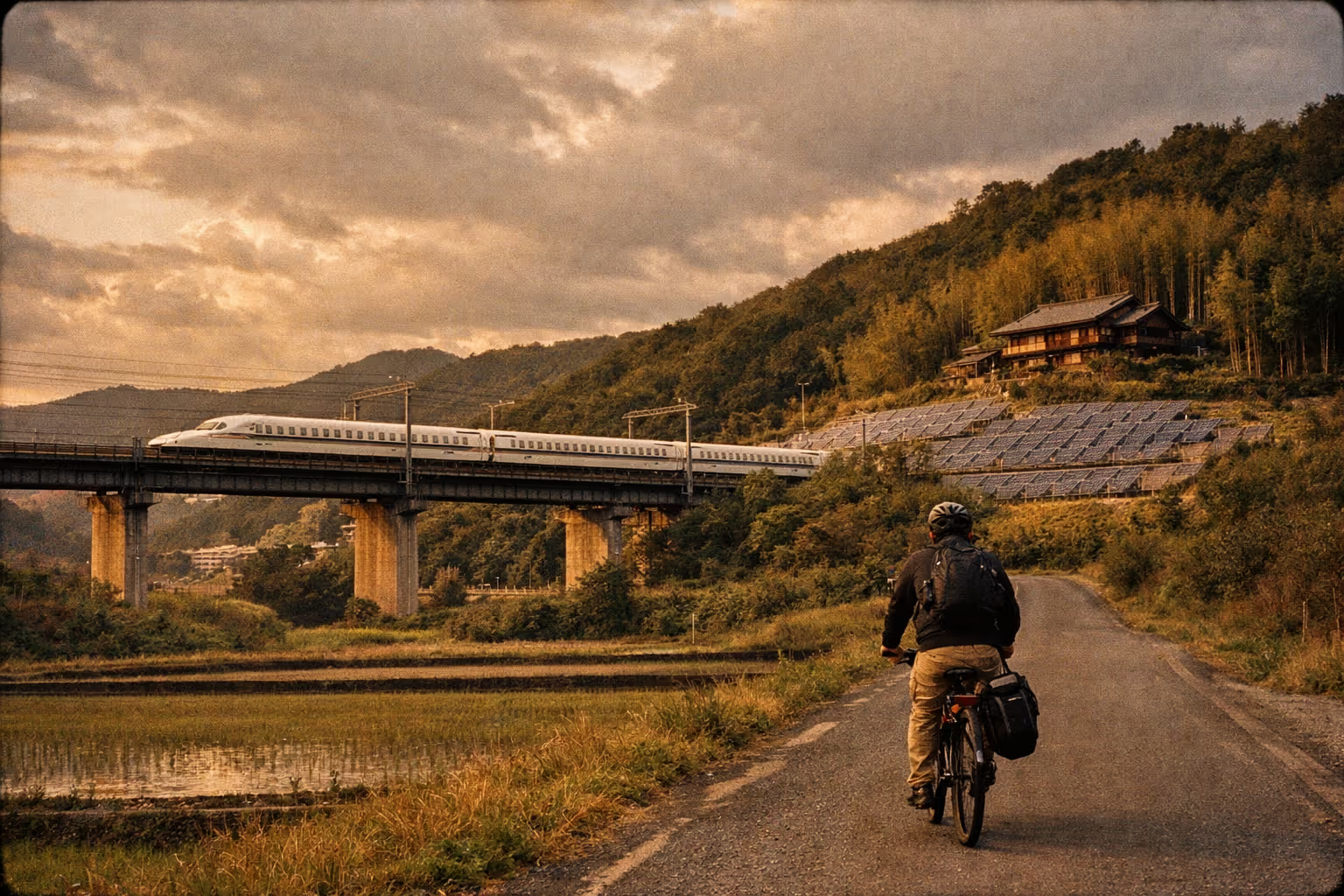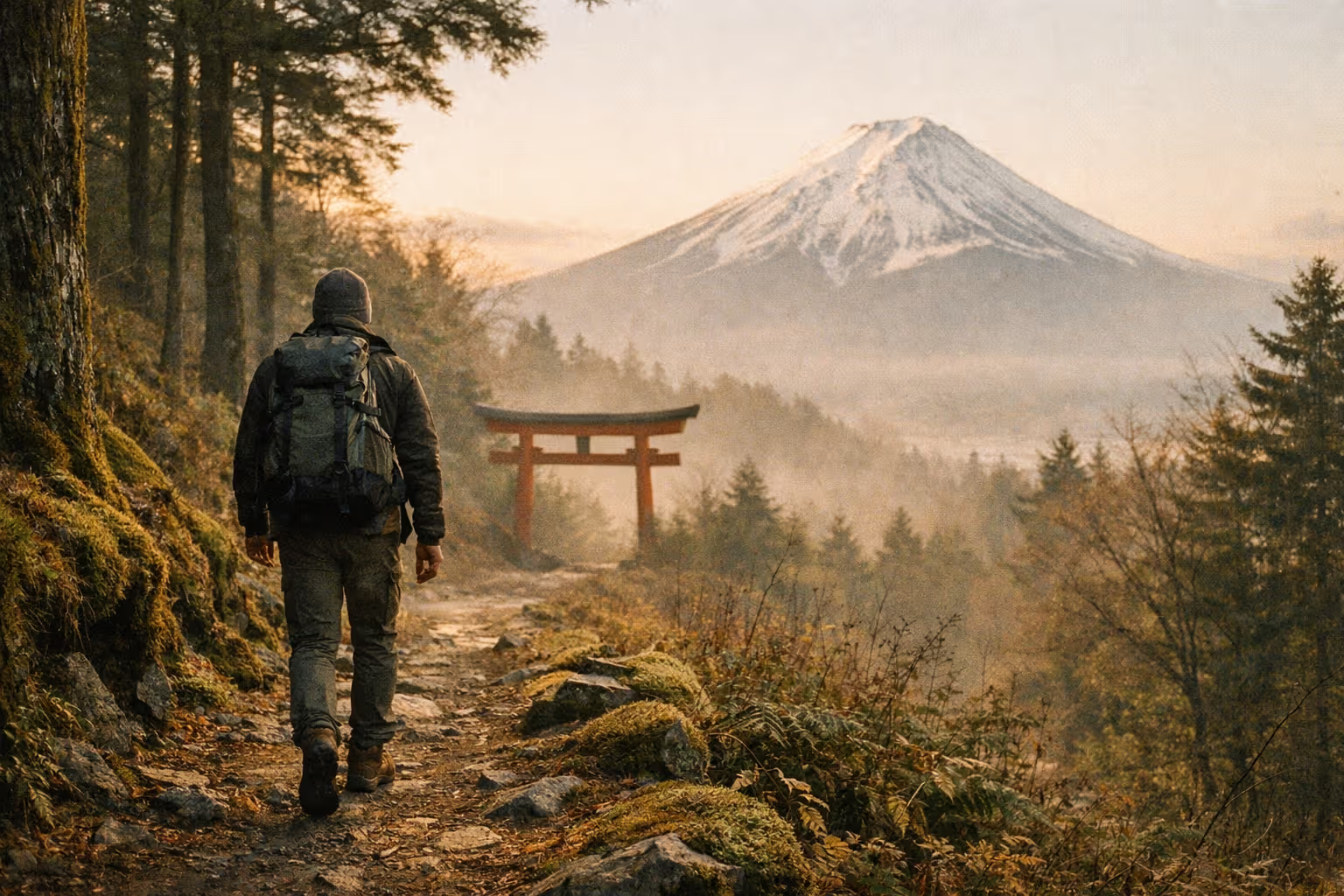
The 10 Day Japan Itinerary at a Glance
A well-planned 10 day Japan itinerary often follows the Tokyo-Hakone-Kyoto-Osaka corridor - sometimes called the Golden Route - with one onsen stop built in for the “Zen” half of the trip. Most well-built guides land on a similar split: 3-4 days Tokyo, 2-3 days Kyoto, 1-2 days Osaka, and 1-2 days in an onsen or nature area (1)(5).
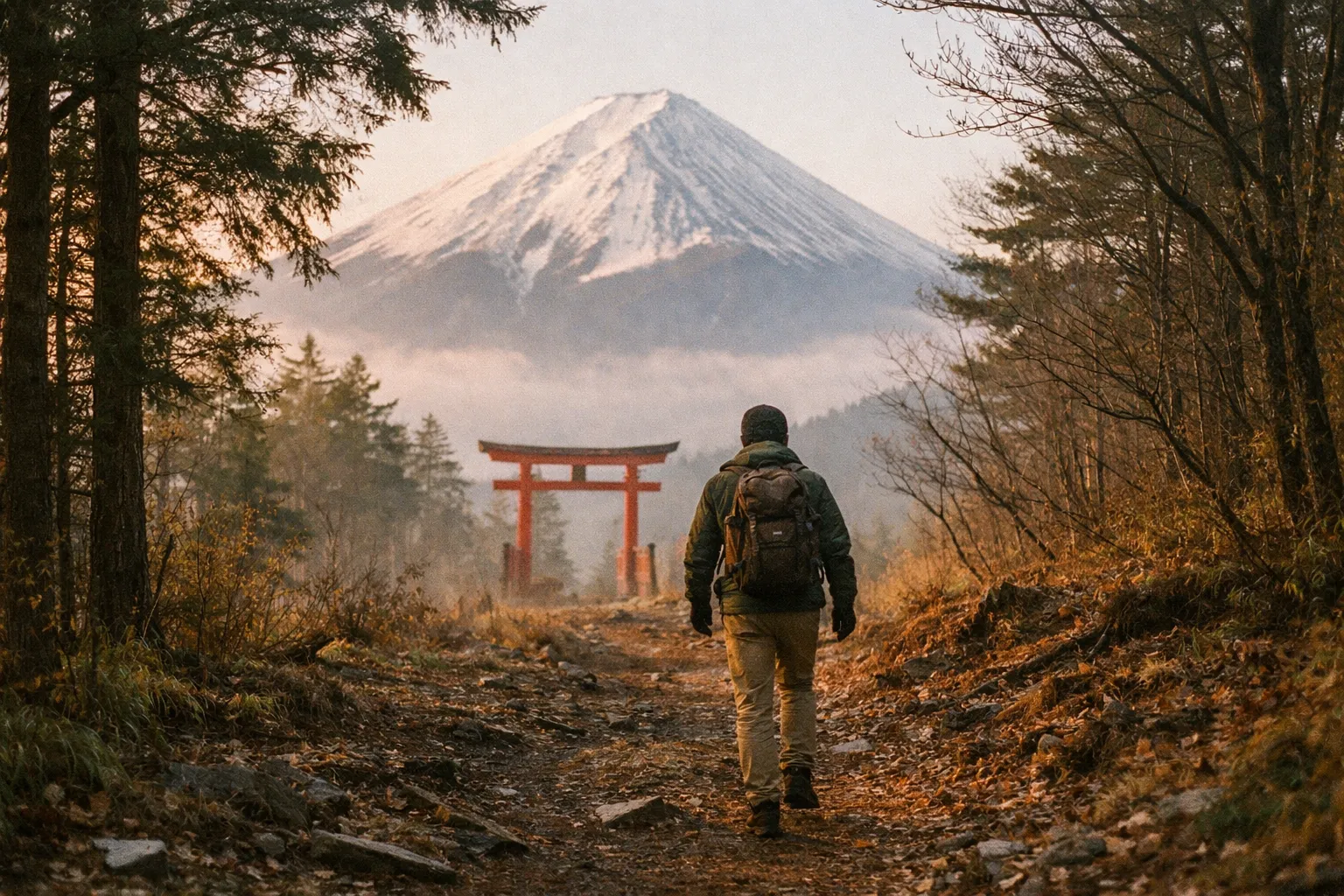
Here’s the shape of it:
- Days 1-3: Tokyo - Shinjuku, Shibuya, Asakusa, teamLab Planets, day-trip energy
- Day 4: Hakone or Mount Fuji - ropeways, hiking, your first onsen
- Days 5-7: Kyoto - Fushimi Inari, Gion, Arashiyama, a tea ceremony
- Day 8: Nara or onsen detour - temples and deer, or a night in Kinosaki
- Days 9-10: Osaka - Dotonbori, street food, last-minute shopping before flying home
I front-load Tokyo because the city’s high energy works in your favor while you’re jet-lagged, and I end with the slower Kyoto-onsen stretch so the final days feel like decompression instead of a sprint. That sequencing is what most seasoned travelers recommend, and it’s the single best structural decision you can make for a first time Japan itinerary (1)(5).
If you have fewer days, the trip compresses cleanly - more on that below.
✓ Pros
- Balanced mix of adventure and relaxation along a well-tested route
- Front-loads high-energy Tokyo to offset jet lag
- Ends with slower Kyoto and onsen days for decompression
- Includes practical transport and budget advice reflecting 2026 prices
✗ Cons
- Popular sites can be crowded, especially in peak seasons
- Rail pass price hikes may complicate transport budgeting
- Onsen etiquette and cash needs require preparation
- Shorter trips may miss some highlights or require faster pacing
What to do in Japan in 10 days, day by day
This is the meat of it. Treat the timings as a skeleton, not a schedule.
Days 1-3: Tokyo
Stay near a major station - Shinjuku, Ueno, or Tokyo Station itself. Proximity here shaves 30-60 minutes off your daily transit, which over three days is a half-day of sightseeing reclaimed (1)(5). This is where people routinely get it wrong: they book the cheaper hotel two train changes away and spend their first morning in Japan staring at a subway map.
- Day 1: Land, drop bags, and keep it light. Asakusa’s Senso-ji temple and the surrounding Nakamise shopping street are an easy, low-effort introduction. End with dinner in a Shinjuku izakaya (Japanese pub serving small plates and drinks).
- Day 2: Shibuya crossing and the side streets behind it, Harajuku’s Takeshita-dori for the spectacle, then Meiji Shrine for quiet. Book teamLab Planets - the immersive digital-art venue - ahead of time; timed slots routinely sell out days in advance (1)(5).
- Day 3: Tsukiji Outer Market for breakfast, then either Akihabara (electronics, anime, retro arcades) or a half-day in the Yanaka neighborhood for old-Tokyo lanes and small temples.
Yanaka is worth knowing about. It’s the part of Tokyo that survived the earthquakes and firebombing with its pre-war street grid mostly intact - narrow lanes, wooden shopfronts, cats on walls. Nothing dramatic, but a useful counterpoint to Shibuya. Budget around 2-3 hours for a wander; the covered shopping street Yanaka Ginza runs about 170 meters and has a handful of good spots for taiyaki (fish-shaped cake filled with red bean paste) and handmade pickles. Entry is free, and the neighborhood rewards slow walking more than any checklist approach.
Day 4: Hakone and Mount Fuji
This is the “Adventure Meets Zen” pivot. Hakone sits about 90 minutes from Tokyo and packs a ropeway over volcanic vents at Owakudani, a pirate-ship cruise on Lake Ashi, and - on clear mornings - a clean view of Mount Fuji. It’s also your first onsen.
Spend the night in a Hakone ryokan (traditional inn) if you can. I’ve done this in both October and February, and the February version wins - cold air, steam rising off the water, Fuji visible above the treeline at dawn. Soaking in a rotenburo (outdoor hot-spring bath) at dusk after a day on the ropeway is exactly the contrast this itinerary is built around.
Days 5-7: Kyoto
Take the Shinkansen from Odawara or Tokyo to Kyoto. Base yourself near Kyoto Station or the Gion/Shijo area to cut transit time (1)(5).
- Day 5: Fushimi Inari’s vermilion torii gates - go at 07:00-08:00 to beat the crowds, which by 10:00 are genuinely shoulder-to-shoulder (5). Afternoon in Gion, Kyoto’s traditional district of wooden machiya houses.
- Day 6: Arashiyama’s bamboo grove early, then Tenryu-ji temple and its garden. Afternoon: a tea ceremony (chanoyu) for a slower cultural beat.
- Day 7: Kiyomizu-dera at opening or after 18:00 for the lamplit hour, then the Higashiyama lanes - Sannenzaka and Ninenzaka - for sweets and crafts.
The early-morning rule applies everywhere in Kyoto. On my last visit in November 2024, I walked the Sannenzaka stones at 07:30 with maybe a dozen other people. By 09:30, tour groups were stacking up at the entrance. Same temple, completely different experience. For a deeper look at things to do in Kyoto by zone, including which areas reward the earliest starts, it’s worth planning each district before you arrive.
Day 8: Nara or a deeper onsen night
Two options here. Nara is a 45-minute train from Kyoto: Todai-ji’s giant bronze Buddha, free-roaming deer that bow for crackers, and gardens you can cover in an afternoon. Alternatively, peel off for a night in Kinosaki Onsen, a riverside town where you stroll between seven public bathhouses in a yukata robe (more below).
I’ve done both. Nara is easier and works fine as a half-day - Todai-ji’s bronze Buddha alone is worth the 45-minute train from Kyoto, and the deer park surrounding it is genuinely strange in the best way. Kinosaki requires more commitment but is the better memory. The town has roughly 1,400 residents and seven public bathhouses (sotoyu), each with a different mineral composition and atmosphere; the ritual of pulling on a yukata robe after dinner and walking the willow-lined canal between them is the kind of thing that doesn’t translate well in photos but stays with you for years.
Days 9-10: Osaka
Osaka is the food capital and the loosest, most relaxed of the three cities - a fitting end. Dotonbori at night for takoyaki (fried octopus balls), okonomiyaki (savory cabbage pancake), and neon. Day 10: Osaka Castle in the morning, then last shopping in Shinsaibashi before heading to the airport. This is the Japan itinerary Tokyo Kyoto Osaka route distilled - three distinct city personalities, one onsen interlude, minimal backtracking.
The Shorter Version: a 7-Day Japan Trip
Not everyone has ten days. A Japan itinerary 7 days drops Osaka and the standalone onsen night, concentrating on Tokyo and Kyoto with one Shinkansen leg between them (5).
- Days 1-4: Tokyo - Asakusa, Shibuya/Harajuku, teamLab, a Hakone day trip for your onsen fix
- Days 5-7: Kyoto - Fushimi Inari, Arashiyama, Gion, Kiyomizu-dera, one tea ceremony
You still get the city-and-temple contrast; you just trade Osaka’s food scene and a dedicated onsen stay for a tighter, cheaper trip. For first-timers worried about pace, seven days in two cities is genuinely more enjoyable than ten days spread across six hotels.
Over-stuffing is the most common mistake I see. Five or six hotel changes and three-hour train days leave zero room for the downtime that makes Japan worth it (5). The best days I’ve had there were the ones with nothing booked after 14:00.
Best onsen towns in Japan
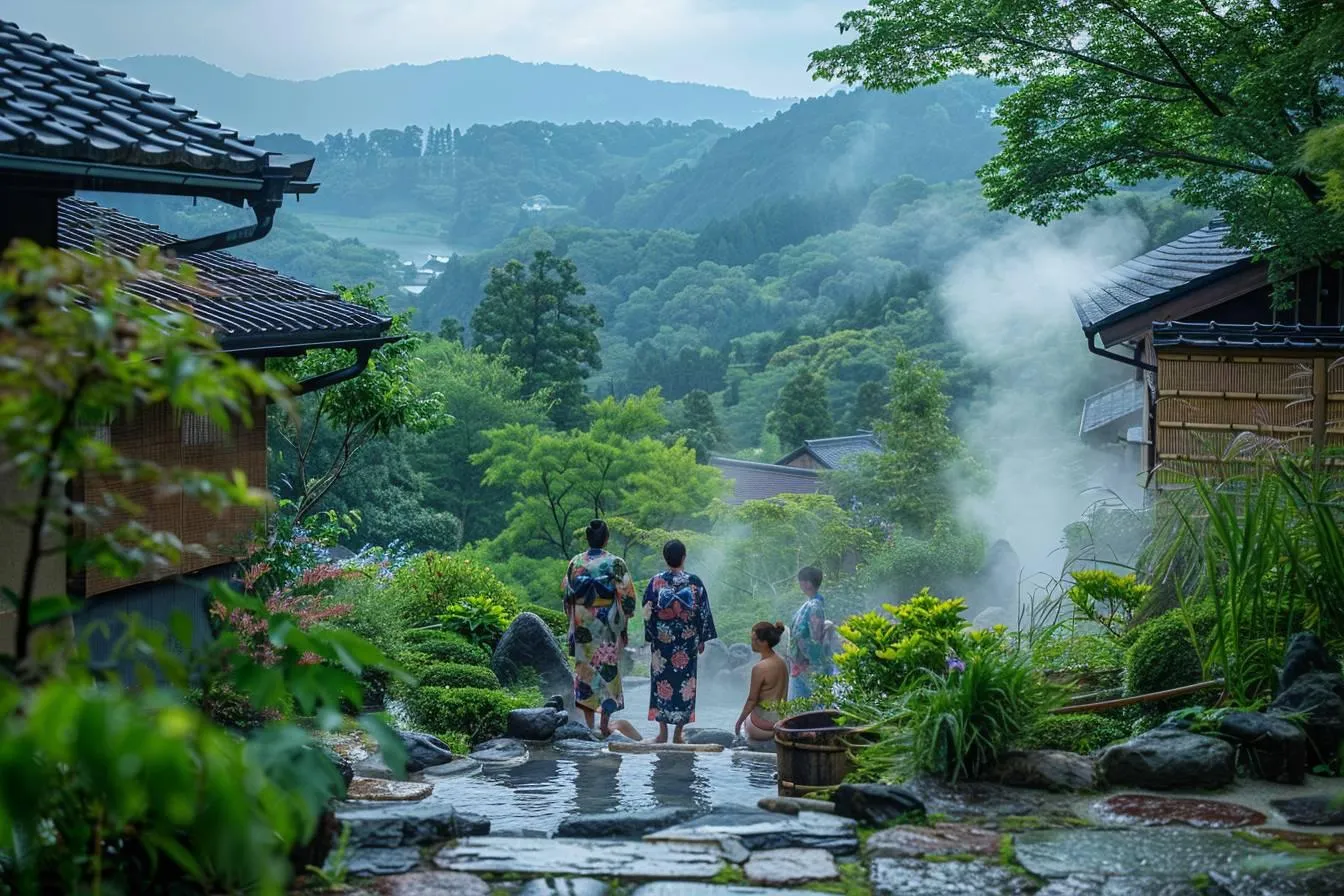
“Visit an onsen” is advice everyone gives and few make specific. Here are the towns worth routing your trip around, with what each actually costs.
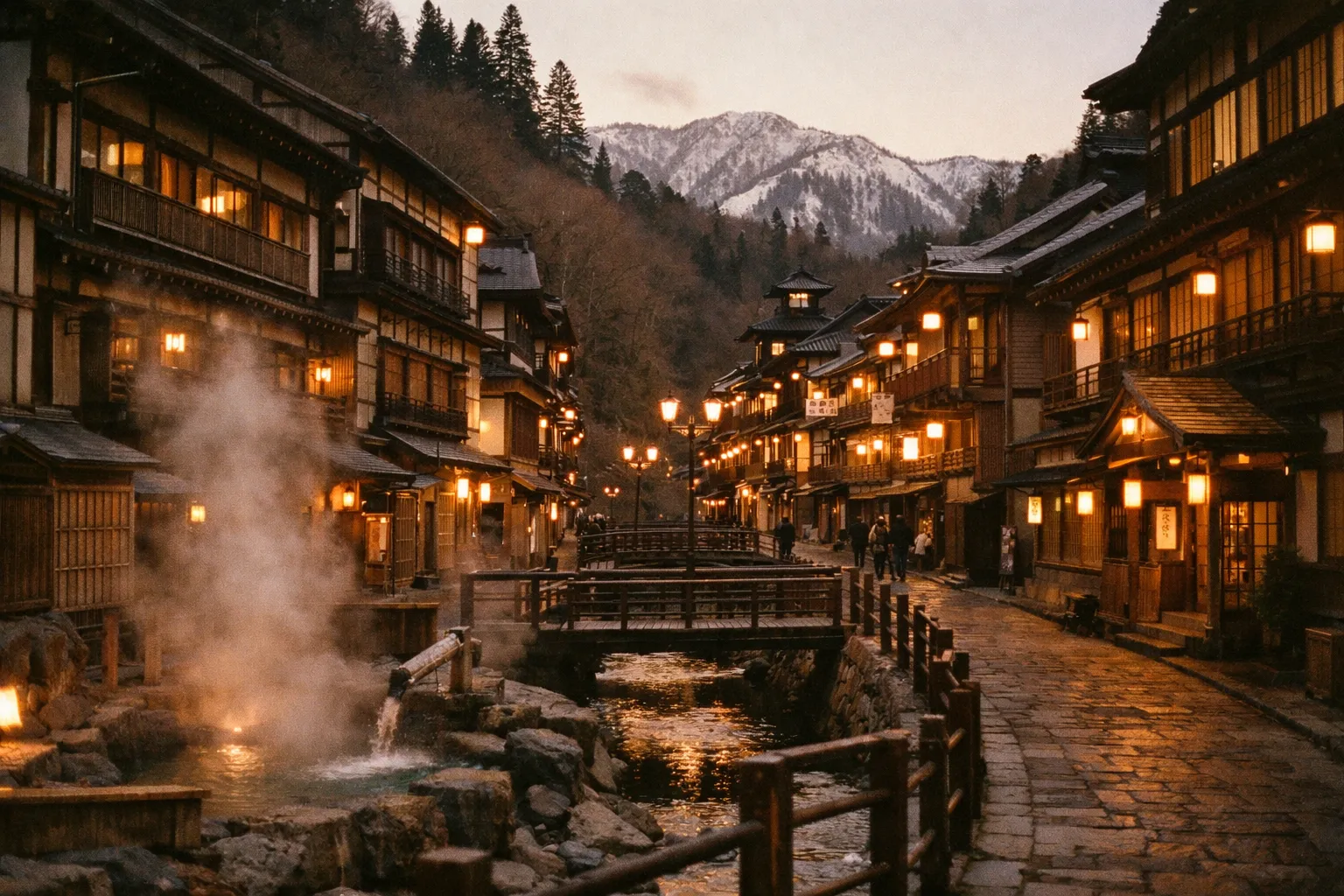
Best Onsen Towns in Japan
| Hakone | Kinosaki Onsen | Kurokawa Onsen | Nyuto Onsen | Noboribetsu Onsen | |
|---|---|---|---|---|---|
| Location | Kanagawa | Hyogo | Kyushu | Akita | Hokkaido |
| Distance from Major City | 90 minutes from Tokyo | 2.5 hours from Kyoto | Remote | Remote | Remote |
| Atmosphere | Mountain scenery, Fuji views | Canal-side town, yukata stroll | Thatched-roof inns, river gorge | Milky sulfur baths | Hell Valley steam vents |
| Price Range (per person, ryokan night) | Varies widely | Moderate | ¥20,000-30,000 (about $125-185) | Varies | Varies |
| Unique Feature | Convenient for day trips, first onsen stop | Seven public bathhouses to visit on foot | Michelin Green Guide 2-star, no chain inns | Northern Japan's top onsen | Hokkaido's famous hot springs |
A money-saving tip: in towns like Kurokawa and Kinosaki, individual baths sell day passes for ¥500-1,500 (about $3-10) each (4). You can do one splurge ryokan night and hop additional baths by day pass instead of paying for multiple overnight stays. We did exactly this in Kinosaki - one ryokan night, three additional bathhouses on day passes - and it was the right call.
Onsen etiquette matters here. You bathe nude - swimsuits aren’t allowed in traditional baths. Wash and rinse thoroughly at the seated showers before entering the communal water, keep your small towel out of the bath (rest it on your head or the edge), and tie up long hair. Tattoos are still banned at many traditional onsen, though tattoo-friendly baths and private family baths (kazokuburo) are increasingly available - ask when booking.
How to get around: JR Pass, Shinkansen, and IC cards
This is where outdated advice will cost you real money.
The nationwide Japan Rail Pass jumped from ¥29,650 to ¥50,000 for the 7-day version in late 2023 - roughly $185 to $310 at current exchange rates, a about 69% increase (2). The 14-day pass went from ¥47,250 to ¥80,000 (about $295 to $500) and the 21-day from ¥60,450 to ¥100,000 (about $375 to $625) (2).
Do the math before you buy. A one-way reserved Tokyo-Kyoto Shinkansen ticket runs roughly ¥13,000-14,000 (about $82-90) per adult; a round trip is ¥26,000-28,000 (~$164-180) (2). For a standard Tokyo-Kyoto-Osaka-Tokyo loop with one side trip, individual tickets total around $180-220 - cheaper than the $310+ 7-day pass after the hike (2).
The pass only pays off if you’re adding multiple long legs - think Hiroshima, Kanazawa, or northern Japan, where point-to-point fares stack above ¥50,000 (2). For most 10-day Golden Route trips, buy individual tickets or a regional pass (Kansai-area, Hokuriku, or Hiroshima) instead (2).
IC cards. Suica and PASMO tap-to-pay cards remain essential for local trains, buses, and convenience stores. Since 2023, physical card sales have been restricted by a semiconductor shortage (7). If you have an iPhone or a compatible Android phone, add a mobile Suica or PASMO before you arrive - it sidesteps the lines and the limited tourist-card stock entirely (7). Do this at home. The airport queue for tourist IC cards on a busy arrival day is not where you want to spend your first 45 minutes in Japan.
Luggage forwarding (takkyubin). Send your big suitcase ahead from hotel to hotel for ¥2,000-3,000 (about $13-19) per bag, and travel the Hakone-onsen leg with just a daypack. It’s one of the most underused conveniences in Japan and makes Shinkansen transfers painless.
What it costs: a realistic 10-day budget
Vague labels don’t help you plan, so here are numbers as of June 2026.
For mid-range travel - shared room, a few Shinkansen rides, one onsen night - budget $1,500-2,500 per person for 10 days, excluding flights (2)(10). Backpackers can target $80-120/day; comfort travelers running nicer ryokan and frequent taxis spend $250-350/day (10). For a full breakdown of daily costs and 2-week numbers, including how night buses and konbini meals shift the math, the numbers are worth checking before you finalize your plan.
Where it goes:
- Hotels: Mid-range city hotels average $150-200 per room per night. Kyoto runs pricier - central stays hit $200-250+ in peak season (10). Across a 10-day trip, plan on 6-7 city nights plus 1-2 ryokan nights; total lodging for a couple lands around $1,600-2,400 (4)(10).
- Ryokan with onsen: ¥20,000-30,000 per person (~$125-185) including dinner and breakfast (4).
- Shinkansen: about $180-220 total for the Golden Route on individual tickets (2).
- Airport transfer: Narita Express to central Tokyo is around ¥3,000 (~$19) per person each way; Haneda is closer and cheaper (8).
- Food: Convenience-store meals run a few dollars; a good izakaya dinner with drinks lands around $25-40 per person.
Cash still matters. Cities are increasingly card-friendly, but rural onsen towns, small ryokan, and local eateries often remain cash-only (7). Carry ¥20,000-30,000 (~$125-185) per person at any time (7). Running out of yen in Kinosaki on a Sunday evening is a specific kind of stress you don’t need.
When to go: navigating Japan’s seasons
Japan’s seasons reshape the trip more than the destination does.
Spring brings cherry blossoms (sakura), when locals and visitors hold hanami (flower-viewing) parties under blooming trees. It’s the most beautiful time and the most crowded - book hotels and ryokan 3-6 months ahead for late March through April (3)(10).
Autumn turns Kyoto and Nara red and gold. My autumn trek through the Kiso Valley, with fall foliage against historic post-towns, remains one of my favorite Japan memories. November foliage season is the other peak-demand window, so book early (3)(10).
Winter is Hokkaido’s season - snow festivals, powder skiing, and steaming Noboribetsu baths in the cold air.
Summer is humid but full of festivals (matsuri), fireworks displays (hanabi), and mountain hiking. The official Mount Fuji climbing season runs roughly July through early September; outside it, the trails and huts close. Temperatures in Tokyo and Osaka regularly hit 33-36°C (91-97°F) in July and August, so plan outdoor sightseeing before 10:00 and after 17:00, and lean into the air-conditioned museum and department-store hours in between. The Gion Matsuri festival in Kyoto runs through the entire month of July, with the main float processions (yamaboko junko) on July 17 and 24 - if your dates overlap, it’s worth building the itinerary around rather than treating as a bonus.
Whenever you go, book Kyoto first. Failing to lock in Kyoto hotels and timed experiences months out during sakura or foliage means $250-400/night last-minute rooms or long commutes from outlying cities (3)(10). I’ve watched people make this mistake and spend three days of their trip on trains they didn’t plan for. One practical note: if central Kyoto is sold out, Fushimi and Yamashina - both on the Kintetsu and JR lines - put you 15-20 minutes from Gion at a fraction of the price, and neither feels like a compromise once you’re on the ground.
Cultural immersions and food
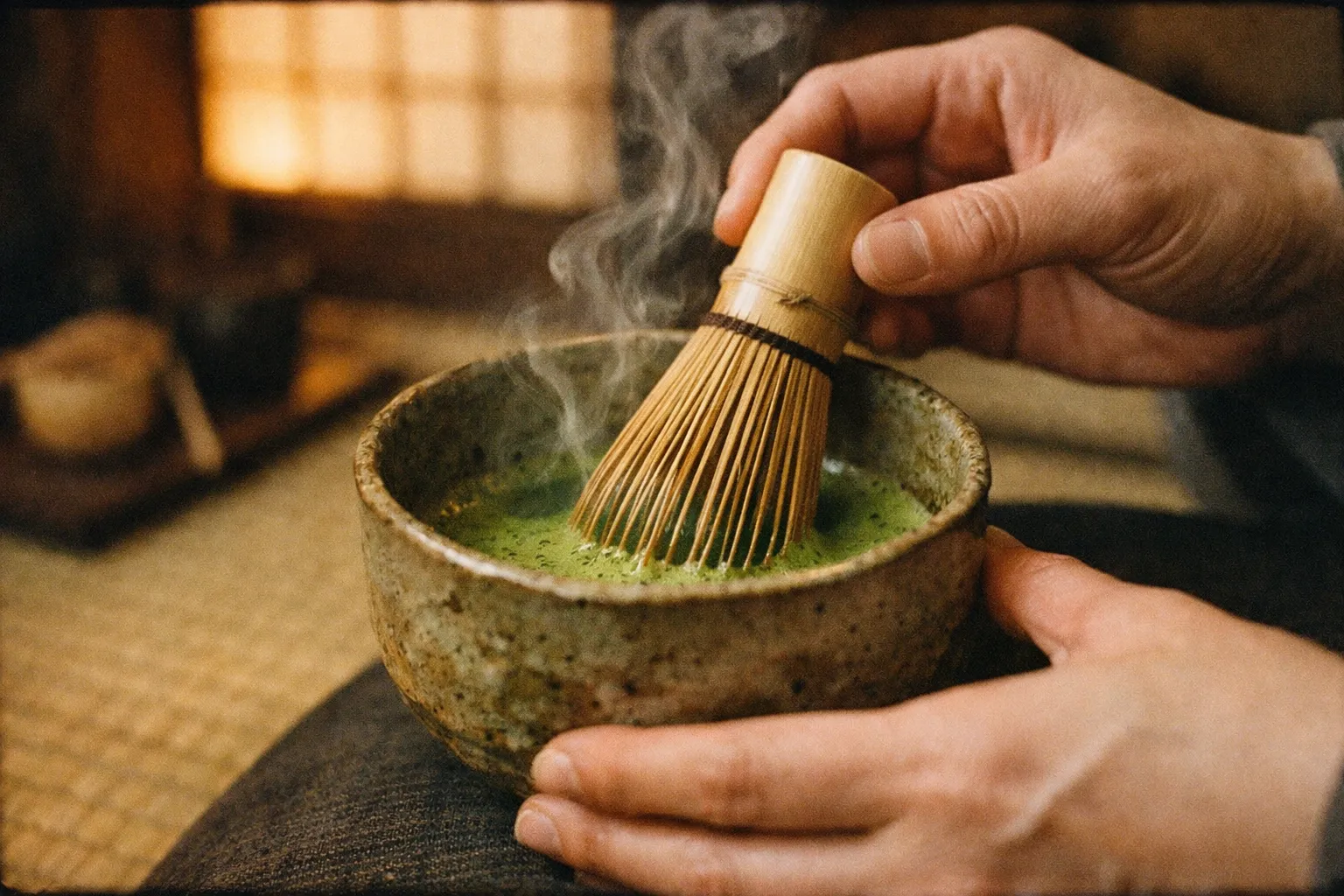
The visual and adrenaline side is only half the country. A traditional tea ceremony (chanoyu) or a kabuki theatre performance opens a window into Japan’s artistic heritage that no temple photo does - in Kyoto, the Gion Hatanaka machiya runs small-group chanoyu sessions in a working tea room off Hanamikoji-dori. You can also try kendo (Japanese fencing) or zazen (seated Zen meditation) for a more hands-on cultural beat; Kyoto’s Shunkoin temple in the Myoshinji complex runs English-language zazen sessions most mornings.
Food is its own itinerary. From sushi at a Tokyo Michelin-starred counter - a 10-seat omakase in Shinjuku or Ginza runs roughly ¥15,000-30,000 (about $95-185) per person for lunch, less than dinner at the same counter - to okonomiyaki at a backstreet spot in Hiroshima’s Nagarekawa district, each region has a signature. Kyoto leans toward kaiseki (multi-course seasonal cuisine) and tofu-based dishes; Osaka’s Dotonbori strip is where you eat standing up - takoyaki in one hand, a canned drink in the other. I always build in izakaya nights - for the food, the noise, and the chance to talk to whoever’s at the next stool over. In Tokyo, the izakaya alleys around Yurakucho station, tucked under the train tracks, are a good starting point: loud, cheap, and genuinely fun.
A few etiquette notes for meals: don’t tip - it isn’t customary and can cause genuine confusion. Don’t stick chopsticks upright in rice (it echoes a funeral rite), and don’t pass food chopstick-to-chopstick. Slurping noodles is fine and even welcomed. Many restaurants and all ryokan are shoes-off - look for a genkan (entry step) and a shoe rack.
Frequently Asked Questions
- Is 10 days enough for Japan?
- Ten days comfortably covers the Tokyo-Kyoto-Osaka corridor plus one onsen town without rushing. Adding destinations like Hiroshima or Hokkaido requires either more time or a faster pace.
- Should I buy a Japan Rail Pass for a 10-day trip?
- After the 2023 price hike, individual tickets for the Golden Route are usually cheaper than the 7-day pass. Consider the pass only if you plan multiple long-distance trips or opt for a regional pass.
- What's the best onsen town for a first-timer?
- Hakone is the easiest to access and fits well into most itineraries. Kinosaki Onsen offers a fuller experience with multiple bathhouses but requires extra travel time.
- Do I need a visa to visit Japan?
- Many nationalities, including U.S. citizens, can enter visa-free for up to 90 days for tourism with a valid passport and onward travel. Check official sources close to your departure date.
- Should I fly into Narita or Haneda?
- Haneda is closer to central Tokyo, cheaper, and more convenient, especially with luggage. Narita arrivals can add travel time and cost, and late arrivals risk missing last trains.
- How much cash should I carry?
- Carry around ¥20,000-30,000 (about $125-185) per person. While cities accept cards widely, rural onsen towns and small eateries often require cash.
Putting it together
Build the trip in this order: lock your dates against the seasons, book Kyoto lodging first, then Tokyo, then your onsen night. Decide on rail tickets versus a regional pass by adding up your actual Shinkansen legs - not by defaulting to the JR Pass. Add a mobile Suica before you fly. Pre-book teamLab and any tea ceremony or popular timed attraction the moment your dates are firm.
The structure that works is simple: front-load Tokyo while you’re wired from the flight, end with Kyoto and an onsen so the last days slow down. Visit the big temples at 07:00 or after 18:00 and you’ll get the quiet version even in peak season (5).
Do that, and ten days is enough to come home with the full range - the ropeway over the volcano and the dusk soak with Fuji on the horizon, in the same trip.