Is Yellow Spring Road in Japan Real?
Yes, yellow spring road japan is real, and the confusion around it is worth addressing directly because it sends travelers to the wrong prefecture.
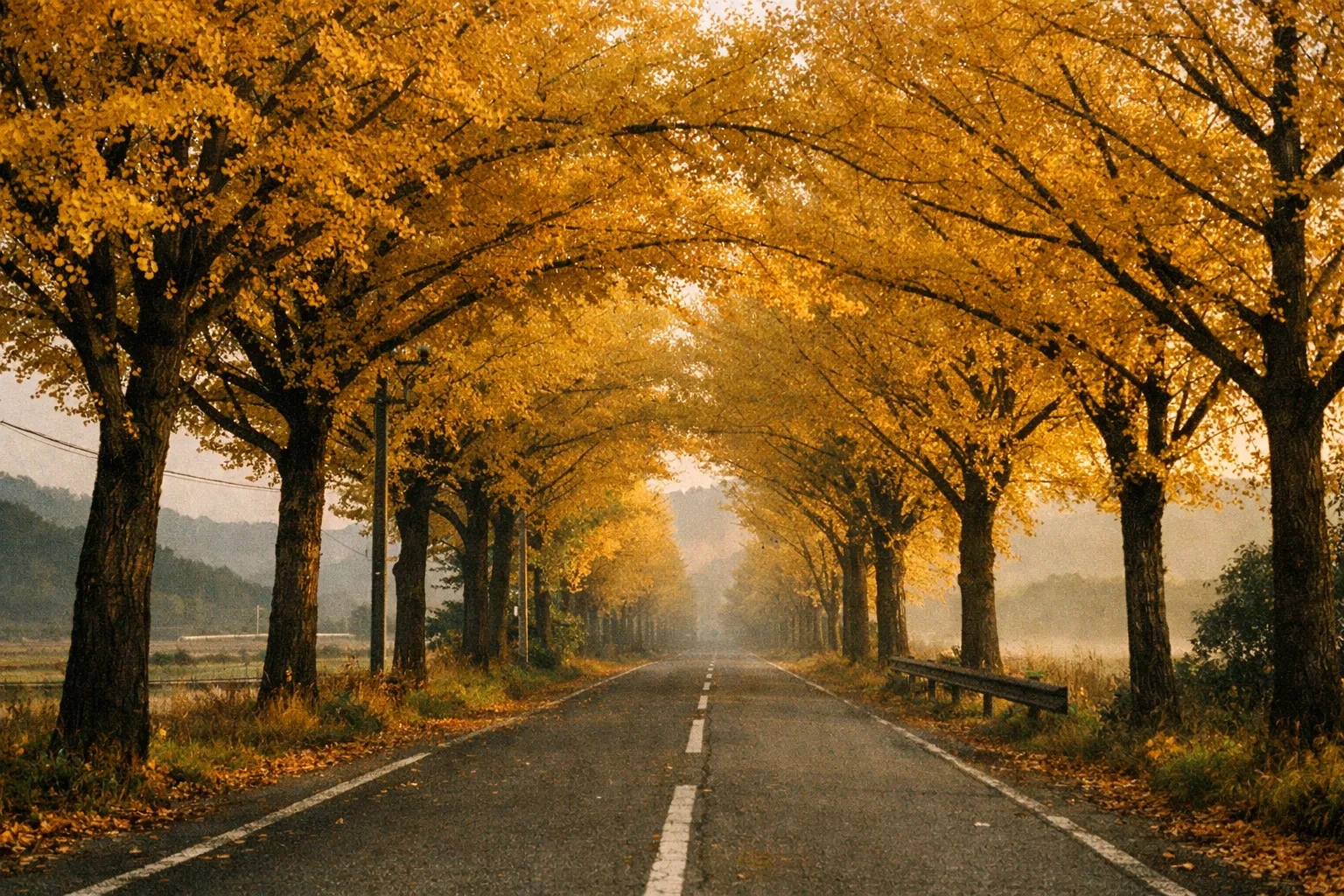
There are at least two distinct locations in Japan that go by this name:
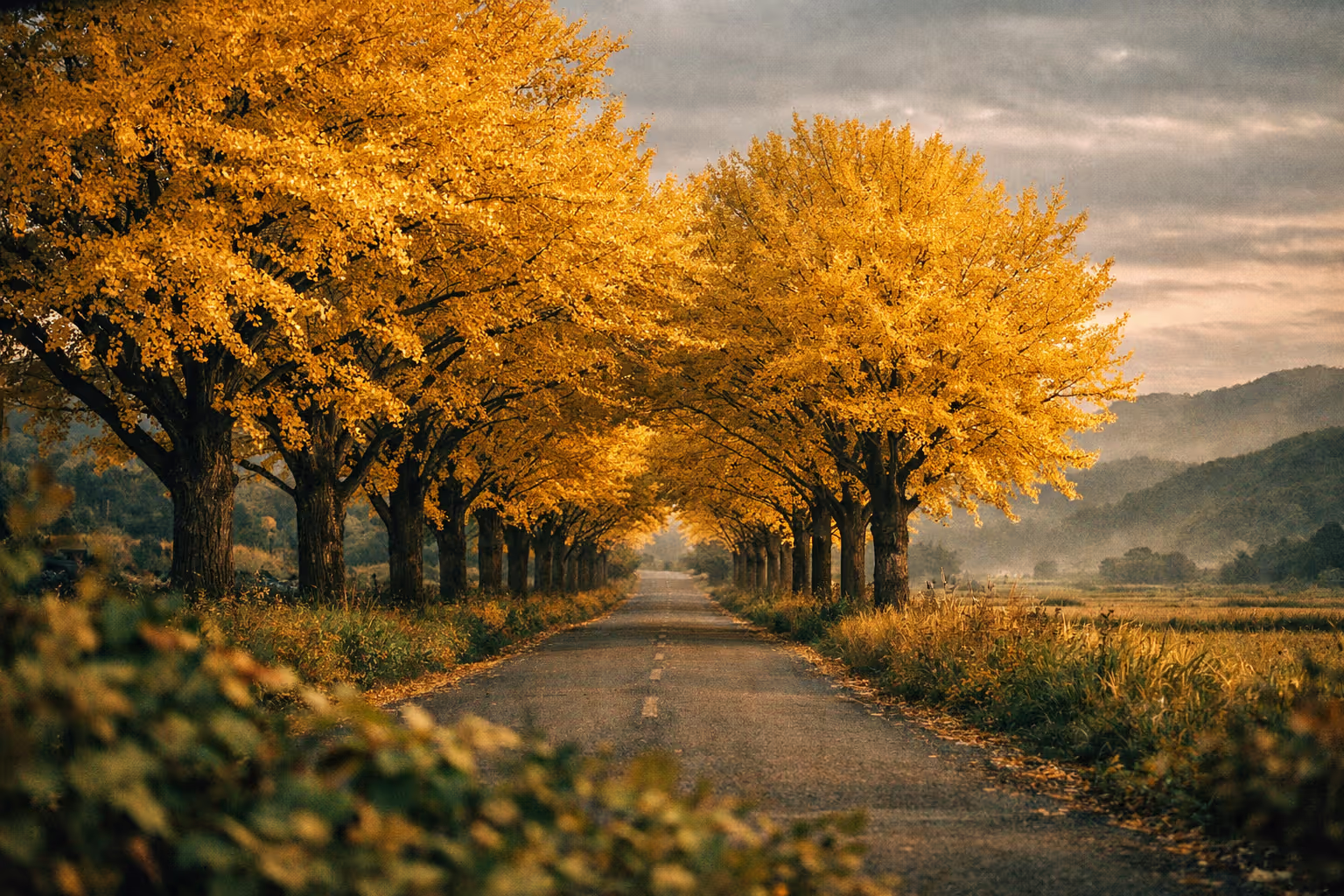
- Hirokawa, Wakayama Prefecture (Kii Peninsula): The ginkgo-lined road that appears in most photos on Instagram and Pinterest. Peak color falls between November 20 and November 30. GPS: 33.766°N, 135.383°E.
- Nanjo, Okinawa: A separate 2-kilometer stretch lined with nanohana (rapeseed) flowers covering about 6 hectares since the 2025 field expansion, blooming from late February through March 15 (2). Same nickname, different plant, completely different season.
A third route on the Izu Peninsula is sometimes labeled “Yellow Springs Road” in English travel content (3), but it’s actually a sakura (cherry blossom) route near Joren Waterfall. The Japan Times fact-checked the sakura association in April 2026 and found no official link - it’s an SEO misnomer. If you’re trying to identify which one you’ve seen in a photo, look at the foliage: ginkgo fans for Wakayama, rapeseed blossoms for Okinawa, sakura petals for Izu.
For this guide, “Yellow Spring Road” refers to the Hirokawa version. That’s the yellow spring road japan location roughly 90% of searches are actually targeting.
The Serene Beauty of Yellow Spring Road
The 140 century-old ginkgo at the core were planted in the early 20th century as part of a community beautification effort - the kind of project that takes generations to pay off. In Japanese culture, the ginkgo - icho (銀杏) - carries associations with resilience and longevity, which partly explains why communities plant them for posterity rather than immediate effect. You don’t plant a ginkgo for yourself. You plant it for whoever comes after you.
I visited in late November 2024, arriving just before 7AM when the light was still low and the tour buses from Osaka hadn’t arrived yet. The canopy was at full color - a solid ceiling of gold from one end to the other, leaves still attached, the ground below starting to accumulate a soft layer. It was quieter than I expected for a site with 50,000 annual visitors.
The site was designated a natural monument in 1985, and the protection shows. TripAdvisor reviews average 4.8/5 across 1,200+ ratings as of May 2026, which for a natural site is unusually consistent.
History and Cultural Significance
The early 20th-century planting was a deliberate civic effort to create a gathering space. Over time, the trees became part of local identity in a way that’s visible in how carefully the community maintains them now.
Wakayama Prefecture extended that legacy in 2025 with a new 500-meter ginkgo extension, expected to reach full maturity by 2027. When it does, the golden tunnel will stretch closer to 1.7 kilometers. Worth knowing if you’re planning a return trip.
The Yellow Spring Road sits within a broader cultural landscape. Hirokawa Shrine is a short walk away, and the Kii Peninsula as a whole has deep ties to Shinto and Buddhist practice. The small Inari shrine at the trail’s southern end has fox (kitsune) statues flanking it. The kitsune is considered a sacred messenger of Inari, the Shinto deity of rice and prosperity - there are over 30,000 Inari shrines across Japan, most identifiable by red torii gates and paired fox statues. Leave the small offerings (rice, sake cups) undisturbed.
Local Festivities and Events
The Ginkgo Festival typically runs in mid-November, a week or two before peak color. Live music, traditional dance, food stalls. The standout is Wakayama kuroge wagyu skewers at around ¥2,200 / $15 USD per stick (November 2025 pricing). Worth it.
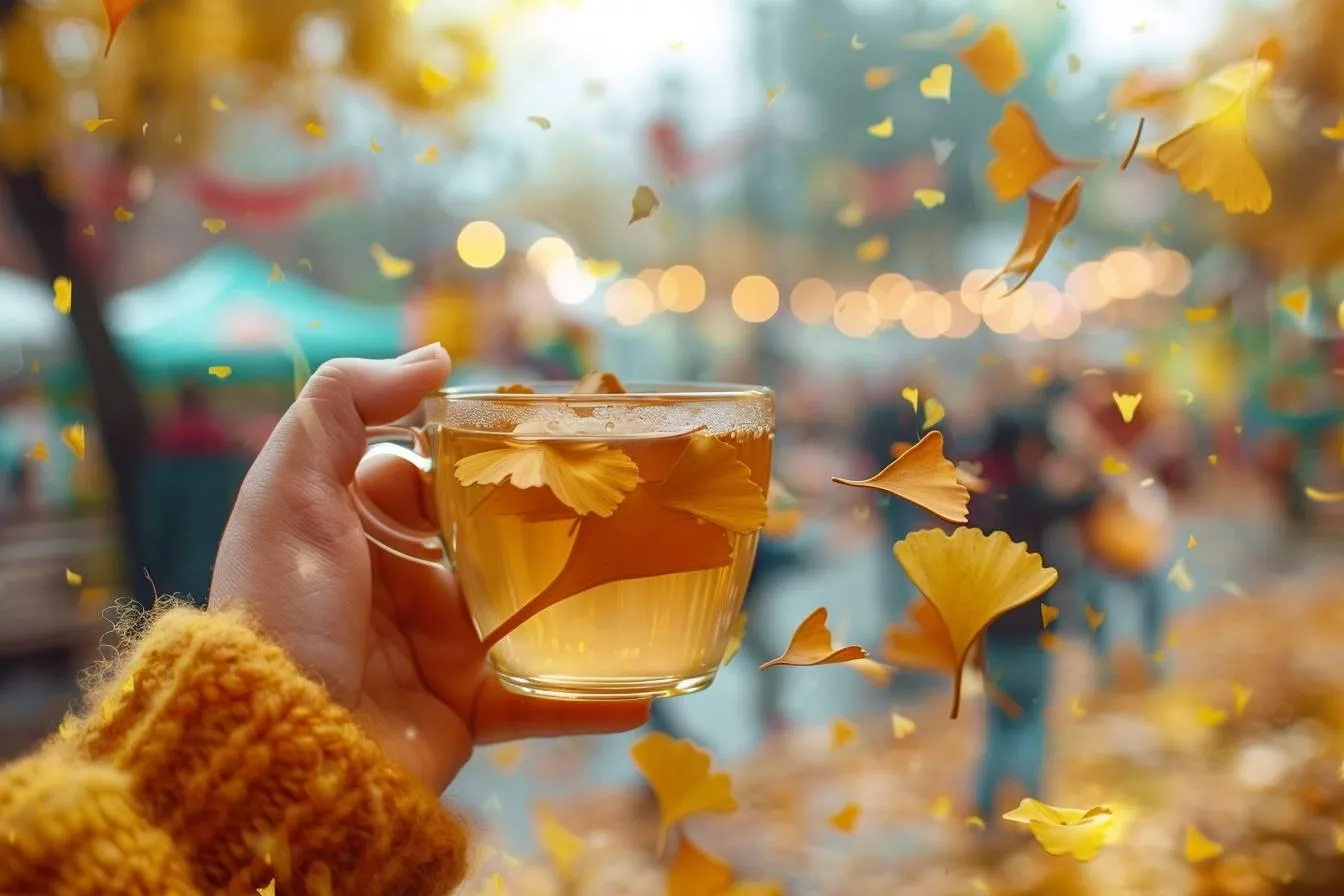
Ginkgo leaf tea tasting is offered free at most booths - the infusion has a faintly grassy flavor that’s more interesting than it sounds. Craft workshops using fallen leaves let you make small souvenirs to take home.
New for 2025-2026: an LED night illumination trial ran November 20-25, 2025 (¥300 / ~$2 USD entry) and boosted visits roughly 25% according to the Wakayama Prefecture report from January 2026. The illumination was extended to a full month for 2026 - check the Wakayama tourism site for exact dates before booking.
Photographic Opportunities at Yellow Spring Road
The best light hits between 7-9AM and after 4PM. Instagram data from 2026 shows golden-hour shots from this location receive roughly twice the engagement of midday images - the hashtag #YellowSpringRoadJapan has accumulated about 45,000 posts and is up 300% year-over-year per Google Trends (April 2026). The midday light is flat and the tour buses from Osaka arrive around 11AM, so there’s a double reason to avoid that window.
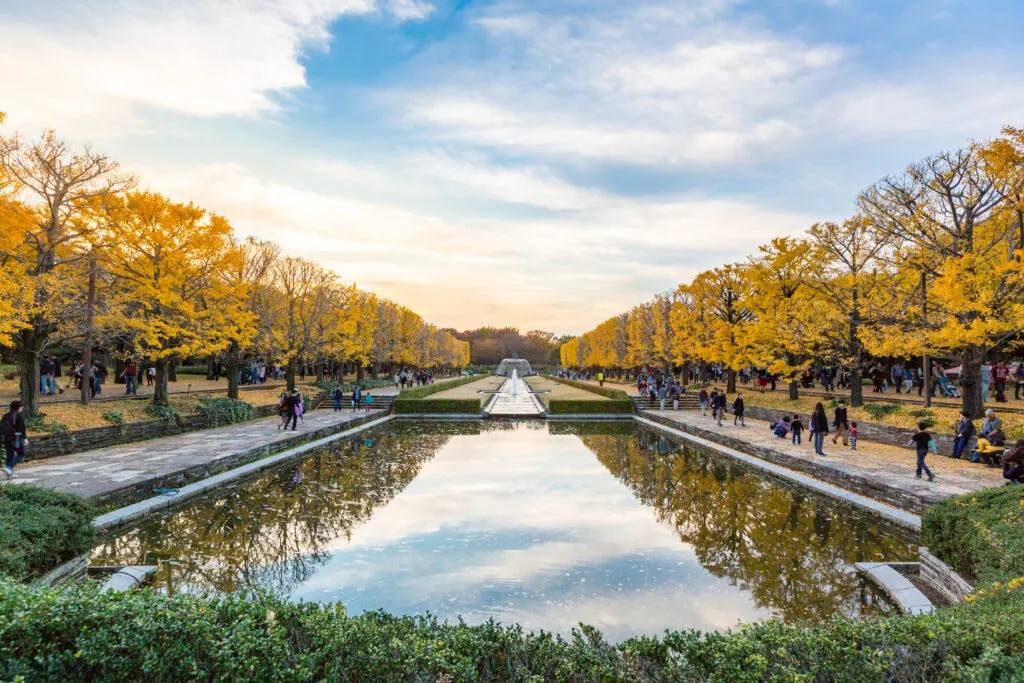
Ginkgo trees in autumn, Japan
Key photography spots:
- The midway point, where the canopy is densest
- The northern end, where the road curves and adds depth to compositions
- The small creek crossing about 400 meters in - good for reflection shots on still mornings
- The overlook above the parking lot (unmarked trail, 5 minutes uphill) for a top-down view of the tunnel
- The underpass at the south entrance - shoot upward through it for an “infinity tunnel” effect at f/8, ISO 100
Technical starting points: f/8, ISO 100, polarizing filter to cut glare off waxy ginkgo leaves. A 6-stop ND filter (around ¥15,000 / $100 USD) is useful for long exposures on breezy days when leaves are moving. Drone use under 100 meters is permit-free, but check no-fly zones via the DJI app before flying - Hirokawa sits near a small heliport corridor. Skip the heavy tripod on peak weekends; the narrow 3-meter-wide sections get congested and a monopod handles the same job at 80% less weight. A phone gimbal (~¥4,500 / $30 USD) handles video well enough.
For exact peak-foliage timing, PhotoPills syncs with Japan Meteorological Agency forecasts and lands within ±1 day in most years.
Seasonal Changes
Autumn is the obvious draw, but each season has its own character.
Spring brings new ginkgo growth in soft greens, sometimes complemented by cherry blossoms in nearby areas. Pleasant without being remarkable.
Summer turns the road into a dense green canopy - genuinely useful shade in Wakayama’s humid heat. The contrast between bright sky and deep green makes for different but workable photos.
Autumn is the reason to come. Ginkgo leaves turn golden from mid-November through early December, with peak color typically landing November 20-30. The Japan Meteorological Agency’s leaf forecast app (free, around 85% accuracy) is the most reliable tool for timing a visit. Hyperdia v6.2 (April 2026) added real-time foliage alerts for Wakayama rail lines at roughly 95% accuracy - useful for last-minute date shifts.
Winter strips everything bare. The branch structure against clear sky has its own appeal, but it’s not why you’re making the trip from Osaka.
Cherry Blossoms and Yellow Spring Road: Clearing Up the Confusion
This section exists because so much English-language content conflates Yellow Spring Road with a sakura route, and travelers end up in the wrong prefecture.
The Hirokawa ginkgo road has no significant cherry blossom display. The “Yellow Springs Road” sakura content circulating online (4) typically refers to the Izu Peninsula near Joren Waterfall - same English nickname, completely different experience. The Izu route features sakura trees blooming in late March around the 25-meter Joren Waterfall, with the lower trail (15 minutes from the parking area) being the spot for petal-and-water reflection shots. The 2025 Izu Peninsula earthquake forced a temporary closure, but the reinforced trail reopened in February 2026.
If sakura is your goal, you want Izu - a Tokyo-side trip via the Tokaido Shinkansen and a rental car from Mishima. If golden ginkgo canopy is your goal, you want Hirokawa via Osaka. Chasing both in one trip means crossing the country in opposite directions. Treat them as separate journeys.
Flora and Fauna
The ginkgo trees get all the attention, but the surrounding area supports a reasonable range of wildlife.
- Understory plants: ferns, mosses, and seasonal wildflowers
- Birds: Japanese white-eyes, bulbuls, and occasional migratory species
- Insects: butterflies, beetles, cicadas in summer
- Mammals: Sika deer occasionally graze the upper slope at dawn
Not a wildlife destination by any stretch, but worth knowing if you’re out early.
Visiting and Accommodations
Best Time to Visit
Mid-November to early December, with peak color usually November 20-30. Check the Wakayama Tourism Board’s live cam at wakayama-kanko.or.jp before committing to a date. Bare trees before November 15 or after December 5 mean no color. Avoid Golden Week (April 29-May 5) for any Japan travel - crowds spike around 50% across the board.
How to Get There
The hirokawa yellow spring road is most easily reached from Osaka. From there:
- JR Kuroshio limited express to Yuasa Station (closest practical access, around 1.5 hours, ¥3,800 / ~$25 USD one-way without rail pass), then a 15-minute local taxi (~¥2,000 / $13 USD) to the trailhead.
- New direct JR bus launched April 2026: Osaka to Hirokawa, around 1 hour, ¥2,700 / ~$18 USD one-way.
- Hirokawa shuttle bus from the station launched March 2026 - ¥200 / ~$1.30 USD per ride, capacity capped at 300 per hour during peak weekends. Cuts the walk from Hirokawa Station to the trailhead by about 90%.
- From Tokyo: Tokaido Shinkansen to Shin-Osaka (2.5 hours), then transfer. Plan for a full day each way. This is not a Tokyo day trip, regardless of what yellow spring road tokyo searches might suggest. The closest Tokyo equivalent is Meiji Jingu Gaien’s 146-ginkgo avenue, which peaks the same season.
The 7-day Japan Rail Pass (¥50,000 / ~$340 USD adult, 2026 pricing) covers the above routes and pays off if you’re combining with Kyoto or Hiroshima.
Free parking for around 50 cars sits at the trailhead (33.766°N, 135.383°E). Download Hyperdia or Navitime offline before leaving Osaka - rural Wakayama coverage is patchy.
Accommodations
Hirokawa has traditional ryokan (Japanese inns with tatami floors and futon bedding) within a few kilometers of the road. Expect around ¥18,000 / $120 USD per night including breakfast and dinner - kaiseki (multi-course Japanese meal) featuring local seafood and Wakayama citrus. A luxury kaiseki ryokan runs ¥25,000 / ~$165 USD per night with full multi-course service.
For more options and lower prices, base yourself in Wakayama City (40 minutes by train), where business hotels run ¥7,000-12,000 / $46-80 USD per night.
Nearby Attractions
- Hirokawa Shrine - historic Shinto shrine with quiet grounds, free entry
- Koyasan - UNESCO World Heritage site and center of Shingon Buddhism, 90-minute drive, worth a full day
- Wakayama Castle - feudal castle with panoramic views, ¥410 / $2.70 USD entry, 30-minute drive
- Shirahama Beach - white sand and onsen resort, 1.5-hour drive
- Yuasa town - birthplace of Japanese soy sauce, preserved Edo-era streets, 20 minutes by car
Koyasan and Yuasa together make this a two- to three-day Wakayama itinerary rather than a rushed day trip from Osaka. I’d strongly recommend the extra night.
Environmental Conservation
The local community takes the trees seriously. Regular health checks, root-zone maintenance, and restricted vehicle access during peak weekends are all in place. The 2025 extension planting adds 500 meters of new ginkgo that will reach maturity by 2027.
Don’t pick the leaves. The photo trend of holding a single golden leaf has visibly thinned the lower branches in recent years. Fallen leaves on the ground are fine. Attached ones are not. Pets must be leashed - off-leash fines run ¥10,000 / ~$66 USD.
Local Cuisine
The eating around Hirokawa is straightforward and good:
- Ginkgo nut dishes - roasted ginnan (ginkgo nuts) served in small ceramic pots, common as an izakaya side
- Kakinoha-zushi (persimmon leaf sushi) - ¥500 / ~$3 USD per pack at Hirokawa Station, the regional specialty
- Wakayama ramen - soy-pork broth variant, around ¥850 / $5.70 USD a bowl
- Mikan oranges - Wakayama produces roughly 20% of Japan’s mikan crop; you’ll see them everywhere
- Umeshu - plum liqueur made from local Nanko ume plums
- Kuroge wagyu skewers - roadside grills near the trailhead, ¥2,200 / $15 USD per stick
- Roadside udon shop (5-minute walk from the lot, open 11AM-2PM only) - ¥1,050 / $7 USD per bowl, cash only
Buy a bento from a 7-Eleven (~¥750 / $5 USD) if you’re arriving after 2PM. There’s nowhere to eat between then and dinner.
On the national context: daikon radish is the most-eaten vegetable in Japan at around 30 kg per person per year according to the Ministry of Agriculture, Forestry and Fisheries (2025 data). You’ll encounter it pickled, simmered, and grated alongside nearly every meal in Wakayama.
Practical Information
- Bring cash. Rural Wakayama vending machines and the udon shop are yen-only, and ATMs are scarce. Withdraw up to ¥20,000 / $135 USD at a 7-Eleven before leaving Osaka.
- A Suica or ICOCA IC card (¥2,000 / $13 USD preload) handles local buses and trains without ticket-machine struggles, and avoids the roughly 5% convenience-store surcharge on cash payments.
- An international driver’s permit (~¥3,000 / $20 USD from your home country before departure) is required if you plan to rent a car.
- One 1-liter water bottle per person is enough - free fountains exist along the road.
- Pack a ¥2,000 / $15 USD poncho. Around 30% of late-November days see rain in Wakayama.
- November mornings sit around 8°C (46°F), afternoons 16°C (61°F). Layers matter.
Etiquette Note
Speak quietly near the small shrine at the southern end, remove caps when passing the torii gate, and don’t fly drones over groups of people. The fox statues flanking the Inari shrine are not photo props - the kitsune is considered sacred, and the small offerings left at the base are there for a reason.
And again: don’t pick the leaves.
Frequently Asked Questions
- Is Yellow Spring Road in Japan real?
- Yes. It refers to real, GPS-verifiable locations - most famously the ginkgo-lined road in Hirokawa, Wakayama Prefecture (33.766°N, 135.383°E), and separately a nanohana flower road in Nanjo, Okinawa. There is no Yellow Spring Road in Tokyo, despite the popular search query.
- Where is Yellow Spring Road in Japan?
- The main Yellow Spring Road is in Hirokawa town, Wakayama Prefecture, on the Kii Peninsula about 1.5 hours by train south of Osaka. GPS coordinates are 33.766°N, 135.383°E. The trailhead is reachable via JR Kuroshio limited express to Yuasa Station (then 15-minute taxi), the new direct JR bus from Osaka (¥2,700, launched April 2026), or the Hirokawa shuttle bus from Hirokawa Station (¥200, launched March 2026).
- How long is Yellow Spring Road?
- The protected core of century-old ginkgo runs about 200 meters and contains around 140 trees. Including the wider walkable corridor and the 2025 extension planting (which matures by 2027), the full route stretches roughly 1.2 kilometers and will reach about 1.7 kilometers once the new section matures.
- Are there guided tours available?
- Yes. During peak season (mid-November to early December), Osaka-based operators run day-trip bus tours for around ¥8,000 / $53 USD including lunch and English audio guidance. Viator's listing averages 4.9/5. Worth considering if you'd rather not navigate rural transit.
- Is there an entrance fee?
- No daytime entrance fee. Access to the road and trailhead parking is free (or ¥500 / ~$3 USD on peak weekends at the secondary lot). The 2026 LED night illumination event charges ¥300 / ~$2 USD during its November run.
- Is photography allowed?
- Yes, and it's common. Drone use under 100 meters is permit-free but check no-fly zones via the DJI app first. Tripods are discouraged on the narrow 3-meter-wide sections during peak weekends - a monopod handles the same job without blocking foot traffic.
- Which city in Japan has the fewest foreigners?
- Among major cities, Kōchi City in Kochi Prefecture (Shikoku) records one of the lowest foreign-visitor ratios at around 0.8%, compared to Tokyo's roughly 15% per JNTO 2025 data. Akita in the Tohoku region has a similarly low foreign-resident share. Hirokawa itself sees very few international visitors outside the November peak - a function of access difficulty rather than deliberate obscurity.
- What animal is considered sacred in Japan?
- The fox (kitsune) is regarded as a sacred messenger of Inari, the Shinto deity of rice and prosperity. Over 30,000 Inari shrines exist across Japan, most identifiable by red torii gates and paired fox statues - including the small one at the southern end of Yellow Spring Road. Other animals with strong sacred associations include the deer at Nara (messengers of the Kasuga deities) and the crane (a symbol of longevity).
- What's the most eaten vegetable in Japan?
- Daikon radish, at roughly 30 kg per person per year according to Japan's Ministry of Agriculture, Forestry and Fisheries (2025). Cabbage and onion follow closely. You'll encounter daikon pickled, simmered, and grated alongside nearly every meal in Wakayama.
If you have flexibility, plan around a weekday in the November 20-30 window, take the first train out of Osaka, and book your ryokan at least three months in advance. The trip works best when you’re not fighting the crowds for the light, and the crowds arrive reliably at 11AM. Everything else is logistics.