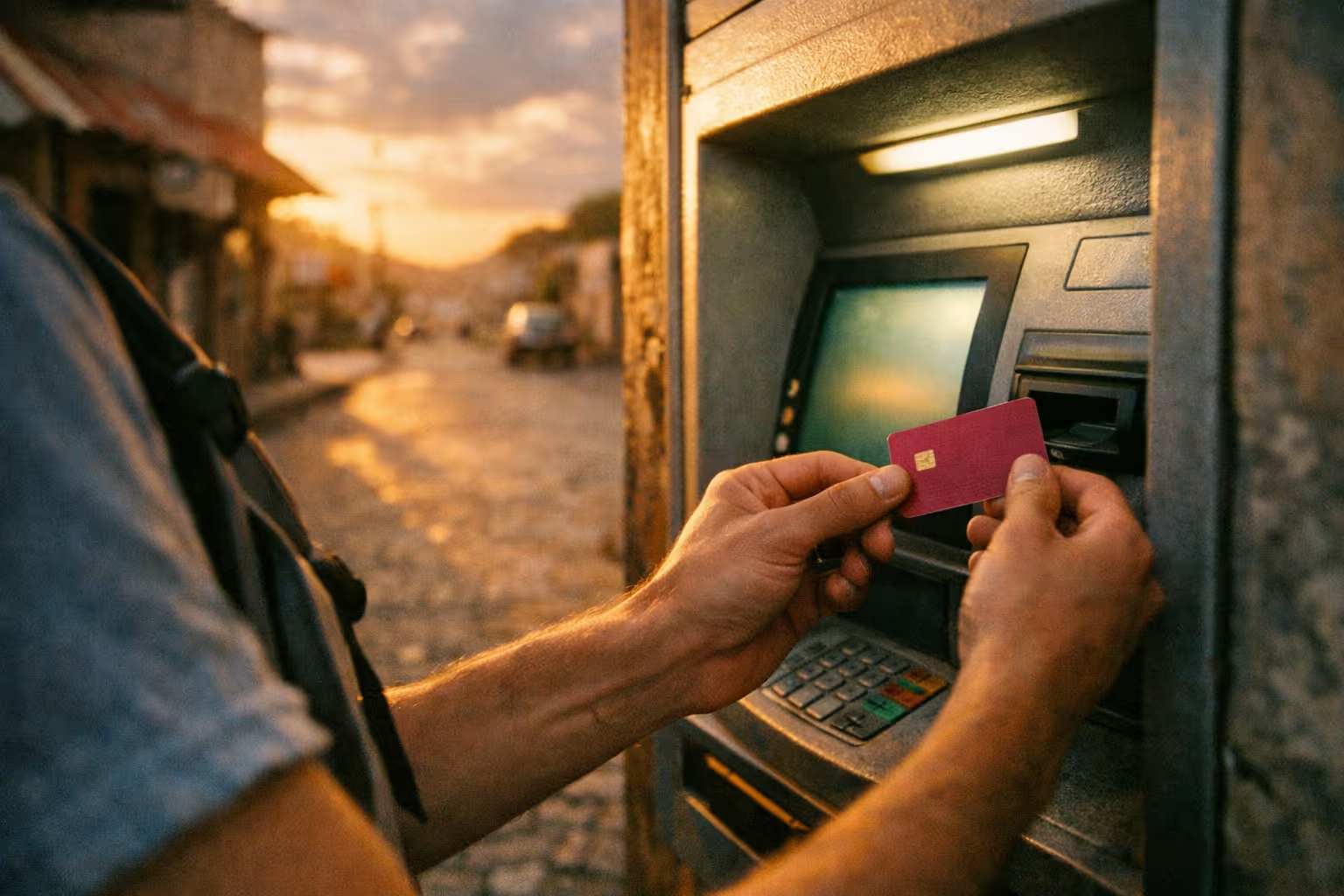
Is Monzo Good for Travelling? The Short Answer
Yes - if you spend mostly by card. The Monzo travel card charges no foreign transaction fee on card payments anywhere in the world and passes through the Mastercard exchange rate with no markup (2)(3). That alone puts it ahead of most UK high-street debit cards, which typically tack on 2.75-2.99% to every foreign purchase. For US-based travelers or anyone converting: £200 is roughly $250 USD at current rates, and £1,500 of trip spend is around $1,875 USD - useful context if you’re planning a mixed-currency trip.
I ran this card as my primary payment method through a two-week US road trip in March 2025 - zero fees on card spend, one ATM hit in a cash-only situation, and the real-time GBP conversion made it easy to track daily spend against a fixed budget.
Where Monzo gets less generous is cash. Outside the EEA, free-tier users get £200 fee-free ATM withdrawals every 30 days; after that, it’s a 3% fee per withdrawal (3). Inside the EEA, main-account holders get unlimited fee-free withdrawals (2)(3). So the real question isn’t “is Monzo good for travel” - it’s “how much cash will you actually need?”
Worth using Monzo for: card-first trips to Western Europe, the US, Canada, Japan, most of Southeast Asia’s cities, Australia.
Use with a backup plan: cash-economy destinations like Albania, parts of the Balkans, rural Morocco, much of Cuba, parts of South America. The Travel Hack’s 2025 review specifically flags Albania as a place where Monzo alone wasn’t enough and cash was still needed (1).
✓ Pros
- No foreign transaction fees on card payments worldwide
- Real-time spending alerts and budgeting tools
- Fee-free Mastercard exchange rate with no markup
- Instant card freezing in-app for security
- No need to notify Monzo before travel
✗ Cons
- Limited fee-free cash withdrawals outside the EEA (£200/30 days on free plan)
- No physical branches, support only via app chat
- UK residents only, requires UK address
- Standard card is debit, so weaker chargeback protection
- Some ATMs charge operator fees not covered by Monzo
Monzo Travel Card: No Foreign Transaction Fees, Full Stop
No foreign transaction fees on card payments. That’s the headline, and it holds up. Whether you’re tapping for a gelato in Rome, paying for a taxi in Tokyo, or buying a tagine in Marrakech, Monzo charges you the Mastercard exchange rate and nothing else (2)(3).
Compare that to a typical UK debit card adding ~2.75% per transaction, and the savings on a two-week trip with £1,500 of card spend come out around £40. Not life-changing, but real money for essentially zero effort.
A few practical notes worth keeping in mind:
- Monzo is Mastercard-branded, so it works wherever Mastercard is accepted. Carry a Visa backup for the rare merchant who only takes one network.
- Apple Pay and Google Pay work normally abroad at the same fee-free rate.
- Dynamic Currency Conversion (DCC) - when a foreign card terminal asks if you want to pay in GBP instead of the local currency - always pick the local currency. Saying yes to GBP lets the merchant set the exchange rate, and it’s always worse.
Monzo Mastercard Exchange Rate: What You Actually Get
Monzo uses Mastercard’s wholesale exchange rate with no added markup (2). In practice, that puts it within ~0.3% of the mid-market rate you’d see on Google or XE - better than Revolut on weekends (Revolut adds a markup outside business hours for some currencies), and broadly comparable to Wise.
The app shows you the converted GBP amount within seconds of paying. No waiting three days for the charge to settle and finding out it cost more than expected. That alone is worth something when you’re trying to track spending in real time.
Cash Withdrawals: Where the Free Account Hits a Wall
This is the part most “Monzo is great for travel” articles gloss over. Cash withdrawals have plan-based monthly allowances, and once you cross them, you pay 3% per withdrawal (3).

Here’s the current breakdown:
| Plan | Monthly fee | EEA cash limit (free) | Non-EEA cash limit (free) |
|---|---|---|---|
| Free (main account) | £0 | Unlimited | £200 / 30 days |
| Free (non-main) | £0 | £400 / 30 days | £200 / 30 days |
| Monzo Plus | from £7/month | £400 / 30 days | £400 / 30 days |
| Monzo Premium / Perks / Max | from £3/month upward | £600 / 30 days | £600 / 30 days |
Sources: Monzo fee table (3), Monzo FAQ (4).
A few things worth knowing before you land:
- The 30-day window is rolling, not calendar-month. If you withdrew £180 on the 25th of last month and try to pull another £100 on the 5th of this month, you’re already over for the rolling period.
- “Main account” status matters. To get unlimited EEA withdrawals on the free tier, Monzo needs to be where your salary lands.
- ATM operator fees are separate. Some ATMs - especially in the US, Thailand, and tourist airports - charge their own fee on top, which Monzo can’t waive.
My rule of thumb: if you’ll need more than £200 in local cash outside the EEA, either upgrade to a paid plan for that month or bring a backup card. Monzo Plus at £7/month pays for itself the moment you’d otherwise cross the threshold by ~£234.
Real-Time Spending Alerts and Budgeting Pots
Every transaction triggers a push notification with the GBP amount and merchant name, usually within a second of tapping. For spotting fraud quickly, this is genuinely useful - and Monzo lets you freeze the card in-app instantly if something looks off (1)(2).
The app auto-categorizes spending (food, transport, entertainment, etc.) and breaks it down by currency. At the end of a two-country trip, you can see exactly what you spent in EUR vs JPY vs GBP without doing any manual work.
Pots are Monzo’s budgeting feature - virtual sub-accounts inside your main balance. Set up a “Tokyo trip” Pot with £800 in it, drain it down as you go, or pay directly from it. Instant Access Savings Pots currently earn 2.75% AER variable (2), which is a decent bonus if you funded the trip months in advance.
What works well: splitting a budget across Accommodation / Food / Activities / Buffer, rounding up spare change into a Pot for the next trip, and shared Tabs for splitting costs with travel companions.
What doesn’t: Pots won’t replace a proper budgeting app if you want long-term category trends, and the auto-categorization gets foreign merchants wrong often enough that you’ll be recategorizing manually more than you’d like.
No Need to Notify Monzo Before You Travel
Unlike traditional UK banks, you don’t need to tell Monzo you’re going abroad (2). The card just works. If a transaction looks genuinely suspicious, Monzo may flag it and ping you in-app to confirm - one tap and you’re done.
The fraud detection is fast and rarely over-cautious. The one thing that does occasionally trigger a block: using the card in a country you’ve never spent in before, at a high-risk merchant type, within hours of landing. Fix: make your first purchase something small and normal, like a coffee.
Monzo Credit Card Abroad: Debit vs Credit, Clarified
This trips a lot of people up. When most people search “monzo travel card” or “monzo credit card abroad,” they’re actually thinking about the Monzo debit card linked to a current account - that’s what 95% of Monzo’s marketing covers (2).
Monzo also offers:
- Monzo Flex - a Buy Now Pay Later product that splits purchases over 3 months at 0% interest (representative APR 29% variable beyond that, for up to 24 months) (2). Works abroad with the same fee-free FX as the debit card.
- Monzo credit card - a revolving credit product. Same fee-free FX abroad, but availability depends on credit checks.
Why the distinction matters for travel: in the UK, Section 75 of the Consumer Credit Act gives you statutory protection on credit card purchases between £100 and £30,000 paid directly to the supplier. Monzo debit still carries Mastercard chargeback rights, but those are a voluntary scheme - not a legal entitlement - and harder to enforce on complex disputes. If you’re booking expensive flights or hotels you might need to dispute later, a true credit card - Monzo’s credit card, or something like the Halifax Clarity or Barclaycard Rewards - gives you stronger protection than the Monzo debit card alone.
For day-to-day travel spending, the debit card is fine. For the £1,200 flight or the £900 hotel deposit, put it on a credit card.
What Are the Disadvantages of a Monzo Card?
The honest list, based on the current 2025 fee structure - I last tested this setup on a three-week card-first trip through the US and Mexico in March 2025, pulling one ATM withdrawal in Oaxaca (roughly $60 / ~£48) before switching to card-only for the rest:
- Cash withdrawal limits abroad. £200 every 30 days outside the EEA is tight for cash-heavy destinations (3).
- No physical branches. If something goes badly wrong, you’re dealing with in-app chat. Usually fine, occasionally frustrating when you need someone right now.
- Requires data or Wi-Fi. Card payments work offline, but app support, instant freezing, and notifications need connectivity (1).
- Not a true credit card by default. The standard Monzo card is debit, so no statutory Section 75 protection on big purchases - debit does retain Mastercard chargeback rights, but Section 75 (which covers eligible purchases between £100-£30,000 paid directly to the supplier) only applies to credit products like Monzo’s credit card or Flex. For high-value bookings, a credit card is the safer instrument.
- UK residents only. You need a UK address to open the account, and Monzo Max specifically is for UK residents aged 18+ (4).
- Some ATMs still charge their own fee. Monzo waives its own fee within allowance, but the ATM operator’s fee is theirs to set.
- Mastercard-only. Rare, but a few merchants are Visa-only.
- Top-up timing on travel days. If you mostly live cash-free in the UK and only top up Monzo before a trip, allow a day for transfers to clear. Faster Payments are instant, but standing orders may not be.
Is Monzo Free to Use in the USA?
For card payments - yes. Tap, swipe, or insert and you pay zero in foreign transaction fees, just the Mastercard rate (2)(3).
For cash - partially. On the free account, you get £200 every 30 days fee-free at any US ATM, then 3% per withdrawal after that. The bigger gotcha in the US is ATM operator fees, which typically run $3-$5 per withdrawal regardless of which card you use. Monzo can’t refund those.
Practical US tip: use card almost everywhere (the US is heavily cashless outside tipping situations), and pull one larger cash withdrawal at a credit union ATM rather than several small ones at airport or 7-Eleven ATMs. The operator fees alone make the “lots of small withdrawals” approach expensive fast.
Monzo vs Starling for Travel
Both are UK app-based banks. Both offer fee-free FX on card payments. Both use the Mastercard or Visa wholesale rate. The differences are real but specific.
Starling offers genuinely unlimited fee-free ATM withdrawals worldwide on its standard free account. That’s the single biggest advantage Starling has for travel, and it’s not a small one.
Monzo has better budgeting tools (Pots, Trends, automatic categorization), a more polished app, and more travel-adjacent perks on paid plans - Max includes worldwide travel insurance (4).
My take: if you withdraw cash abroad regularly and don’t care about budgeting features, Starling. If you spend mostly by card and want better in-app financial management, Monzo. A lot of regular travelers carry both as backups for each other, which is a perfectly reasonable system.
Setting Up Monzo Before a Trip: Practical Checklist
If you’re opening a Monzo card for travel specifically for an upcoming trip, timing matters more than most people expect:
Setting Up Monzo Before Your Trip
2 weeksEssential steps to have your Monzo card ready and working for travel.
- 1
Apply at least 2 weeks before departure
Approval is fast - often same day - but the physical card arrives by post and can take 5-7 working days. You can use the digital card via Apple Pay or Google Pay within a couple of hours of approval (1).
- 2
Top up enough to cover the first few days
Transfers from another UK bank are instant via Faster Payments.
- 3
Enable instant notifications
Go to Settings → Notifications and turn on payment alerts.
- 4
Log in on a second device
Having a tablet or laptop browser session means you can still freeze the card if your phone is lost or stolen (4).
- 5
Test a small payment before leaving
This catches any account-verification issues while you're still home.
- 6
Check your destination's cash habits
Some places like Albania, rural Italy, and certain Asian markets require a small amount of local cash as backup.
- 7
Decide if a paid plan makes sense
If you'll withdraw more than £200 in cash outside the EEA, calculate if Monzo Plus or Premium for that month is worth it.
Frequently Asked Questions
Frequently Asked Questions
- Can I use Monzo abroad without internet access?
- Card payments work offline, but app features like instant freezing, notifications, and support require data or Wi-Fi.
- Does Monzo refund ATM operator fees charged by third parties?
- No, Monzo only waives its own fees within allowance; ATM operator fees are charged by the ATM owner and are not refunded.
- Is Monzo's budgeting feature suitable for detailed long-term expense tracking?
- Monzo Pots are great for short-term budgeting and trip-specific funds but don't replace dedicated budgeting apps for long-term category trends.
- What should I do if my Monzo card is blocked after arriving in a new country?
- Make a small, normal purchase first to confirm your presence; Monzo's fraud system may block high-risk transactions in unfamiliar locations initially.
- Can non-UK residents open a Monzo account for travel?
- No, Monzo requires a UK address and is only available to UK residents aged 18 and over.
- How does Monzo's debit card protection compare to a credit card's?
- Monzo debit cards have weaker chargeback protection than credit cards, which offer Section 75 protection for purchases over £100.
- Is it better to use Monzo or Starling for cash withdrawals abroad?
- Starling offers unlimited fee-free ATM withdrawals worldwide on its free plan, making it better for cash-heavy travelers; Monzo excels in budgeting and app features.
Bottom Line
Monzo is a solid default for UK travelers who spend mostly by card. Zero foreign transaction fees, real-time spending alerts, the Mastercard wholesale rate, and a genuinely useful budgeting app cover what most people actually need on a trip.
The limits worth keeping in mind: £200 of fee-free cash every 30 days outside the EEA on the free plan, weaker chargeback protection than a true credit card, and UK-only eligibility (3)(4). For cash-heavy trips, either upgrade for the month or pair Monzo with Starling. For big-ticket bookings, use a credit card for the Section 75 cover.
Set it up two weeks before you fly, top it up, enable notifications, carry a Visa backup. That’s the whole system.